What That Sound From Your Garage Door Is Telling You
Santa Fe's 1973-1999 housing stock means specific opener and spring failures as winters turn cold. Know what each noise means before it becomes a stuck door.
Most houses in the Santa Fe area went up between 1973 and 1999, with the median landing right around 1990. That means the garage door hardware on a lot of these houses is the same era: steel torsion springs, direct-drive or chain openers from the 1990s, and galvanized track that's been through thirty winters of expansion and contraction. Across the thirteen communities that ring the city - from Agua Fria two miles out to Pecos eighteen miles east - the housing stock follows the same pattern: 1980s and 90s construction, not much older, not much newer. The cold band this part of New Mexico sits in matters here. Steel contracts in deep cold, torsion springs lose a little tension every freeze-thaw cycle, and nylon rollers that were fine in August get brittle and loud by January. A door that worked quiet all summer can start grinding or popping the first hard cold snap, and it's not because something broke overnight - it's thirty years of wear finally showing up when the temperature drops.
The Situation
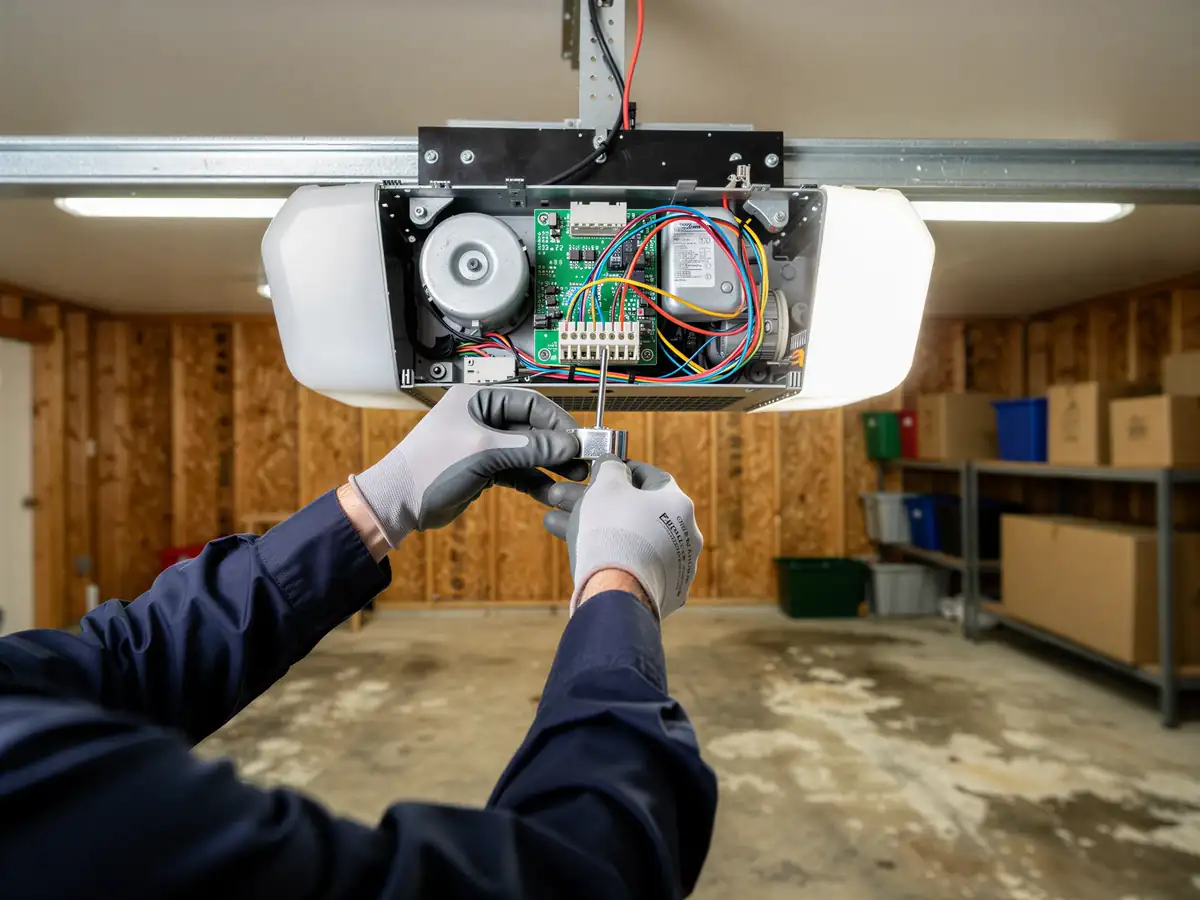
A squeal that rises and falls as the door moves usually means the rollers are worn - not unusual on a door that's been rolling on original nylon or steel rollers since the house was built sometime in the 1973-1999 window. A sharp bang, especially right after a cold night, is almost always a torsion spring letting go; steel that's held tension for twenty-plus years through this region's cold winters is exactly the kind of spring that snaps on the coldest mornings, not the mildest. A grinding or clicking from the opener head is often the gear sprocket on a chain-drive unit from that same era, the kind that was standard equipment when most of this housing stock went in during the 80s and 90s. None of these are urgent in the way a car accident is urgent, but none of them get better on their own, and cold makes every one of them worse faster than a mild month would.
The Common Mistake
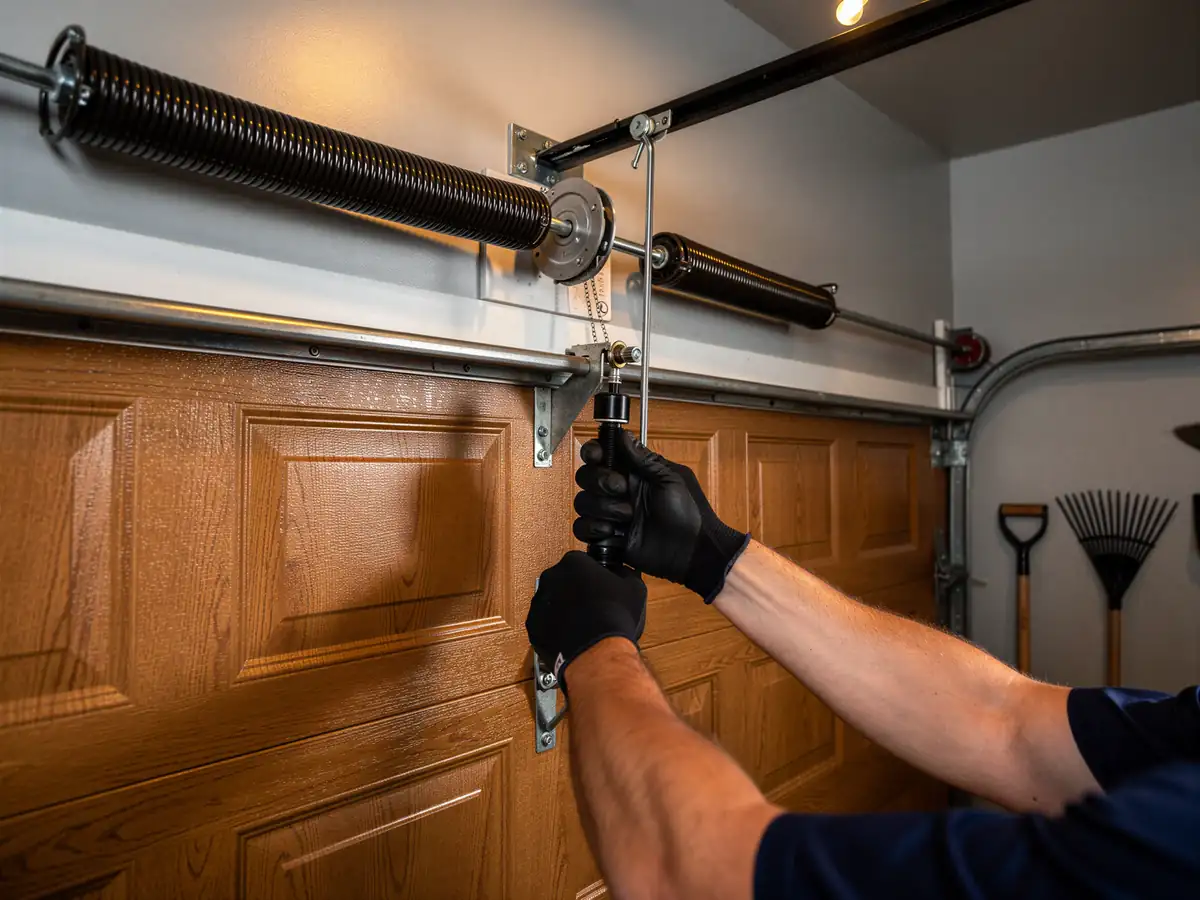
The mistake we see most in houses from this build era is treating a noisy door like a lubrication problem across the board. Spraying standard household oil or WD-40 on a torsion spring doesn't fix fatigue - it just masks the sound for a week or two while rust keeps working underneath, and in a cold severe climate that rust cycle runs harder because of the freeze-thaw swings. The other mistake is waiting out a noisy door through a whole winter, figuring it'll hold until spring. A spring or cable that's already stressed from decades of use doesn't usually get better with one more season of cold; it gets closer to failing on the coldest morning of that season, when a broken spring means a door you can't lift by hand either. On a house built in this window, the hardware has had thirty-plus winters to work loose, rust, or fatigue - treating every noise the same way, instead of figuring out which part is actually failing, is how a small roller job turns into an emergency spring call in February.
When to Call Someone
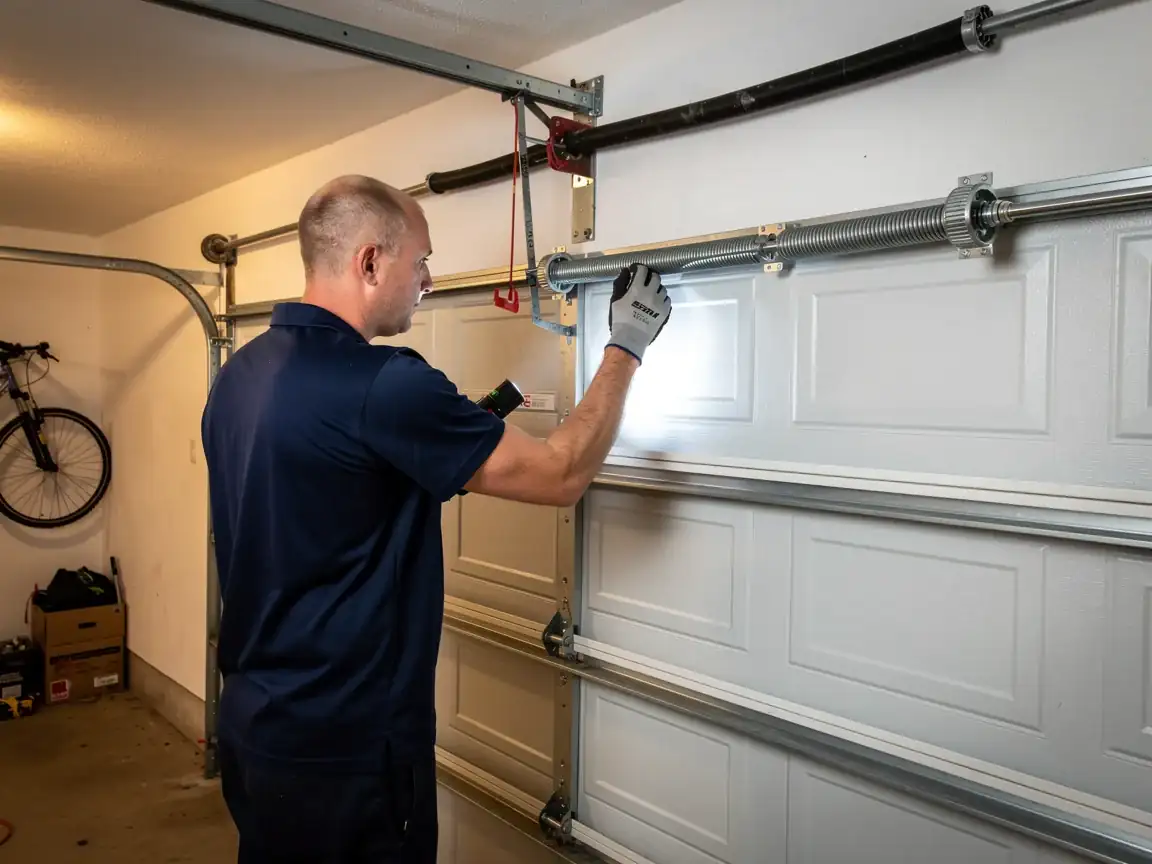
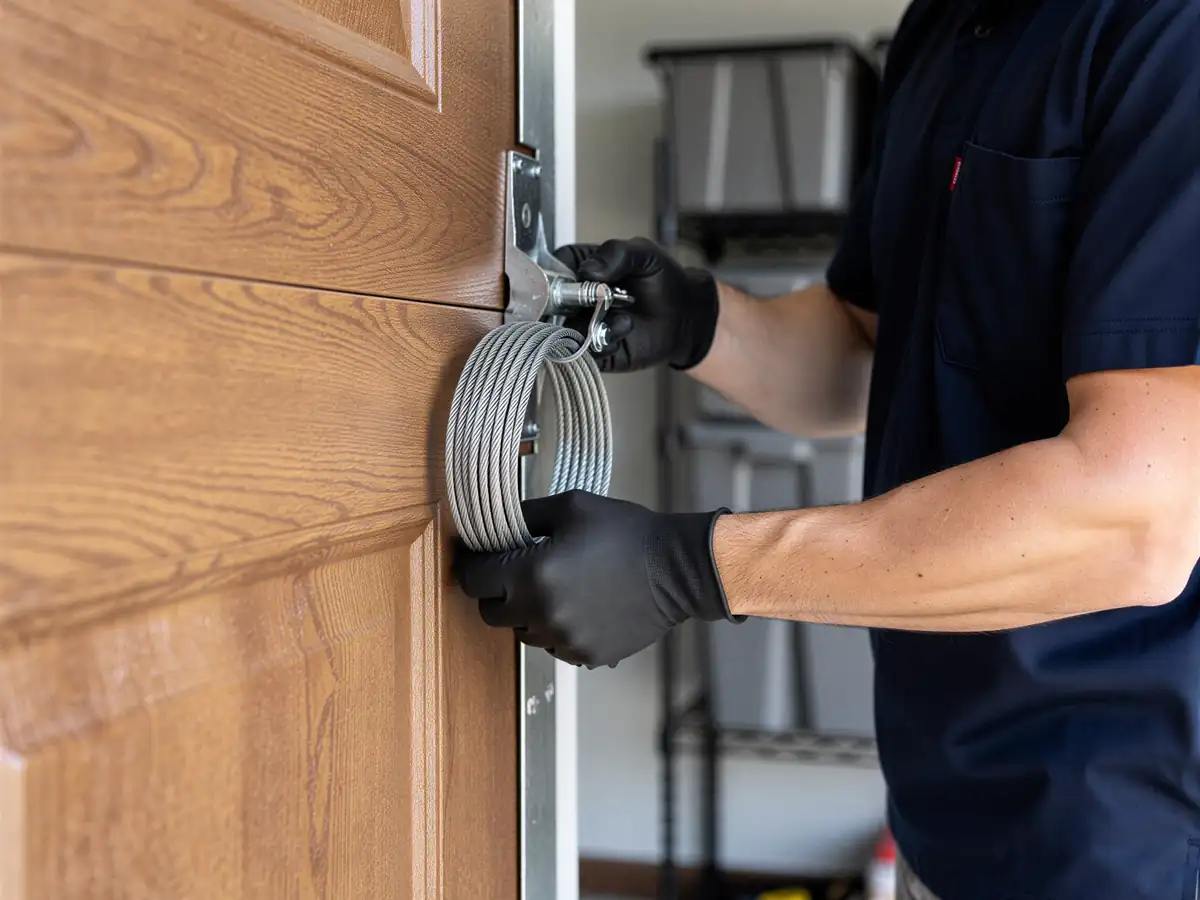
A loud bang followed by a door that won't open, or one that feels unusually heavy, means a spring has gone - stop trying to force it, the cables and the other spring are now carrying weight they weren't built for. A steady squeal with no binding is lower priority; it's worth a call, but it's not going to leave you locked out. If the opener motor is running but the door isn't moving, that's usually a stripped gear or a broken cable, not something to keep testing by hitting the button again. One honest limit: on an older torsion spring, we don't always have the exact wind and wire gauge for a thirty-year-old setup sitting on the truck - sometimes it has to be ordered, and that can mean a wait rather than a same-visit fix. If your house falls in that original 1973-1999 build window and the hardware has never been swapped, that's worth mentioning when you call, since it changes what part we bring.
How it works
From “it’s stuck” to “it’s fixed”
01
Tell us what’s wrong
Describe the symptom - won’t open, loud bang, opener runs but the door won’t move.
02
On-site diagnosis
A technician tests the door under power and by hand and finds what actually failed.
03
Clear, up-front plan
You get the fix that’s needed and what drives the cost - before any work starts.
04
Repaired & tested
The repair is done, the door is set true and tested, and the work area left clean.
Not sure which repair your door needs in Santa Fe, NM? Describe what it’s doing - every job starts with a diagnosis.
Steel hardware contracts in cold weather, and on a door that's original to a house built between 1973 and 1999, that contraction shows up as noise - torsion springs lose tension, rollers stiffen, and track that's slightly out of alignment grinds instead of sliding. The sound usually isn't new; the cold just makes thirty-year-old wear more obvious.
Is my garage door hardware original to the house?
If your house falls in the 1973-1999 range that covers most of this area, and nobody's mentioned replacing the spring, opener, or track, there's a good chance it's original or close to it. That matters because older torsion springs and openers aren't always a stock part - sometimes they need to be ordered.
Do homes in Eldorado or White Rock have the same issue?
Most of the housing across this area, including Eldorado at Santa Fe and White Rock, went up in the same 1980s-90s window, so the hardware problems tend to repeat: worn rollers, fatigued torsion springs, and chain-drive openers from that era. The fix depends on the specific door, not the neighborhood.
Ready to get your garage door sorted?
Tell us what it’s doing and where you are in Santa Fe - we’ll take it from there.