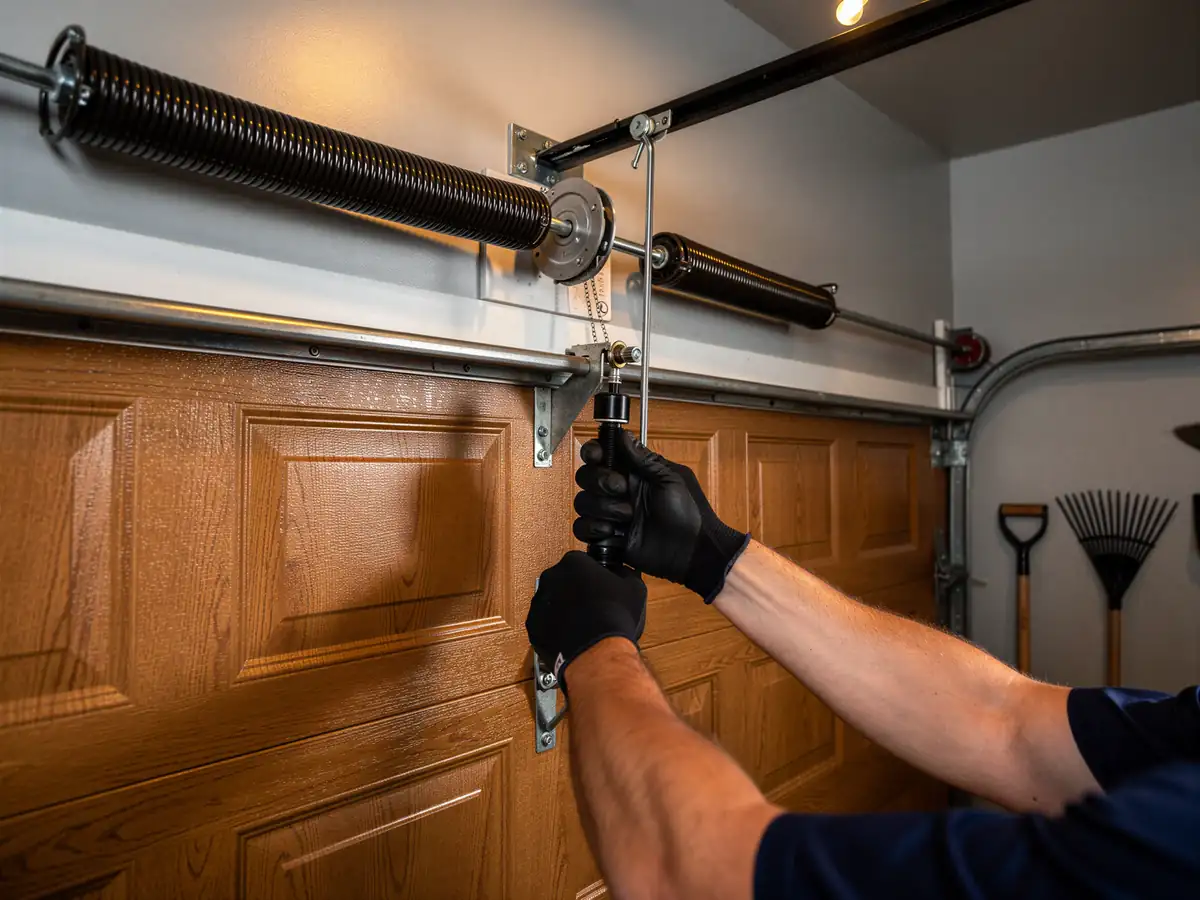
What You Are Seeing
A garage door that won't lift, or lifts a few inches and stops
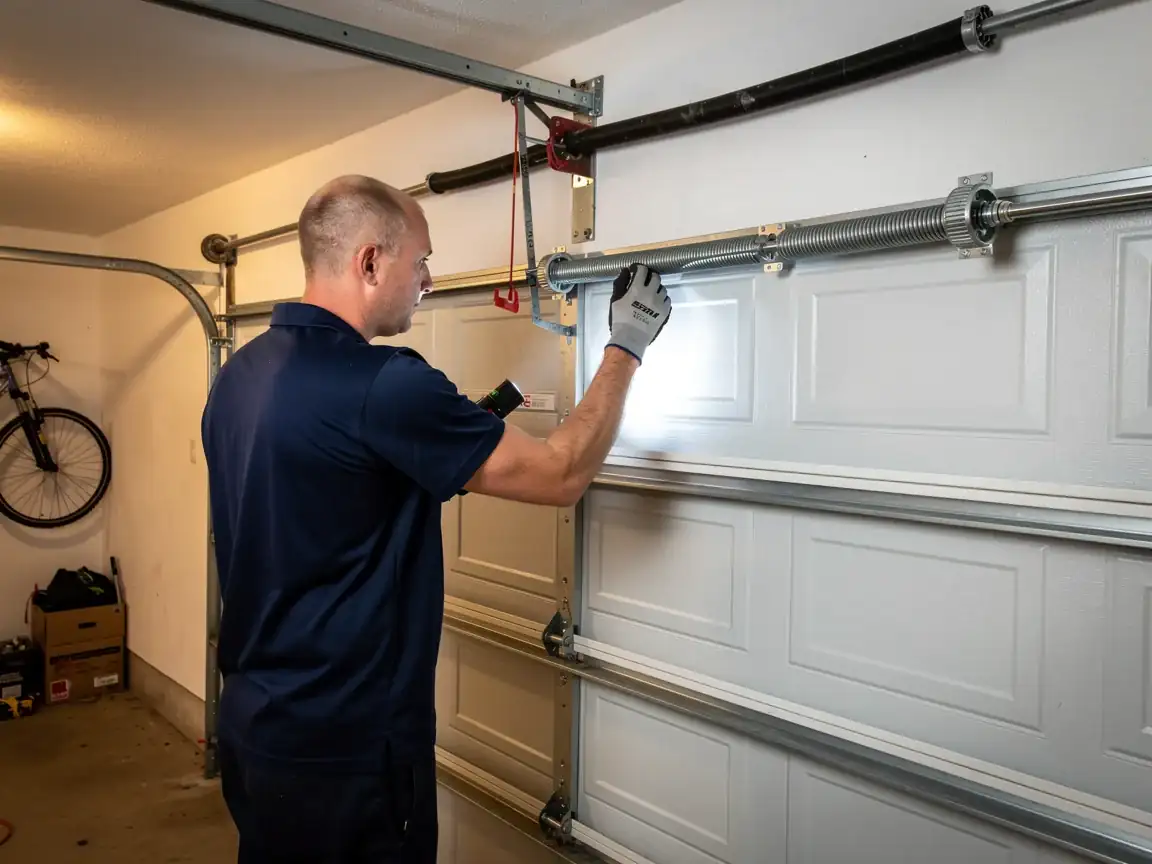
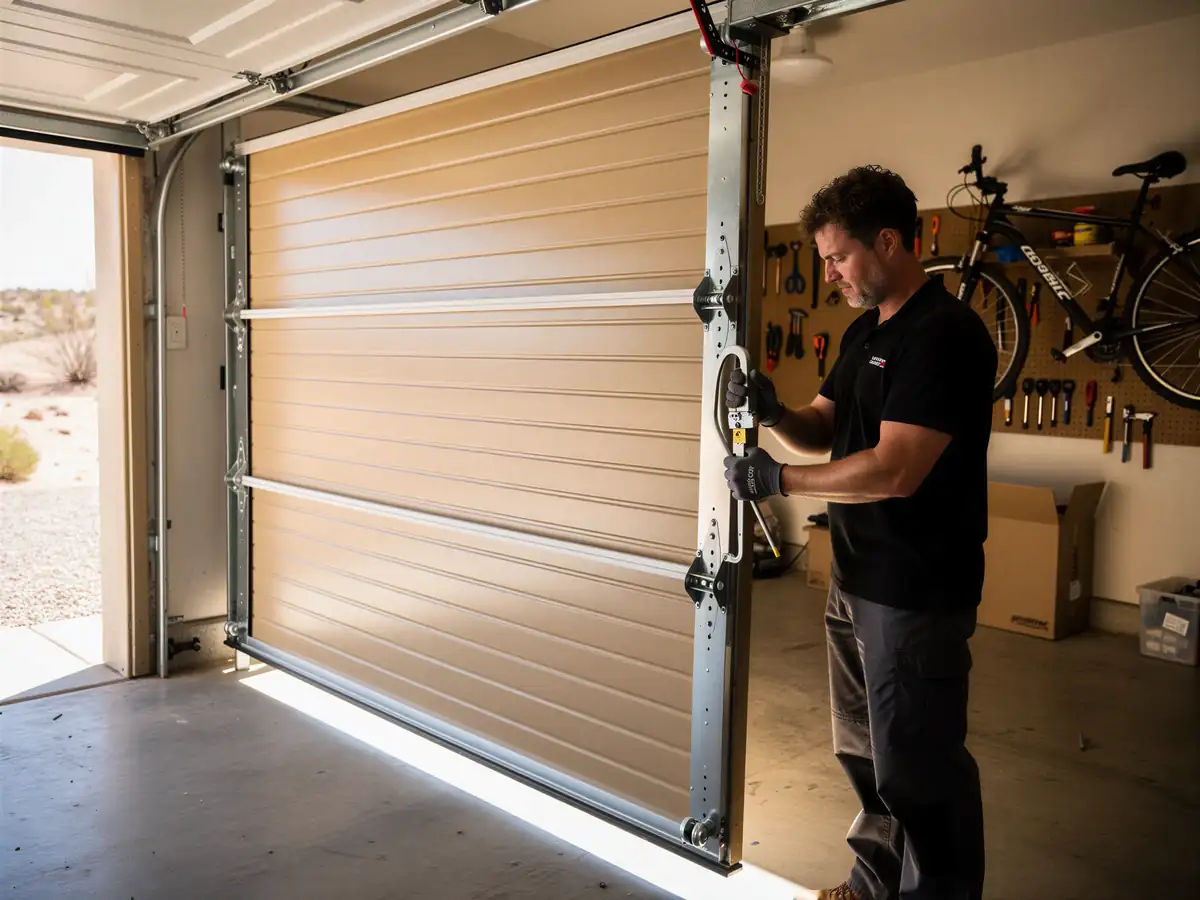
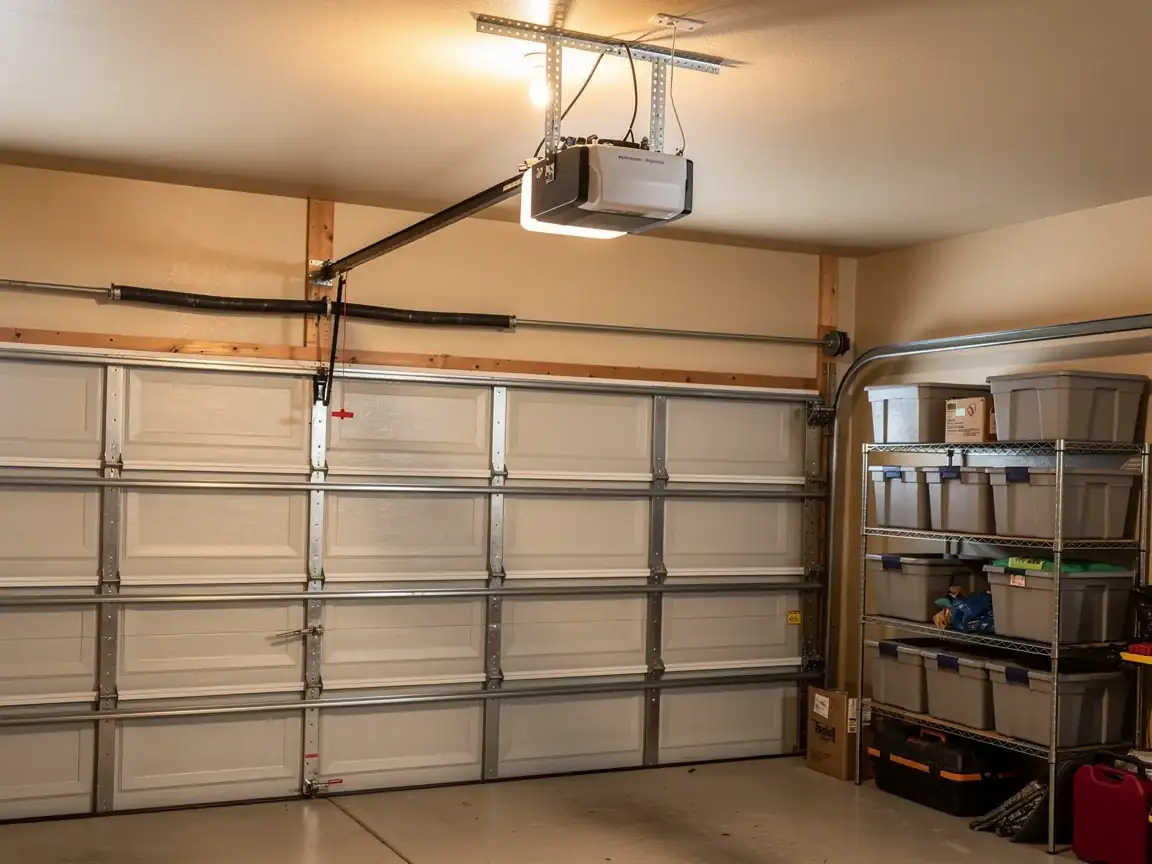
Almost always comes down to a broken spring. If the door feels like dead weight and the opener strains or reverses itself, that's a torsion spring that's let go above the header, or a stretched extension spring hanging along the side tracks. You might hear a loud bang from the garage - that's usually the moment the torsion spring snapped, often when nobody's home.
Some owners notice the warning signs first
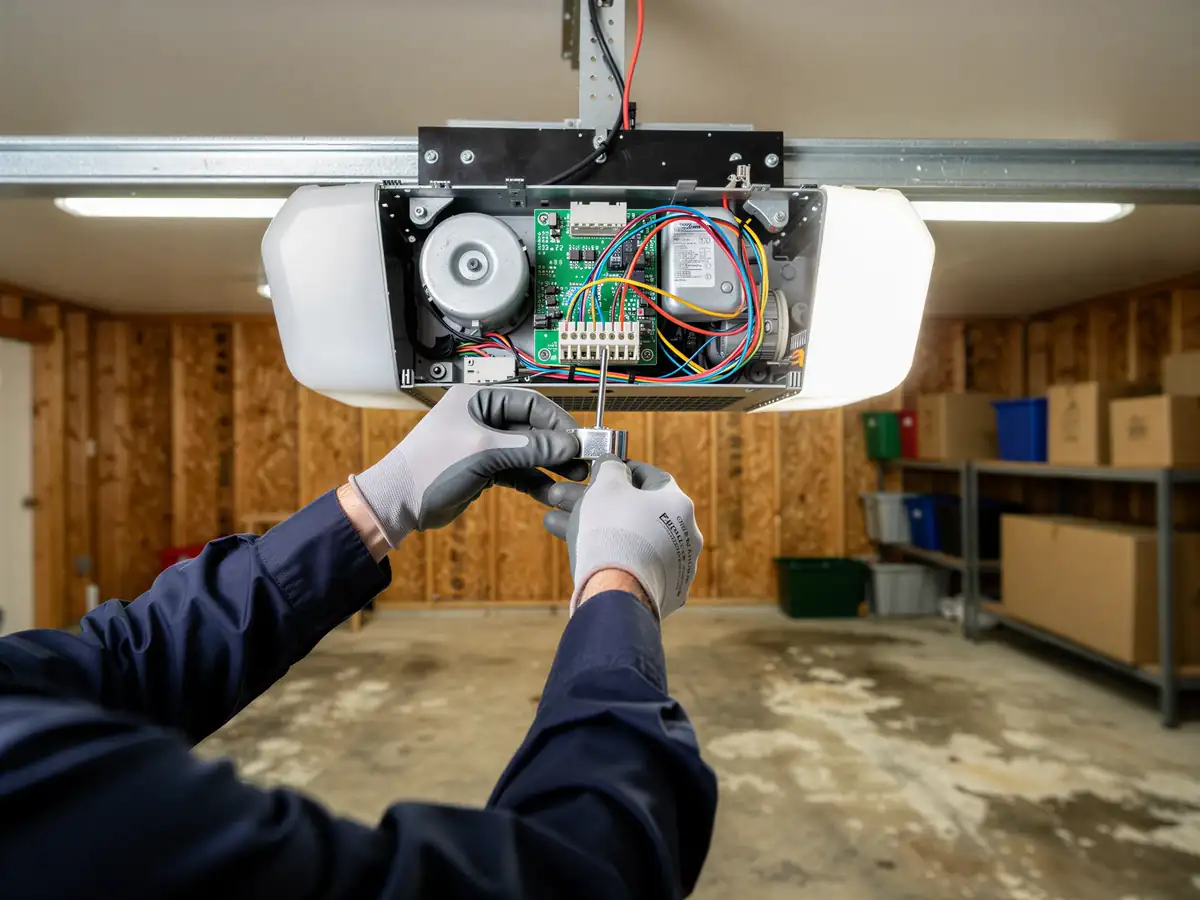
A door that's gotten noticeably heavier to lift by hand over a few weeks, a spring with a visible gap in the coil, or cables that look loose at the bottom bracket. Either way, once a spring breaks, the door's own weight runs through the opener's gears or belt, and that's how a $30 part turns into an opener replacement if it sits broken too long.
Santa Fe's housing stock matters here
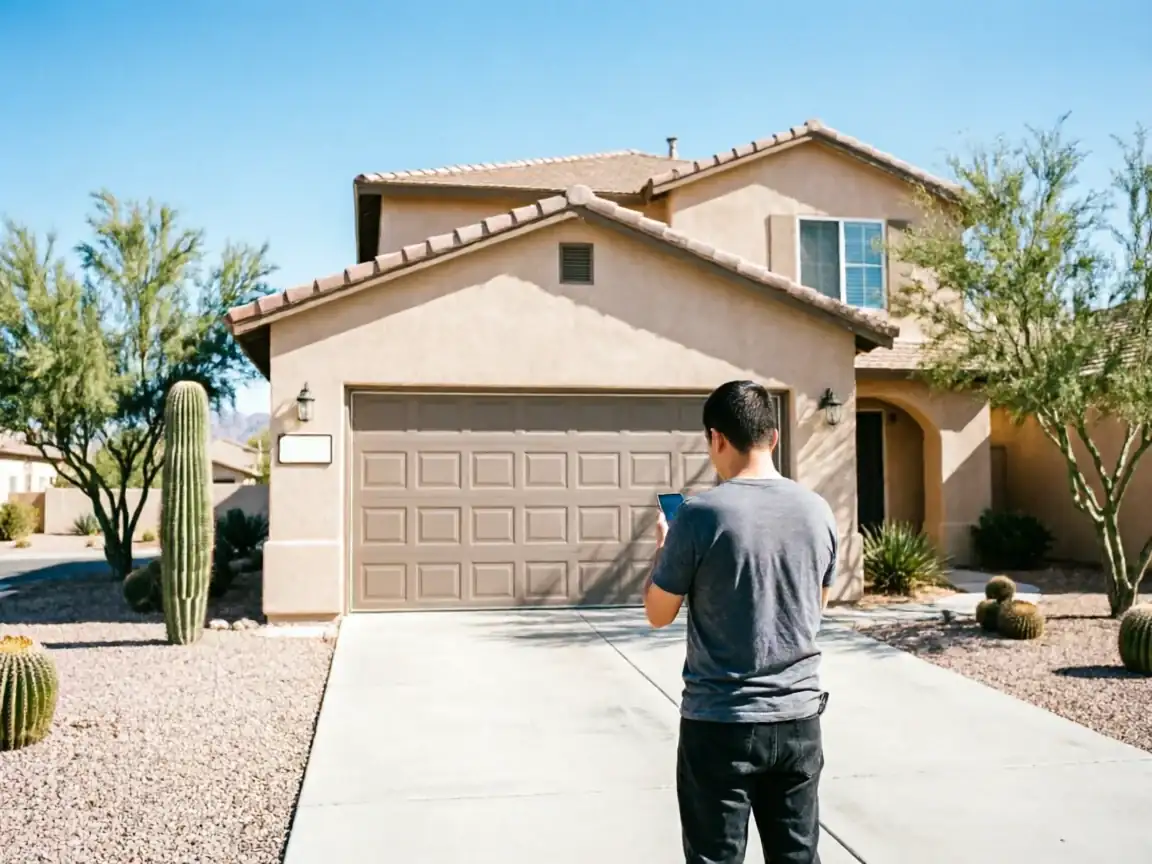
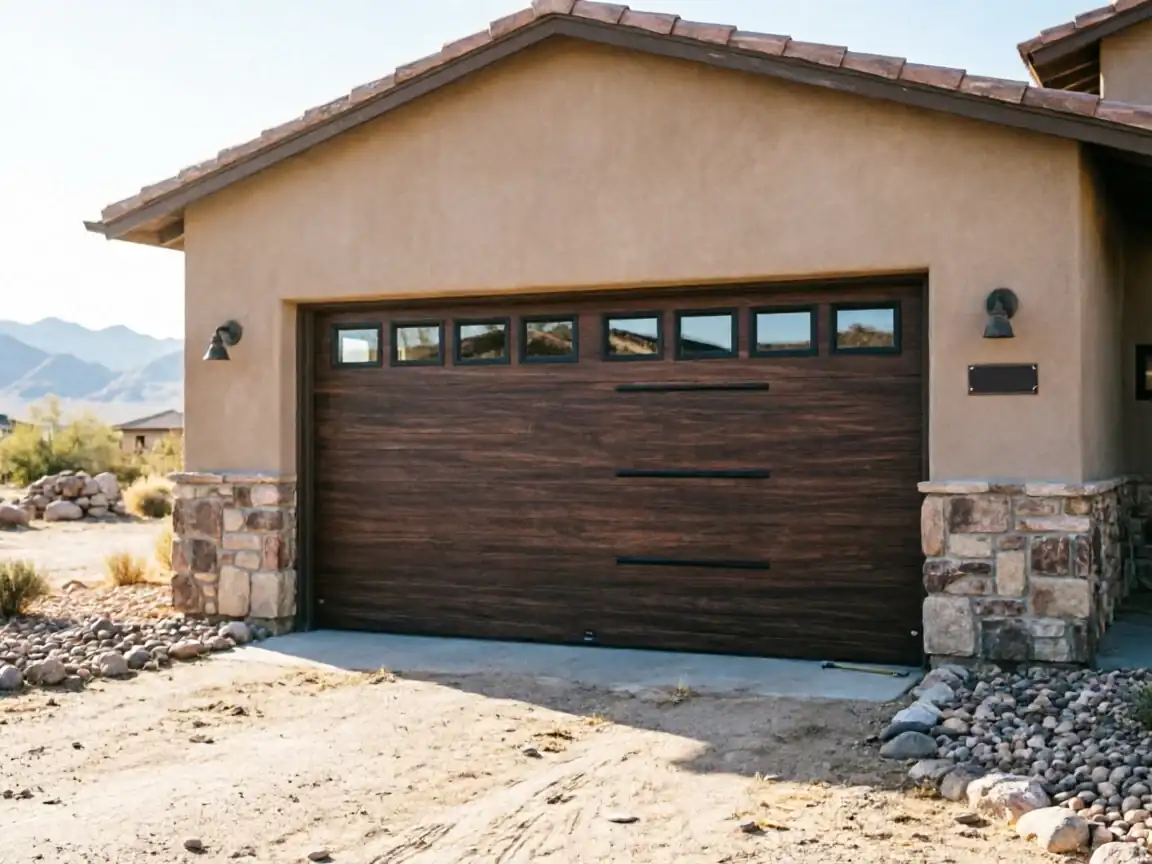
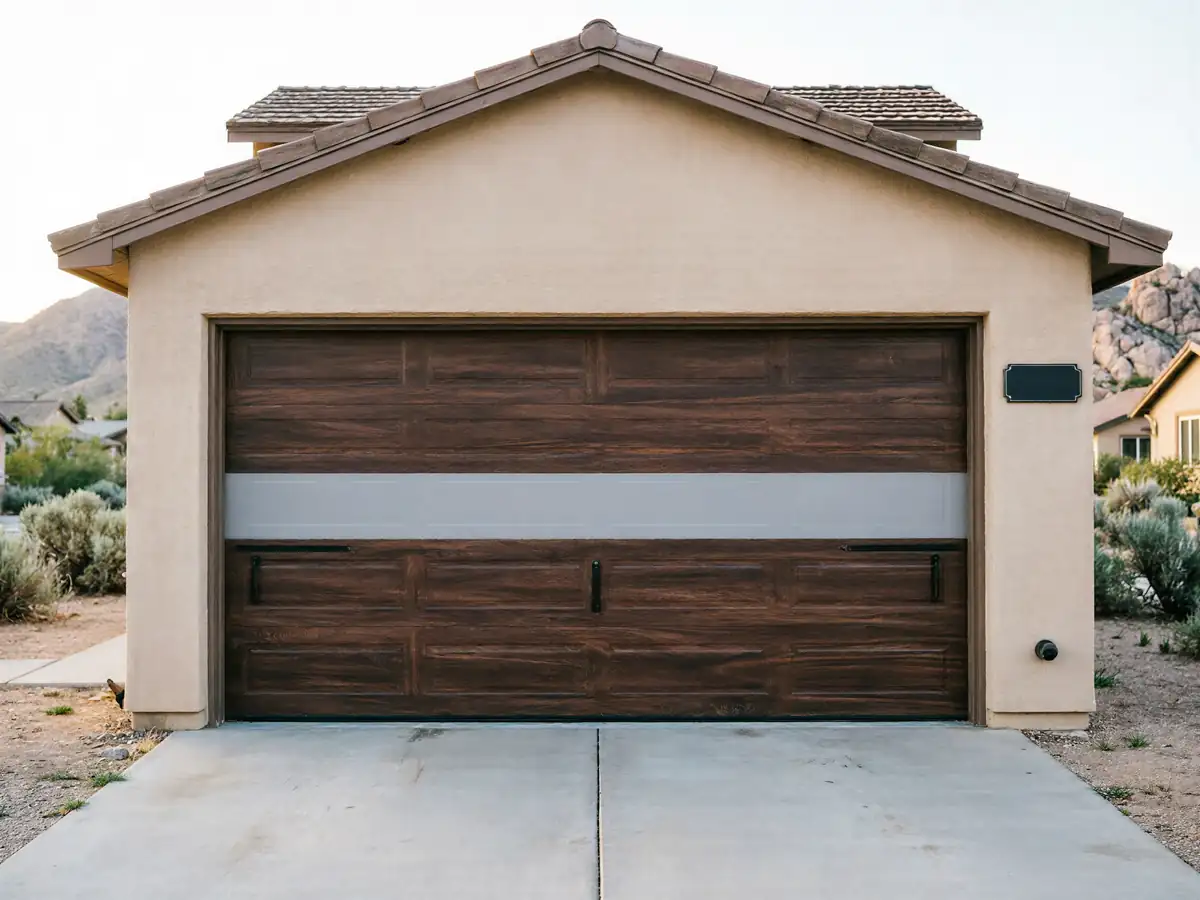
Across the 13 areas we cover, most garage doors are original to homes built between 1973 and 1999, with the bulk going up through the 1980s and 90s. That means a lot of original torsion and extension spring setups are now 25 to 45 years past their install date - well beyond the cycle life any spring is rated for, broken or not yet.
- 45 years
What It Costs
We don't have a flat number to quote here, and we're not going to make one up. Spring repair pricing depends on whether you've got one torsion spring or two, the door's weight and width, whether the drums or cables need replacing alongside the spring, and whether the winding cones or center bearing plate are original 1980s hardware that's seized and needs swapping too.
What we can tell you: a straightforward single-spring torsion job on a standard double door is a different job than two springs on a heavy insulated door with worn cables, and the price reflects that difference. If you want a real number, call and describe what the door is doing - whether it lifts at all, what you hear, what it looked like before it broke - and we'll give you a straight answer before anyone drives out.
What Causes It Around Here
Three things line up against garage door springs in this service area. First, the age of the housing stock: with most doors dating to the 1980s and 90s, a huge share of the springs out there have simply outlived their cycle count. Steel fatigues with use regardless of climate, and a 30-year-old spring winding down every day for three decades is living on borrowed time.
Second, the cold. Santa Fe sits in a severe cold climate band, and steel springs lose some flex in hard winter cold, which raises stress on a coil that's already tired. A spring that's marginal in October is more likely to let go on a January morning.
Third, scale and consistency. Across the roughly 10,772 households and 7,486 owner-occupied houses in the areas we serve, the housing stock is consistent enough - mostly built in that same 1973-1999 window - that spring failure shows up as a pattern, not a one-off. We see the same original hardware fail the same way across Agua Fria, Arroyo Hondo, Tesuque, and the rest of the areas we cover, because the houses themselves came up on the same timeline.
How We Fix It
We size the replacement spring to the door's actual weight and cycle needs rather than just matching what broke
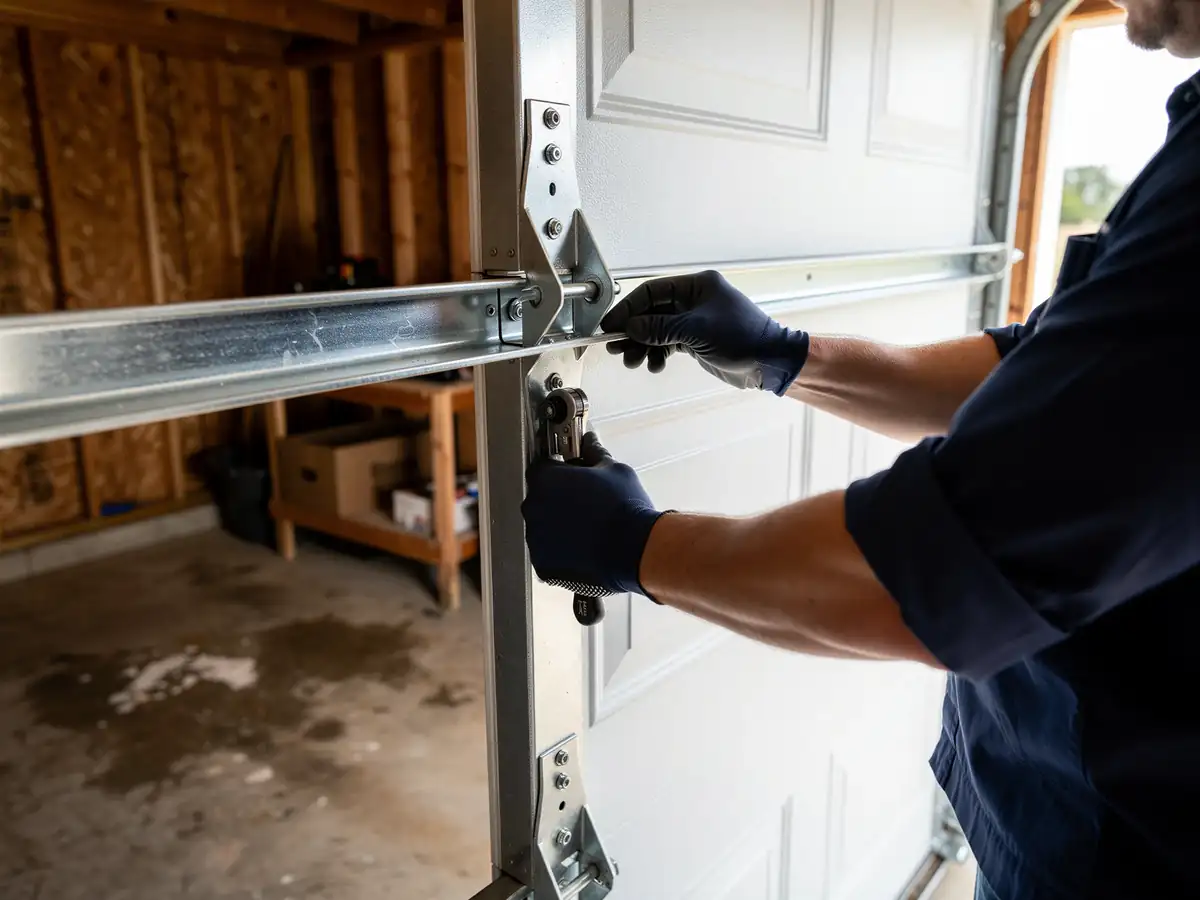
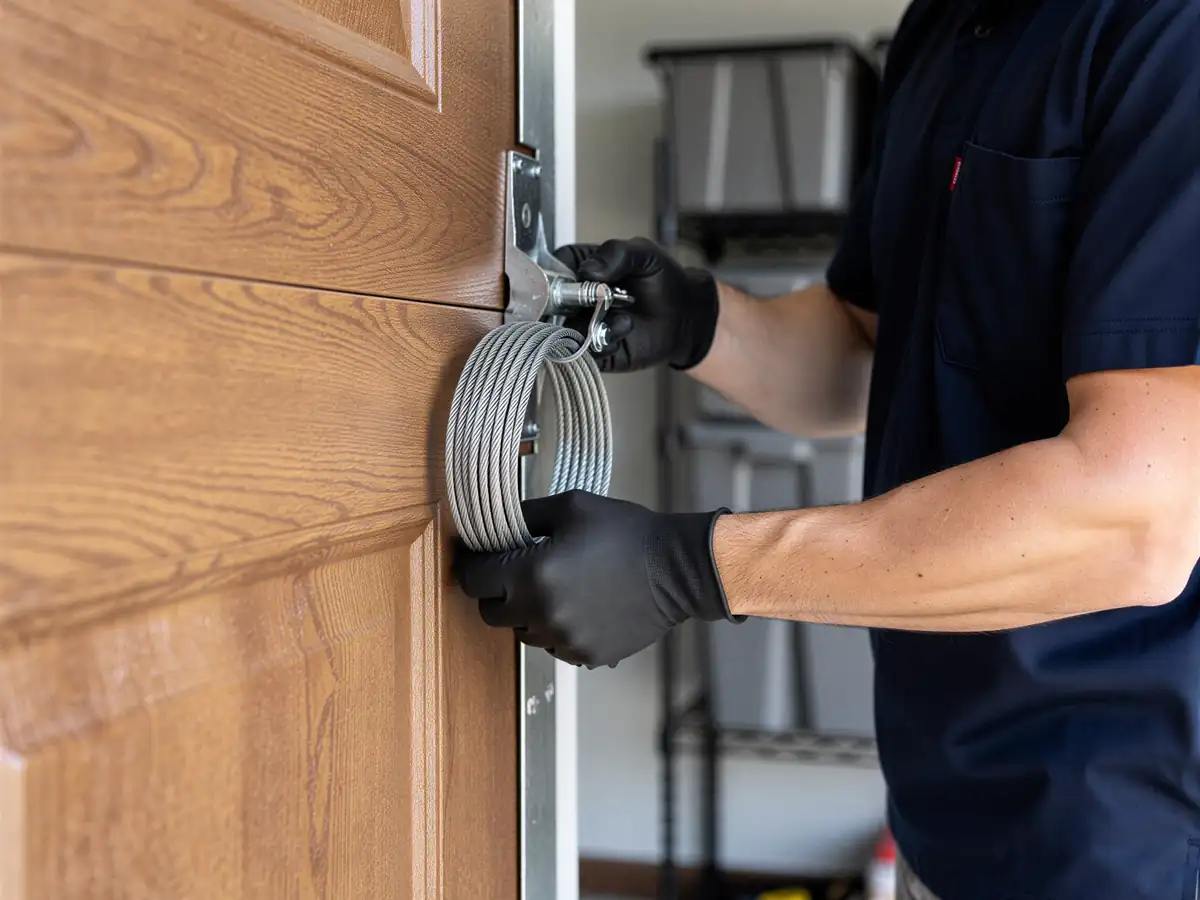
A lot of original builder-grade springs were undersized for the door to begin with, which is part of why so many from that era are failing now. For torsion systems we replace the spring on the shaft, check the center bearing and end bearing plates, and inspect the cables and drums while we're up there, since a worn cable is often next to go.
On older extension-spring setups we'll also check for safety cables
Which a lot of pre-1990s installations never had - that's a code gap we fix as part of the job, not an upsell. One limitation worth saying plainly: if the door itself is warped, the track is badly bent, or the opener's already burned out from running against a dead spring, a spring repair alone won't fix the door, and we'll tell you that instead of billing you twice.