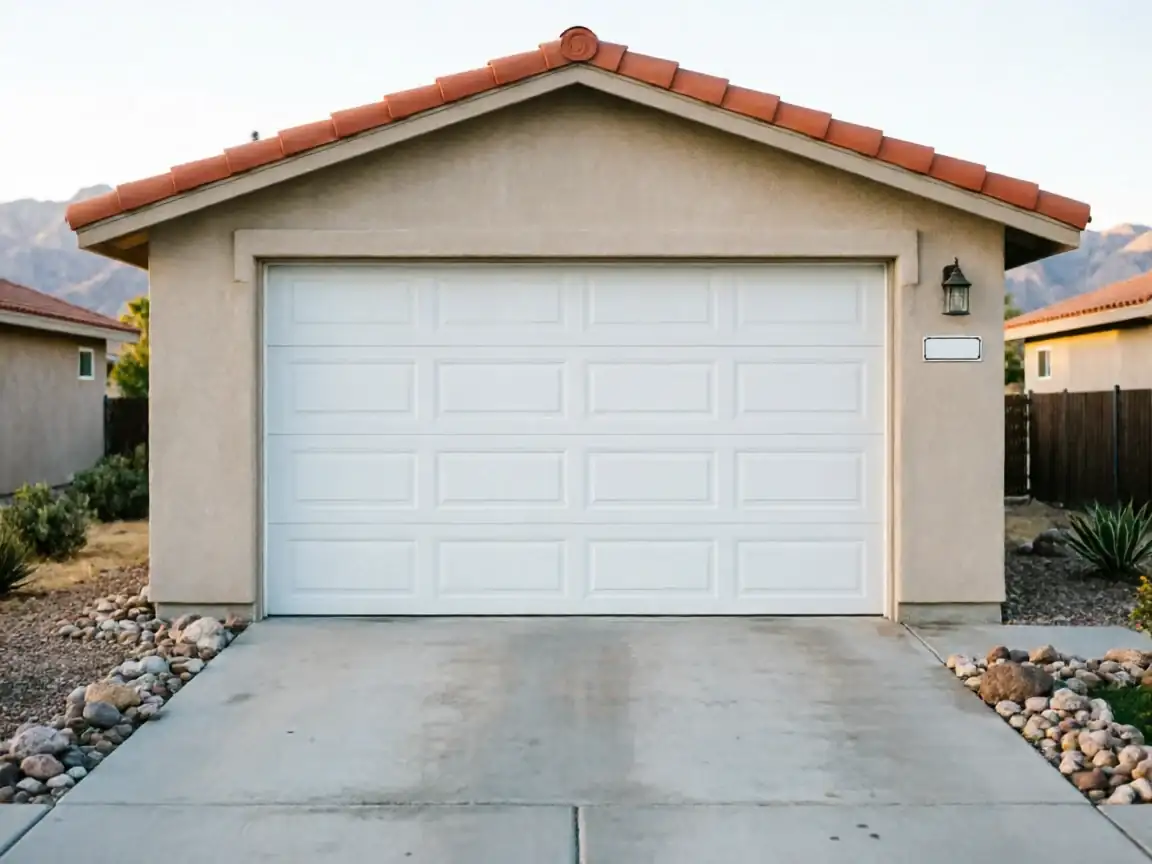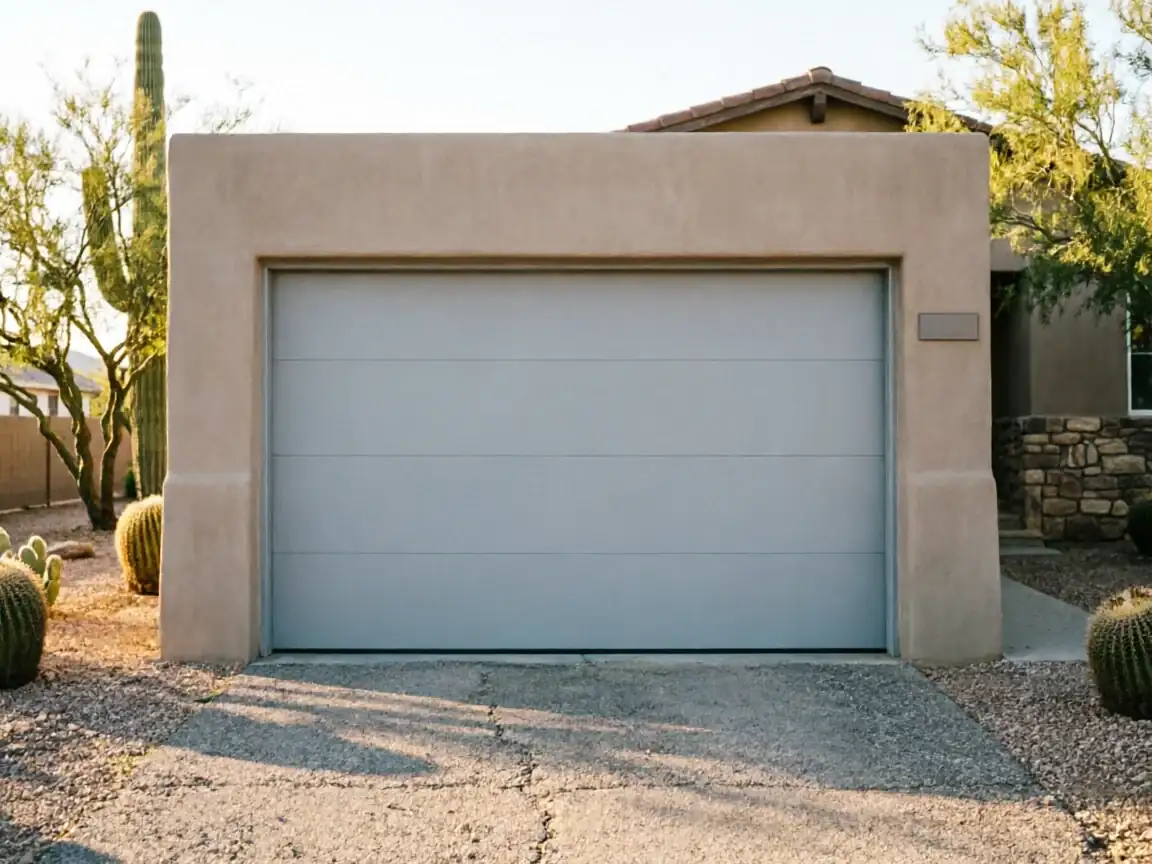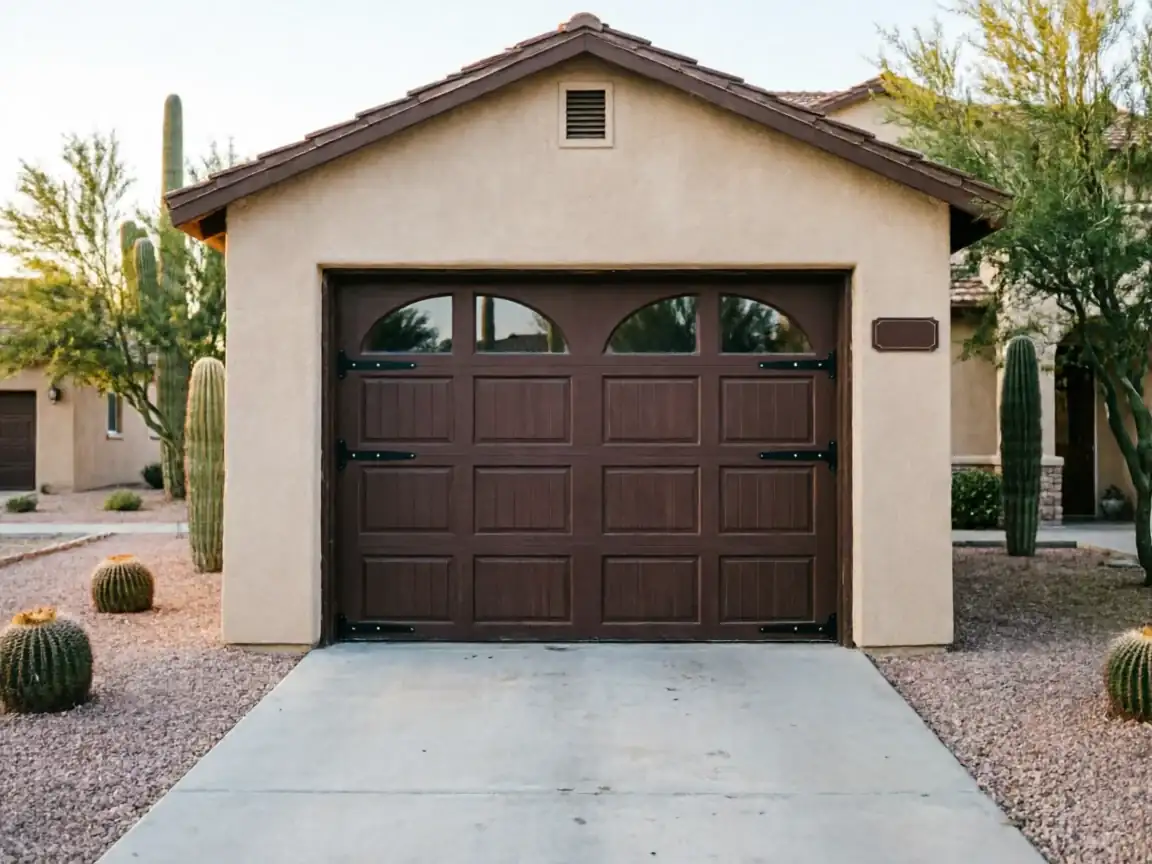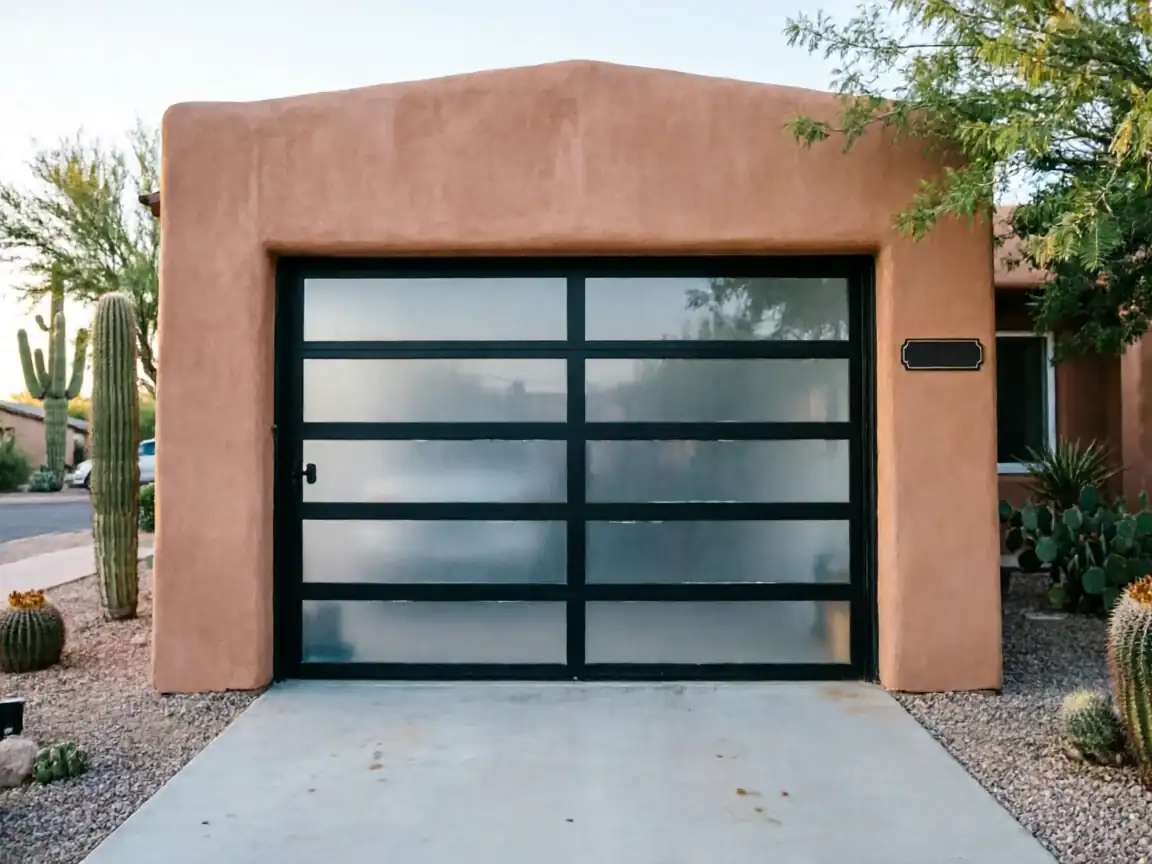
What You Are Seeing
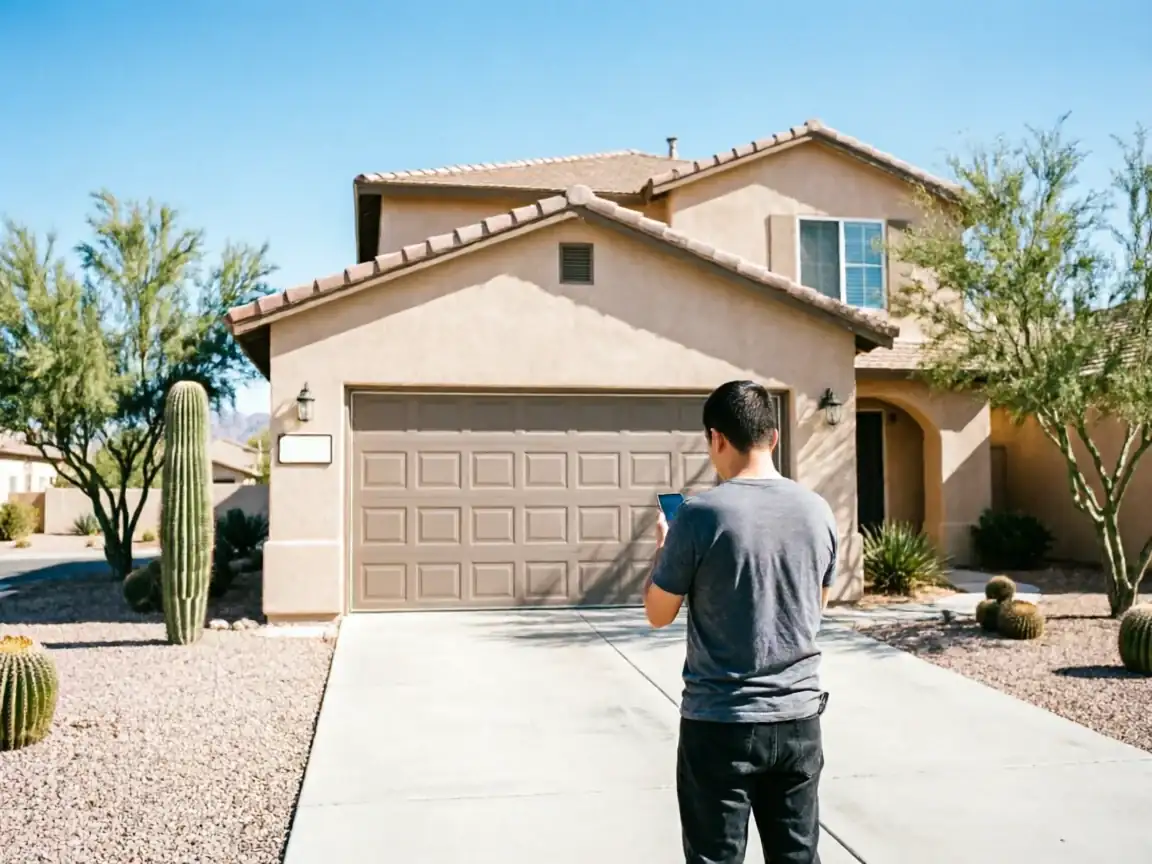
Most calls start the same way: the door won't budge, or it moves a few inches and stops
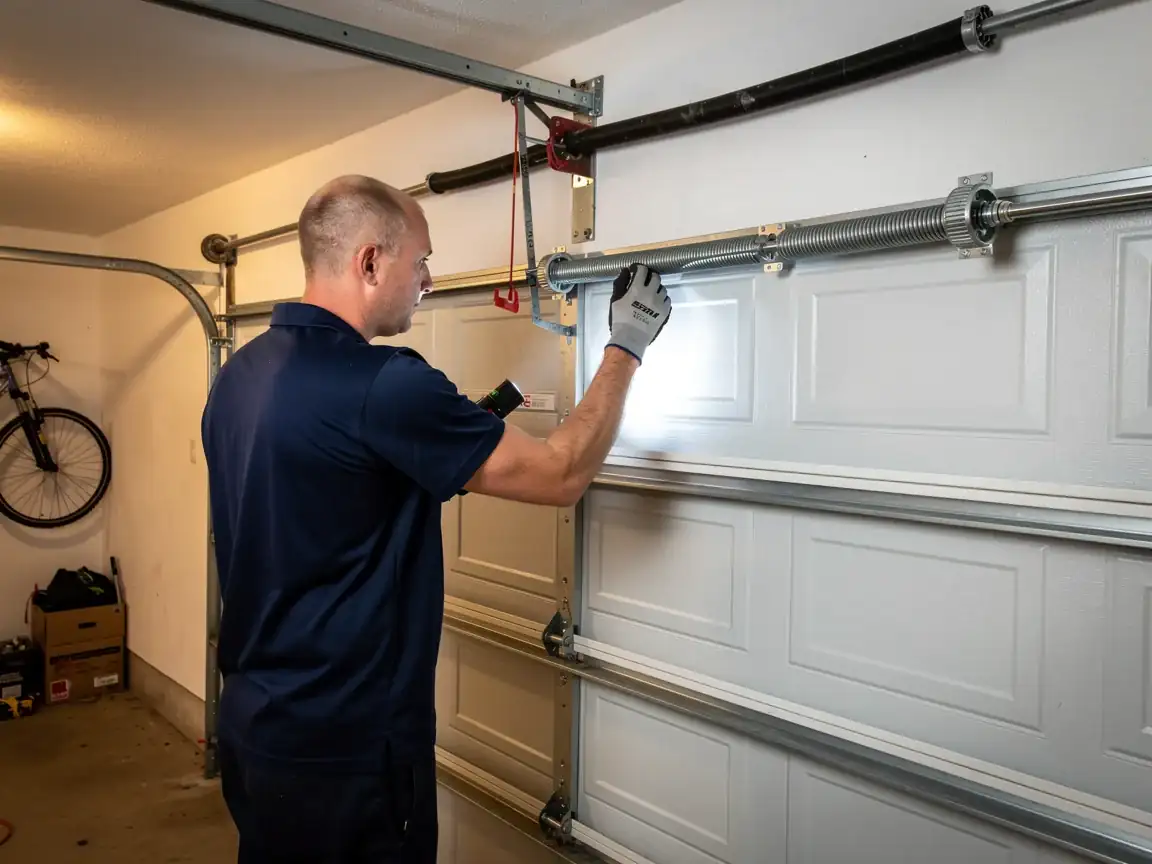
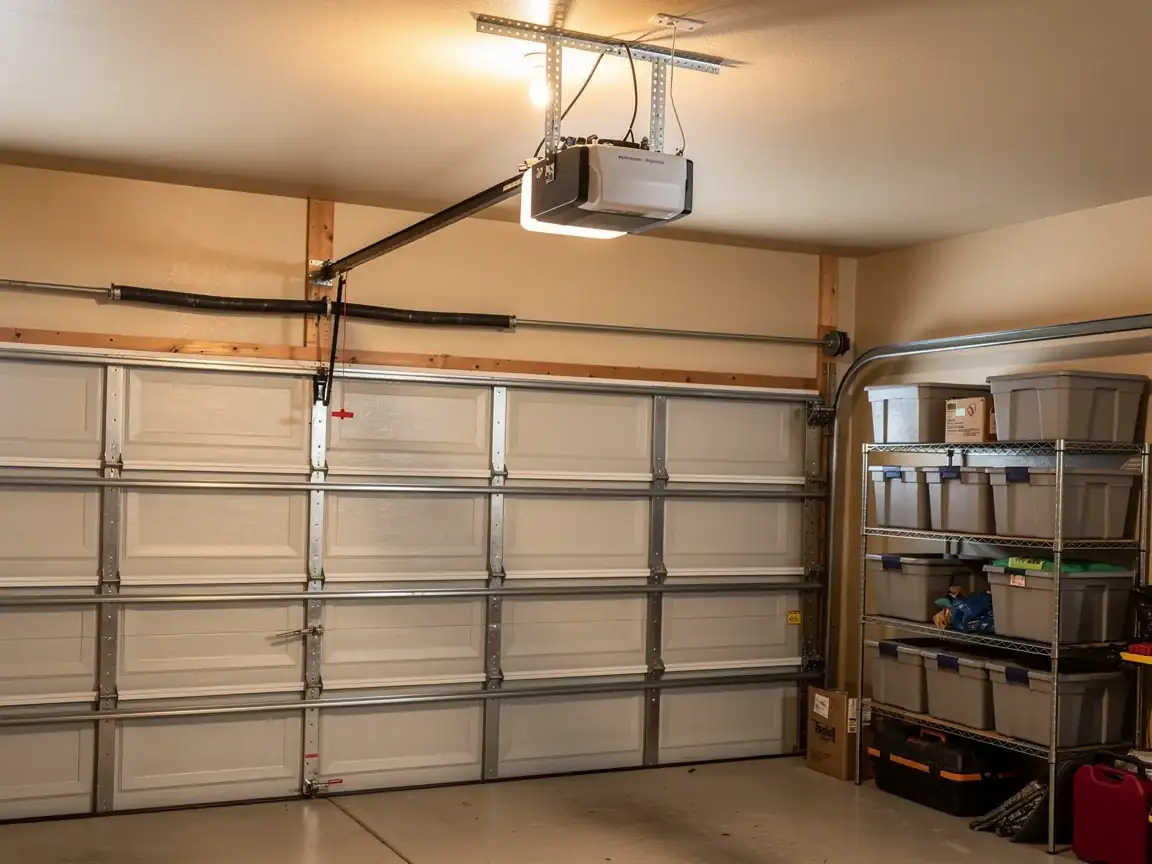
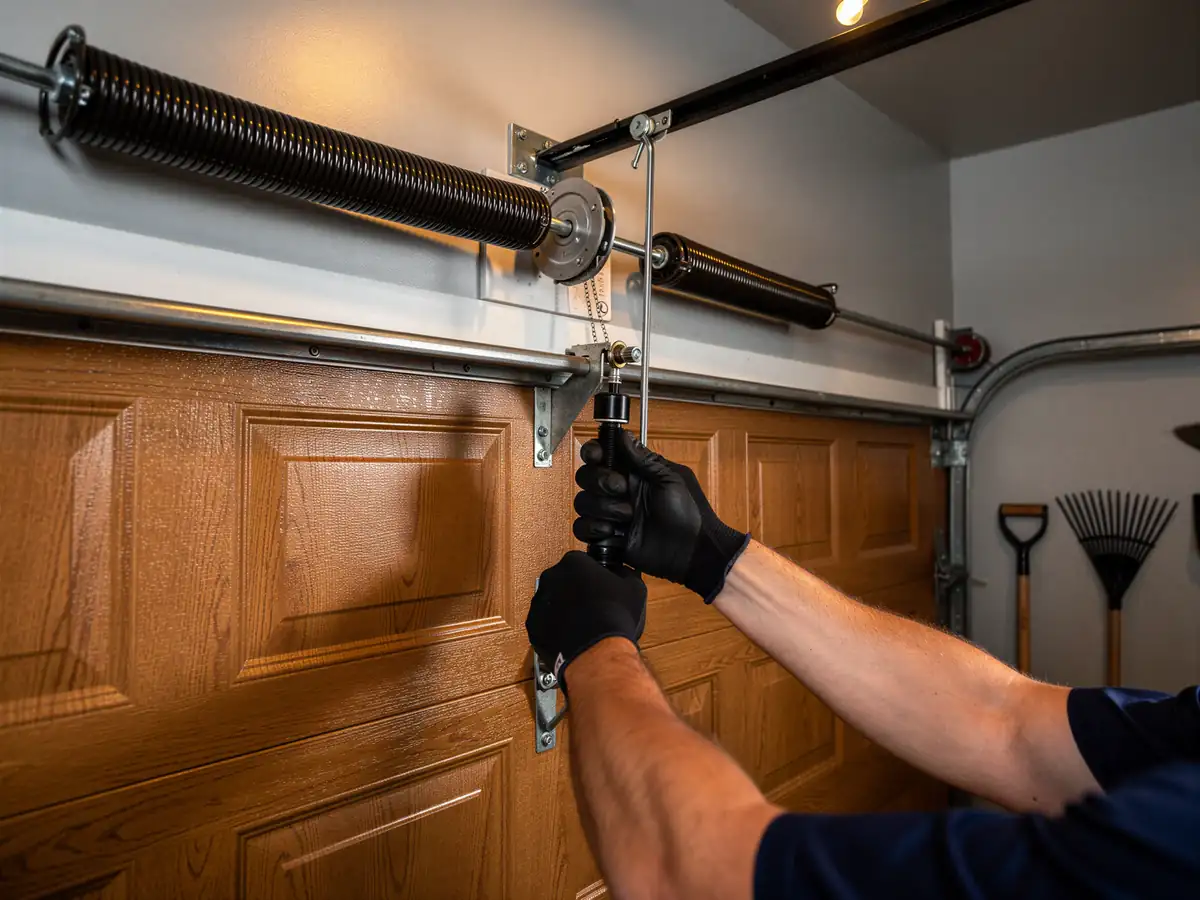
Sometimes there's a loud bang from the garage first - that's a torsion spring letting go, and it usually happens on a cold morning when the metal is stiff and under full tension. Other times the opener runs but the door doesn't move, which points to a stripped gear or a cable that's jumped the drum.
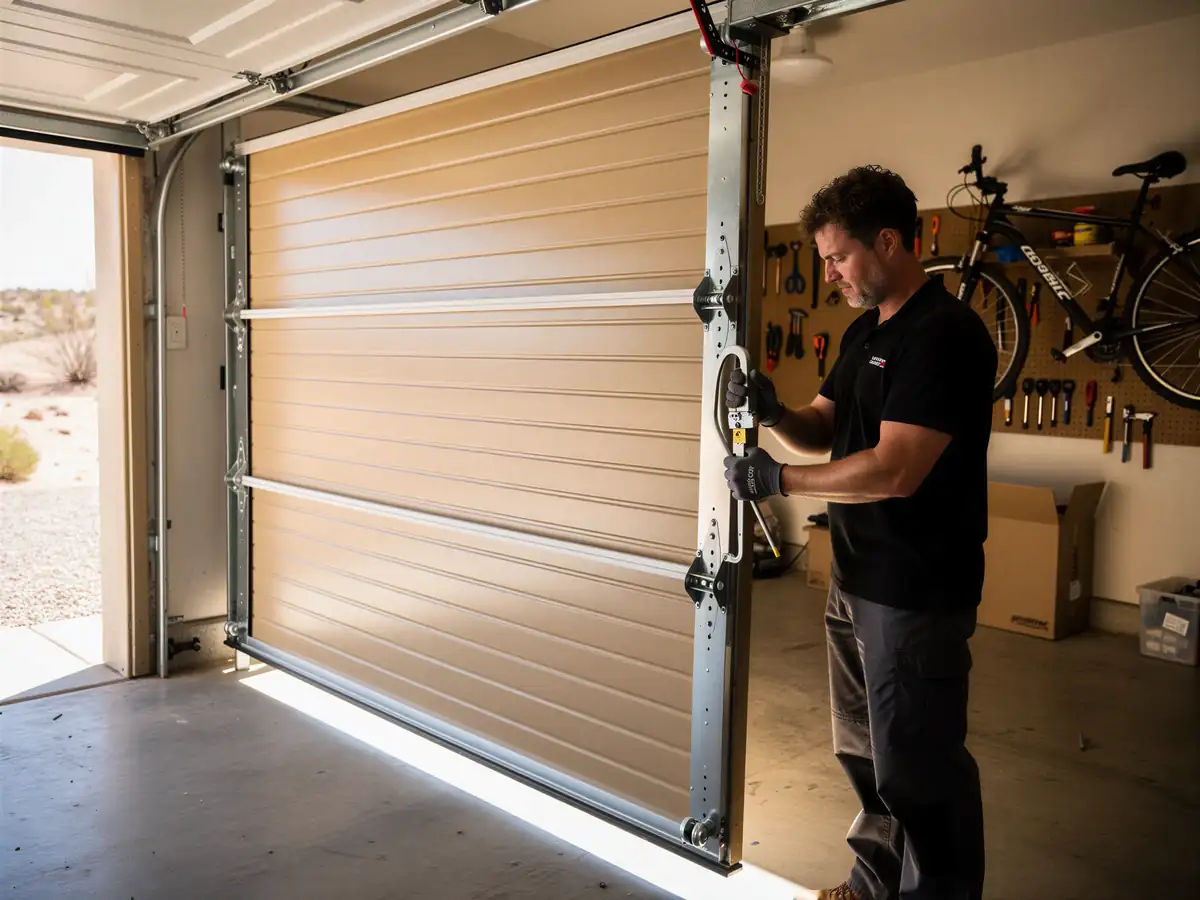
You might also notice the door sagging on one side, rollers grinding in the track
Or the opener motor straining and reversing itself partway up. On older steel sectional doors, panels can start to bow where the hardware has worked loose over the years.
None of these are cosmetic
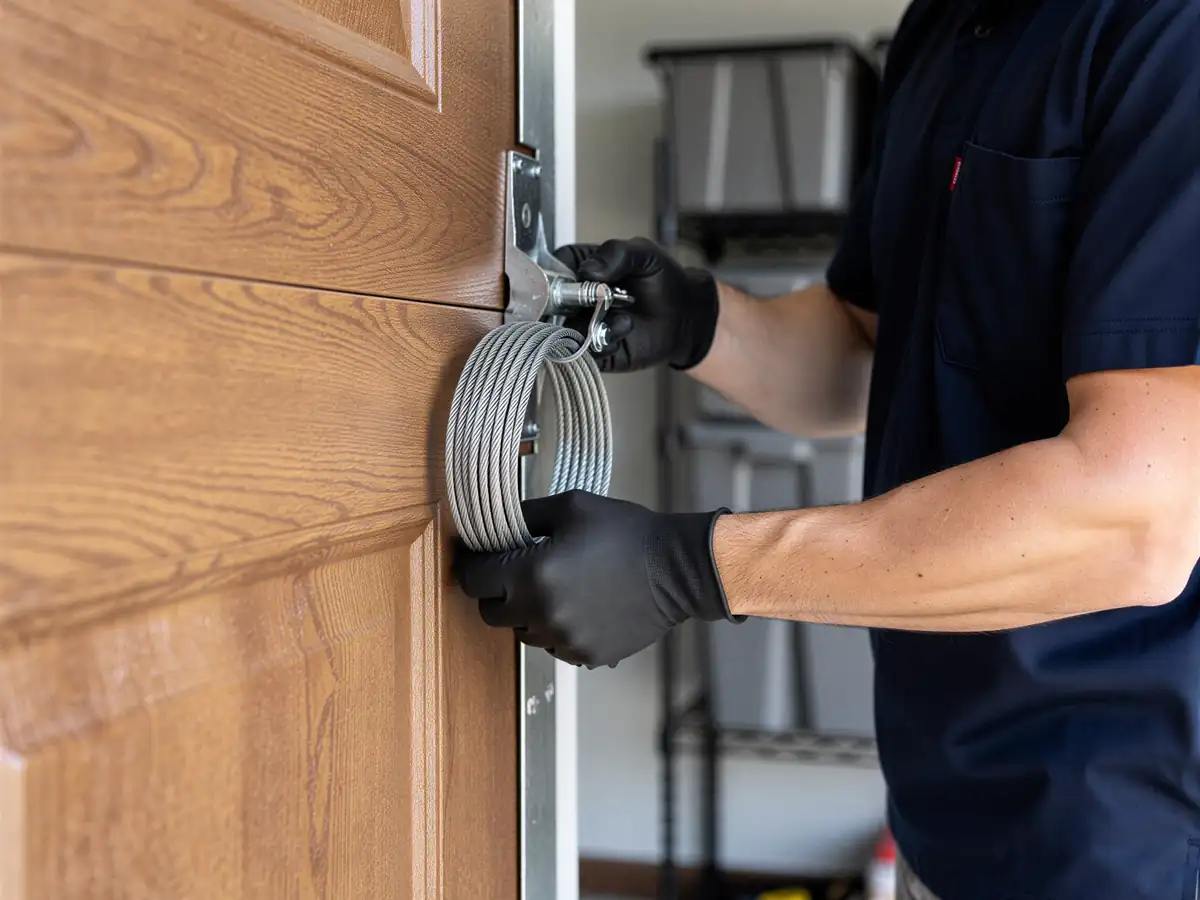
A spring under tension that's about to fail, or a cable fraying at the drum, can put real force behind a door that weighs more than most people think. If the door is making noise it didn't make last month, or it's stopped halfway and won't go further, that's the door telling you something broke, not something that's about to wear in.
What It Costs
We're not going to list a number here that doesn't match what's actually wrong with your door - every job depends on what broke and what it takes to fix it right. A single torsion spring replacement is a different job from replacing both springs on a double-wide door, and an opener that needs a new logic board costs less than one that needs full replacement.
What we can tell you is what drives the cost: whether it's a repair or a replacement, whether parts are standard sizes still in production or an older size that takes longer to source, and whether the opener itself is original to the house. On homes built in the Santa Fe area's main building era - the 1970s through the 1990s - we sometimes find spring sizes and track widths that aren't the current standard, which can add a little time to sourcing the right part.
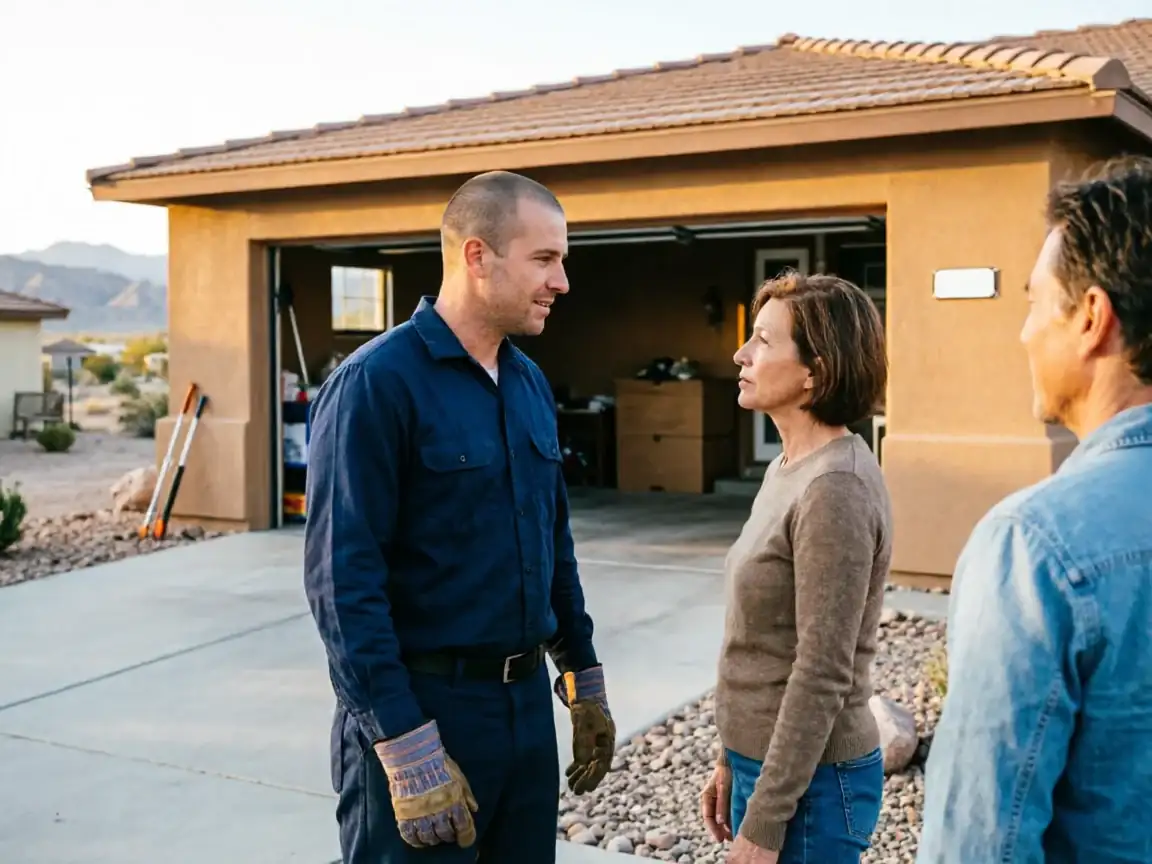
We give you the number before we touch anything, not after. If a repair doesn't make sense against replacing the door or opener outright, we'll say so plainly rather than stack repairs on a door that's past the point of being worth it.
What Causes It Around Here
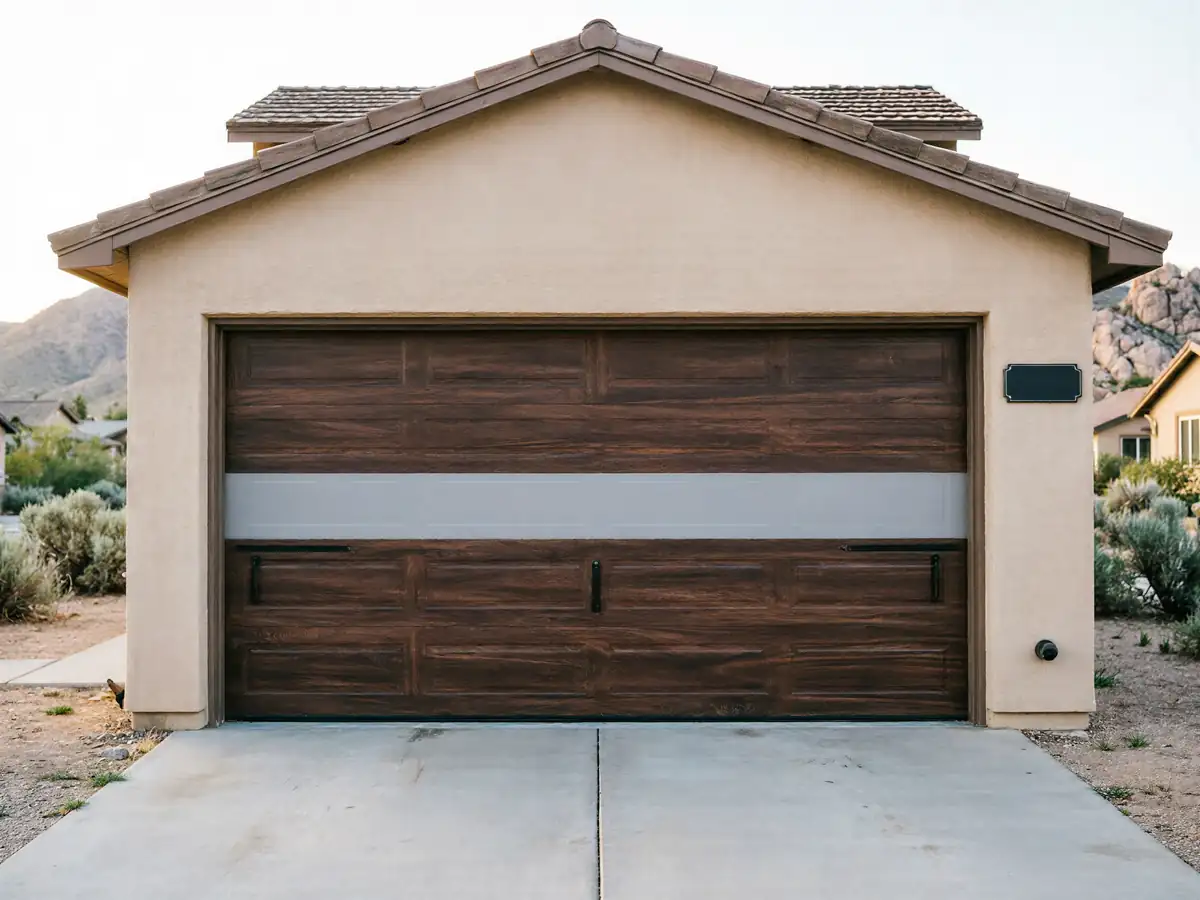
Santa Fe's housing stock mostly went up between 1973 and 1999, with a median build year around 1990, and that pattern holds across the thirteen named areas we work in - from Agua Fria and Arroyo Hondo close in, out to Tesuque, La Cienega, and further. A door and opener installed when a house was built in that window is now anywhere from twenty-five to fifty years old, which is well past the service life of the torsion spring, the rollers, and often the opener's drive gear.
The climate does the rest of the work. Santa Fe sits in a severe cold climate band, and cold is hard on garage door hardware in a specific way: grease in the springs and rollers thickens and stops cushioning the metal, steel contracts and tightens tolerances in the track, and a spring that's already near the end of its rated cycle count is more likely to snap on a cold morning than a mild afternoon. That's why we see a spike in spring failures and opener strain calls when temperatures drop hard overnight.
Put those two things together - 1980s-and-90s-era hardware, plus a climate that stresses metal - and you get the pattern we see across Santa Fe: original torsion springs failing, original openers burning out, and tracks that have gone slightly out of true after decades of thermal cycling.
How We Fix It
We start by finding the actual failure, not just the symptom
If a spring has broken, we check whether the other one is close behind - springs are rated for a number of cycles, and if one has gone, the matching spring on the same door is usually most of the way there too. We replace to the correct size and tension for your door's weight, not a generic stock size.
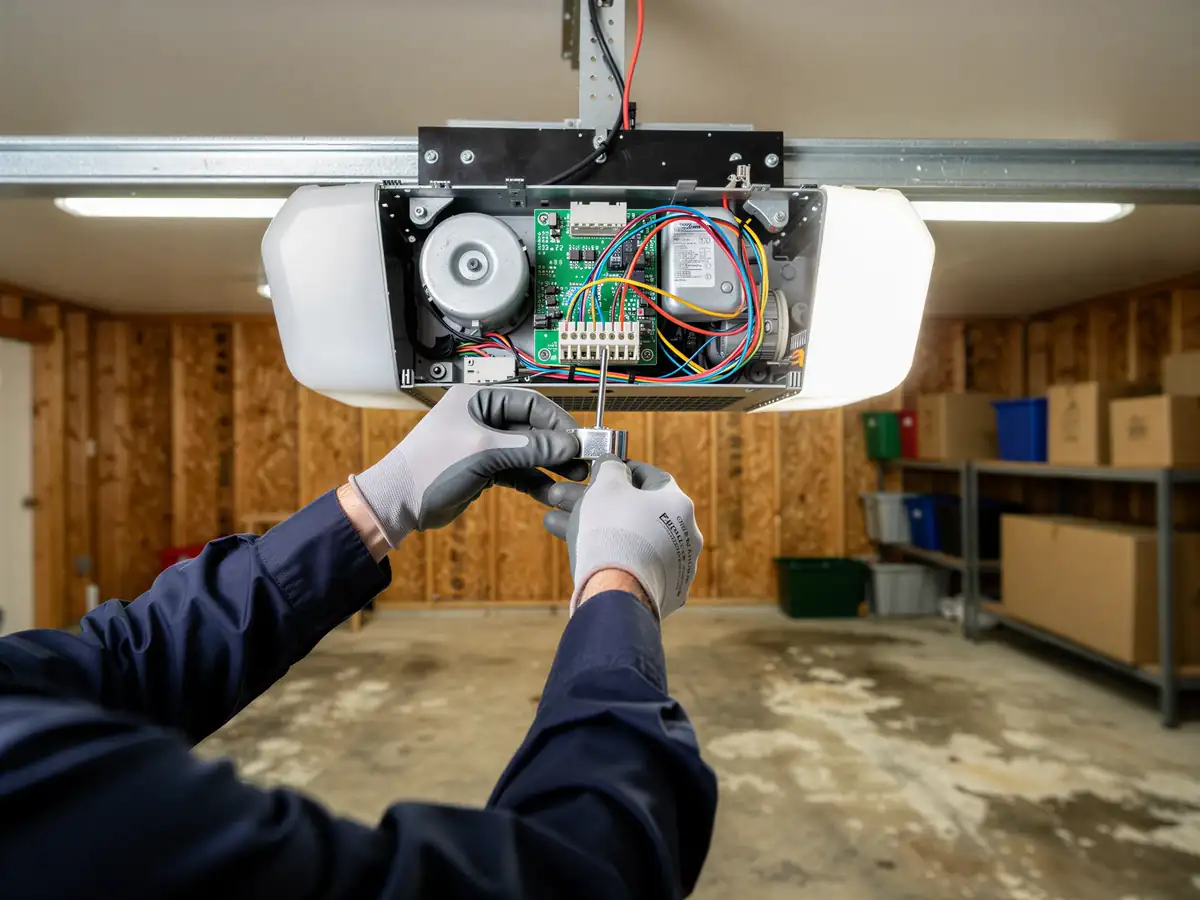
For opener problems, we test the logic board, the gear, and the sensors before assuming the whole unit needs to go
A motor that's straining but not dead can sometimes run years longer with a gear and belt service instead of a full replacement.
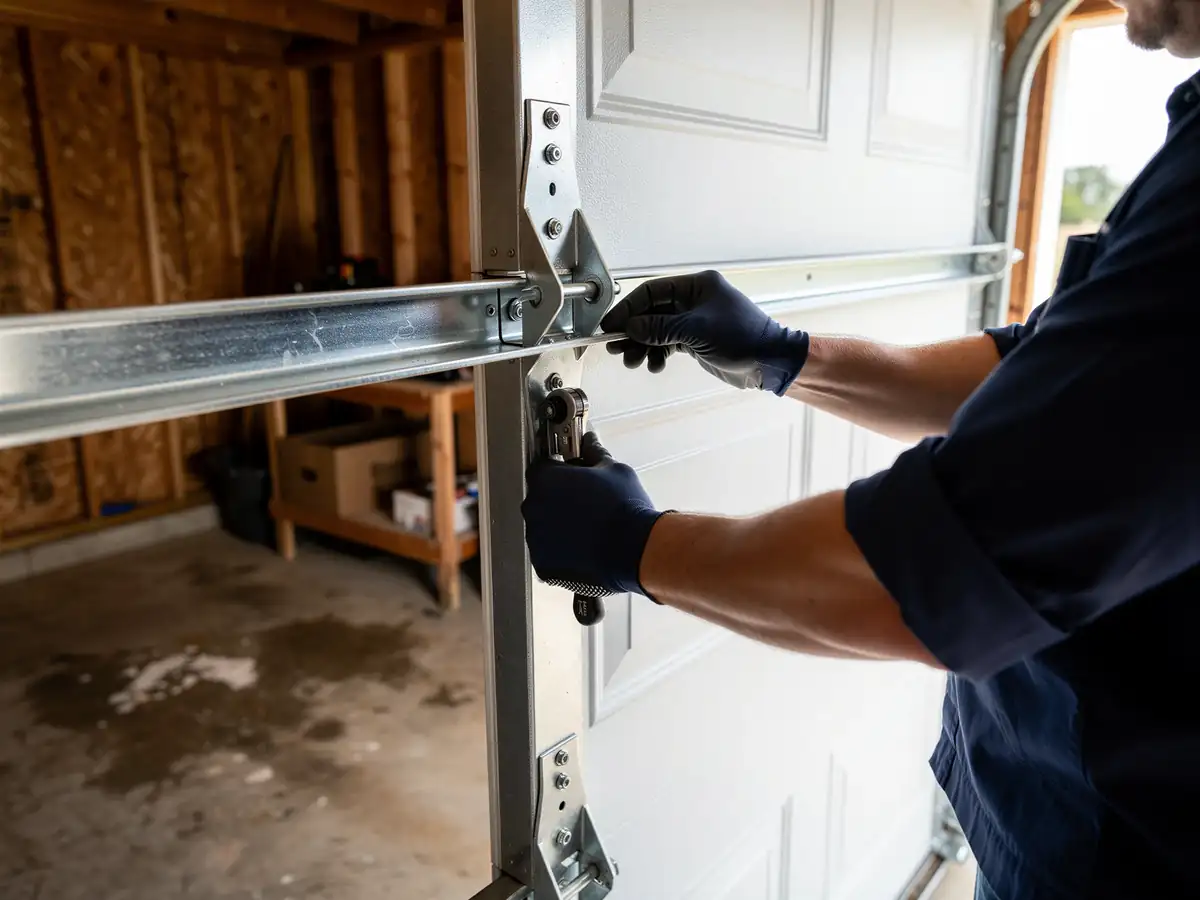
For tracks and rollers, we realign and re-square the track first
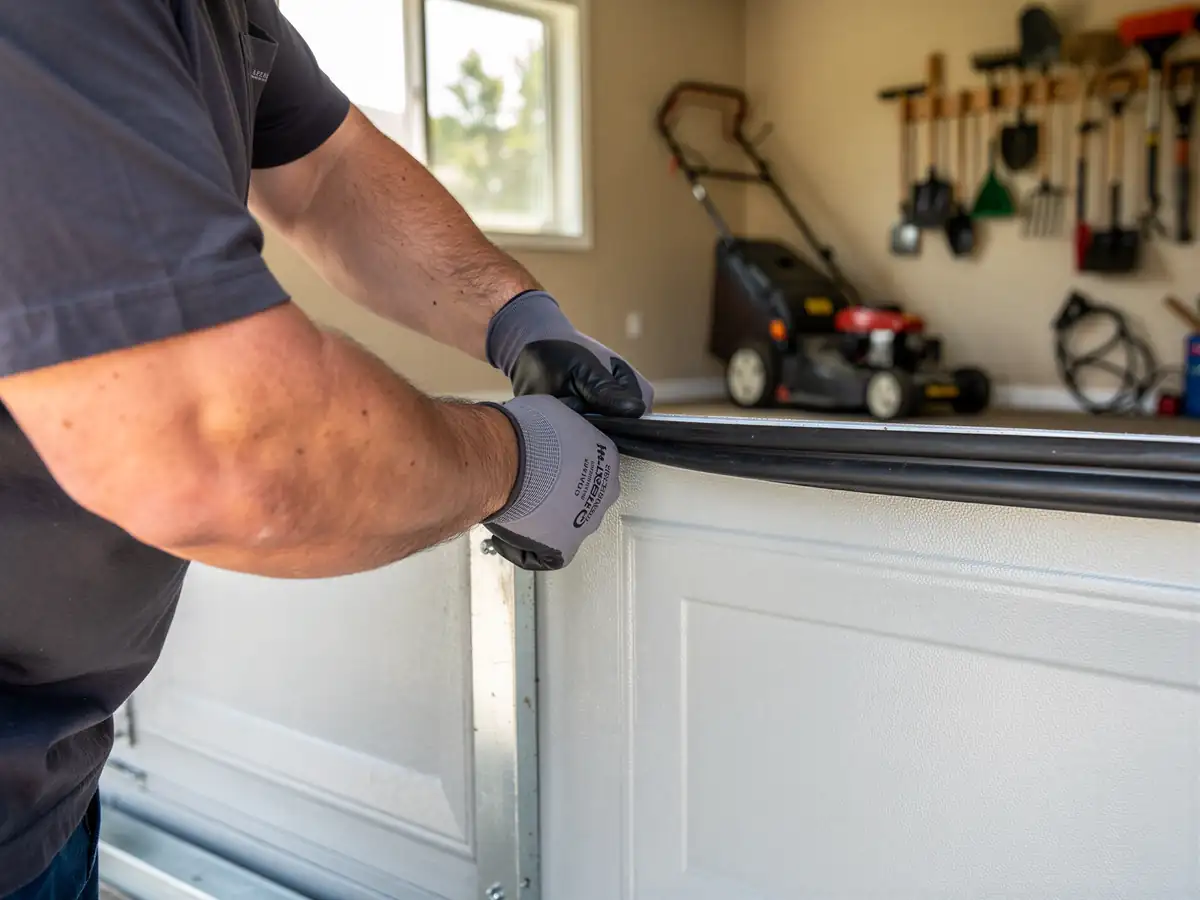
On older homes this is often enough to stop the grinding and the partial-open problem without replacing hardware. If the rollers themselves are worn past that, we swap them for sealed units that hold up better through repeated cold cycling than the originals.
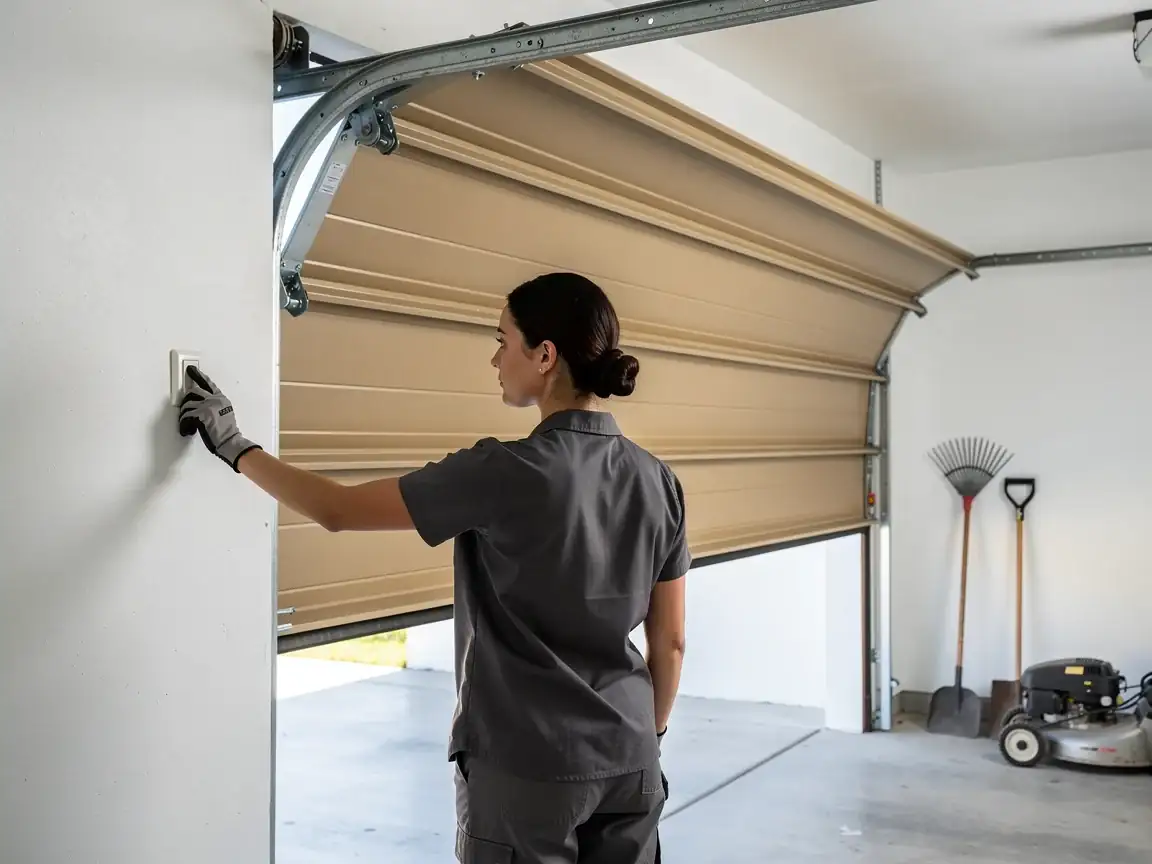
We test the full open-close cycle under load before we call a job done
Including the auto-reverse safety function, since that's one piece of a garage door we won't leave unchecked. More on how we work is on our home page.