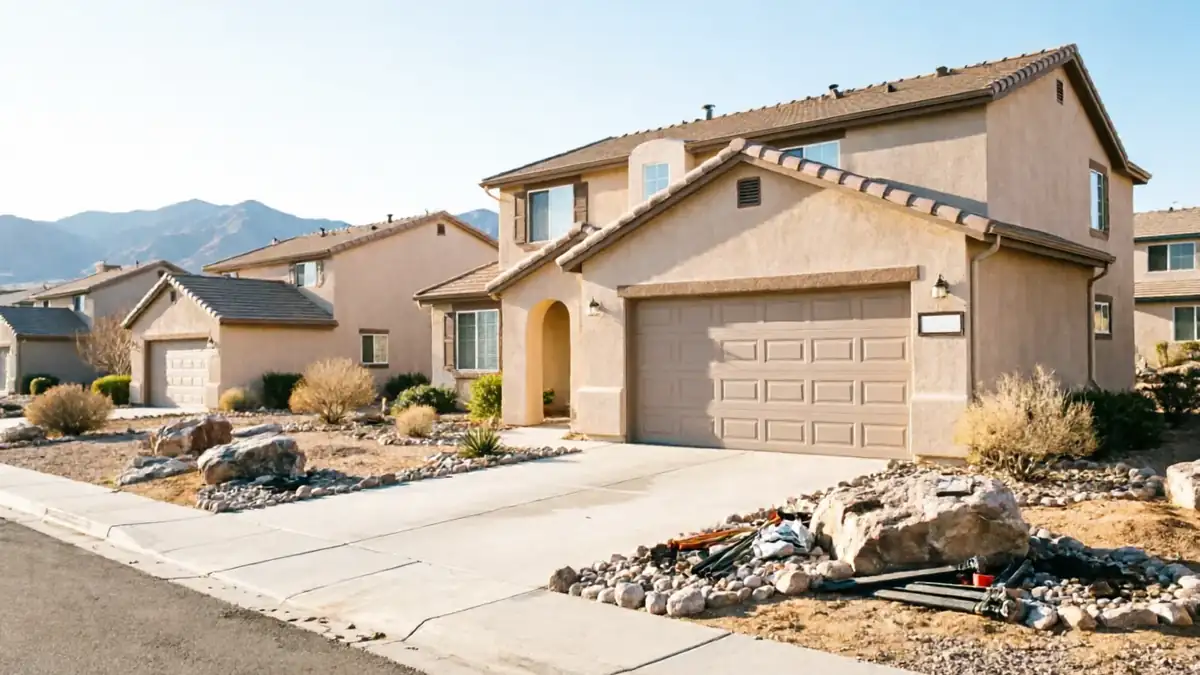
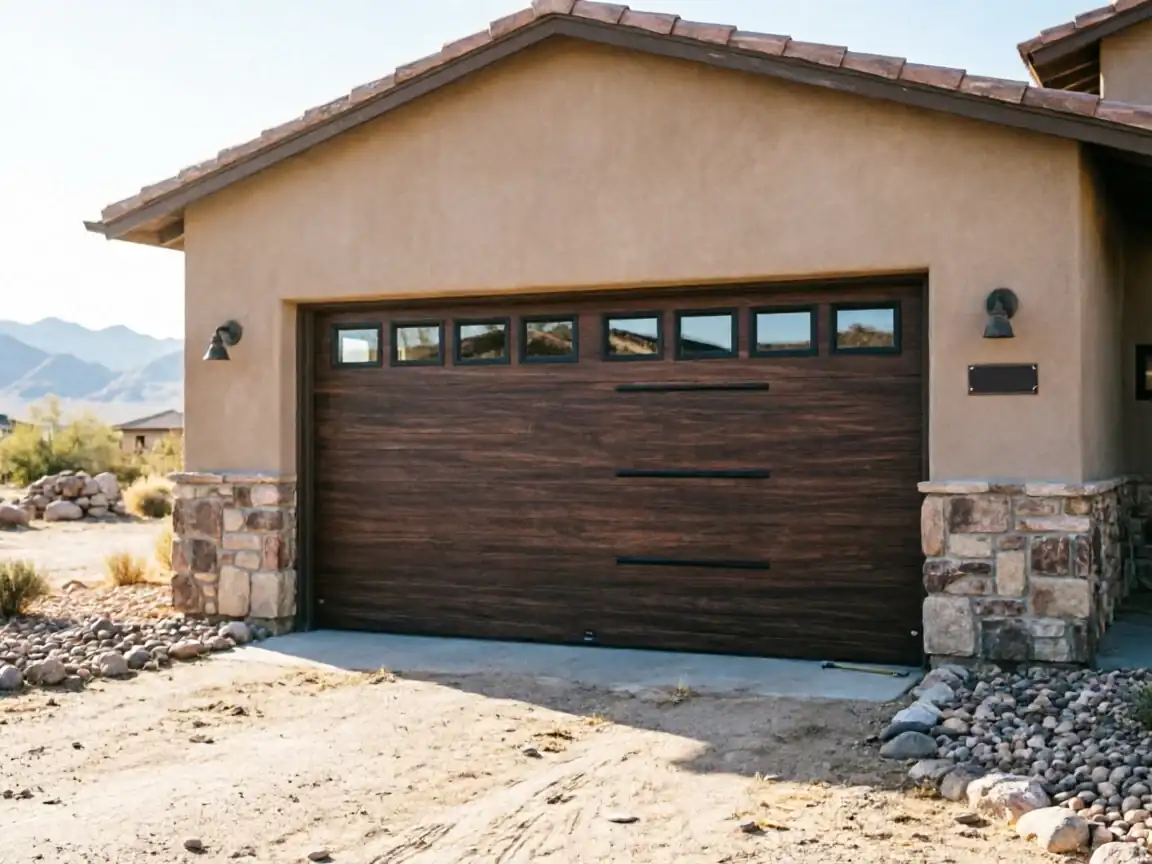
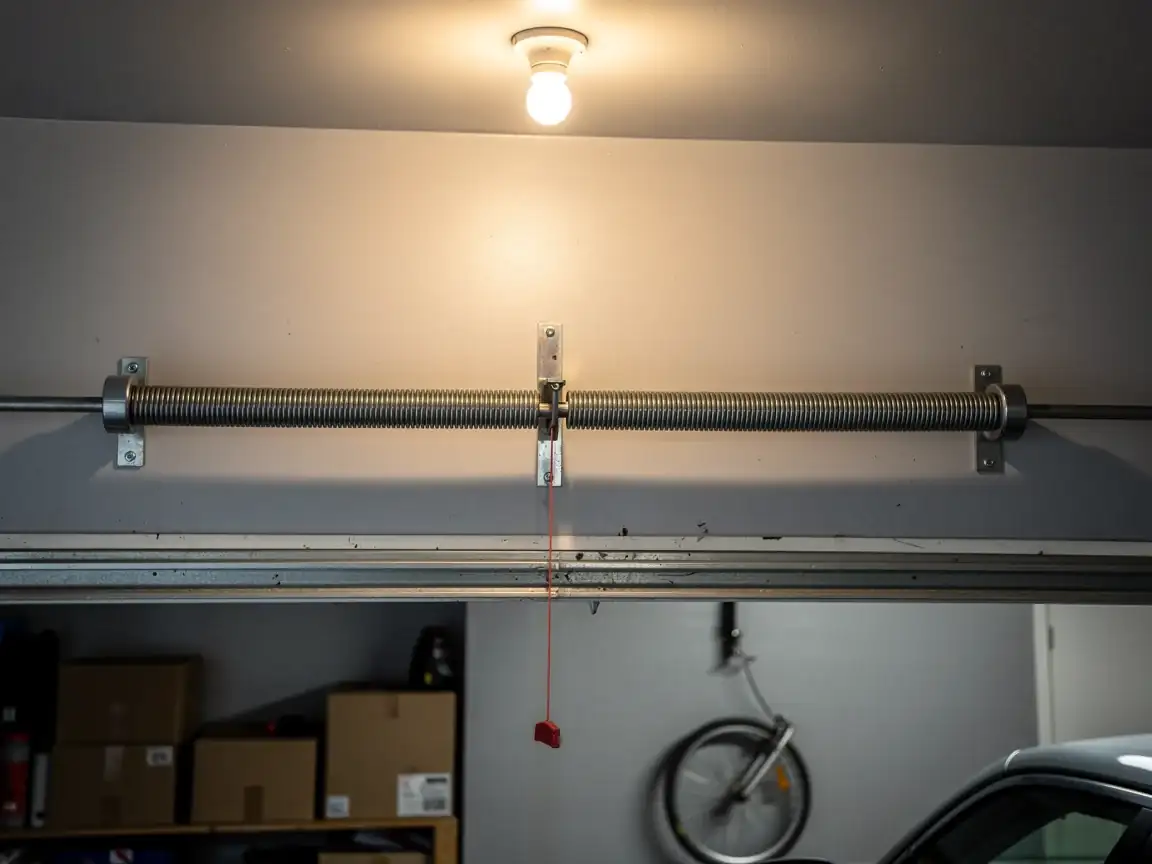
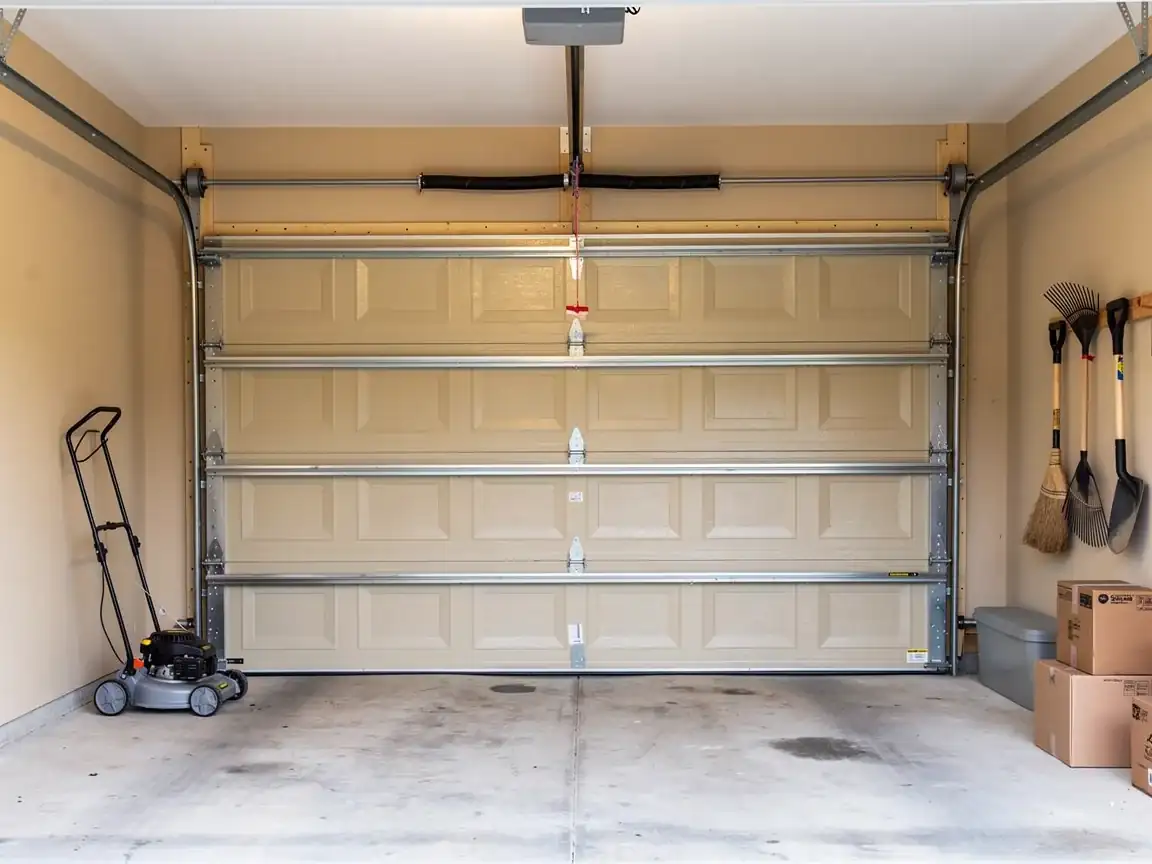
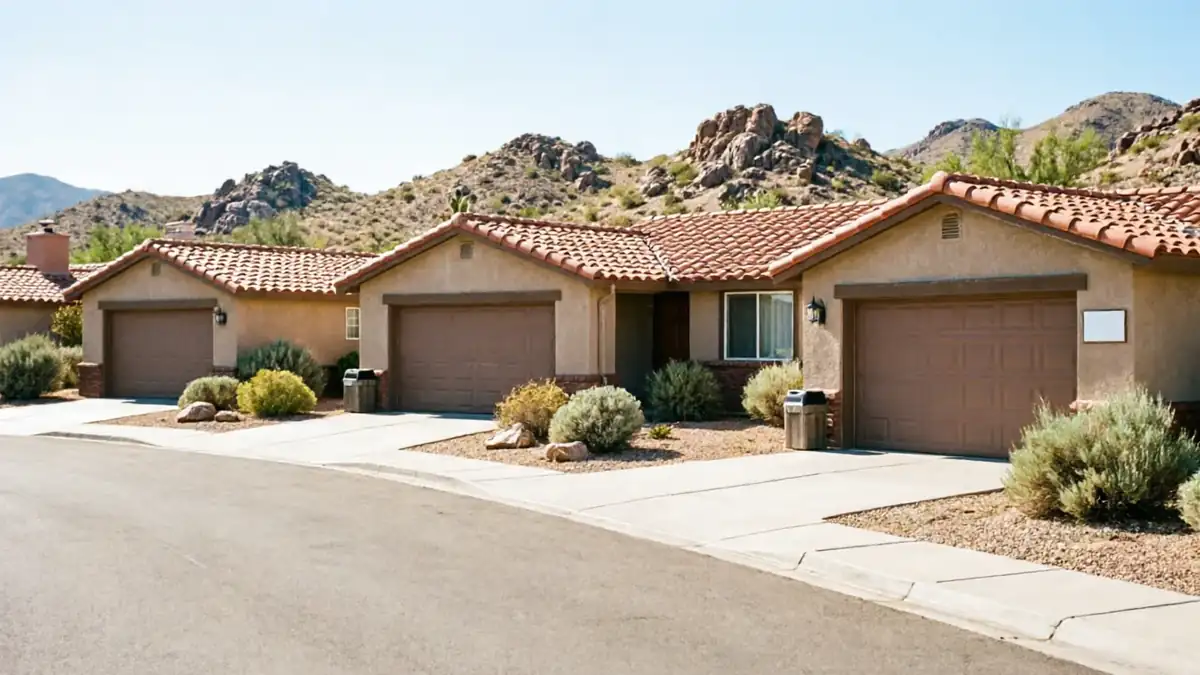
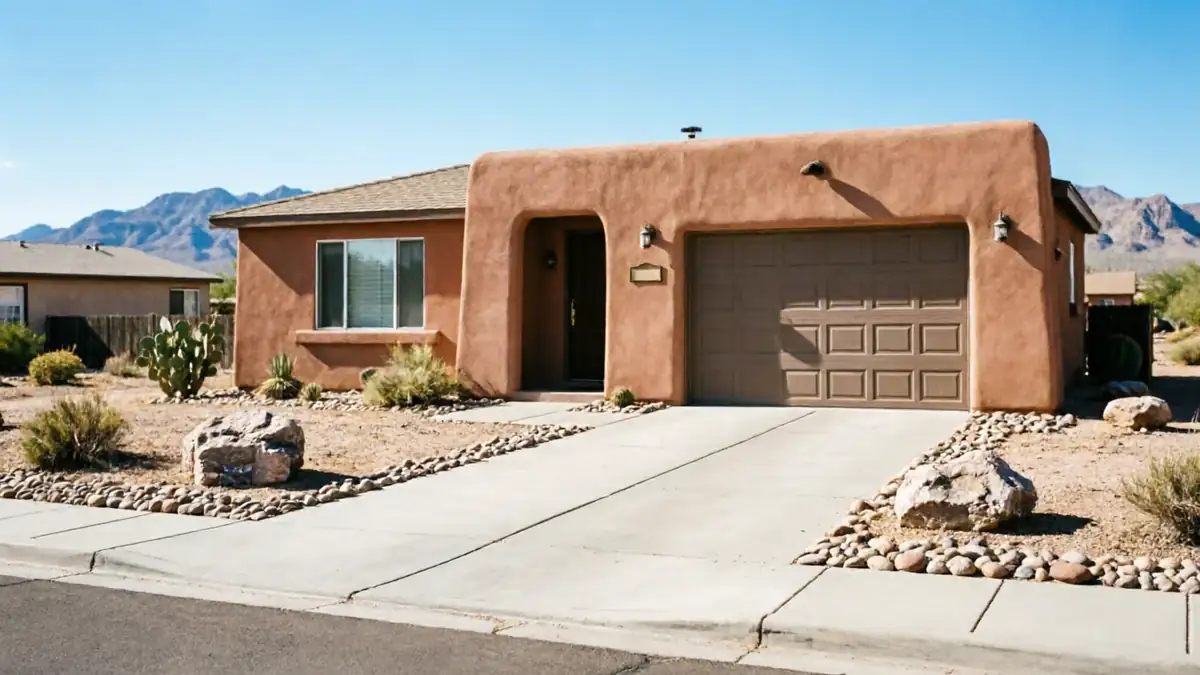
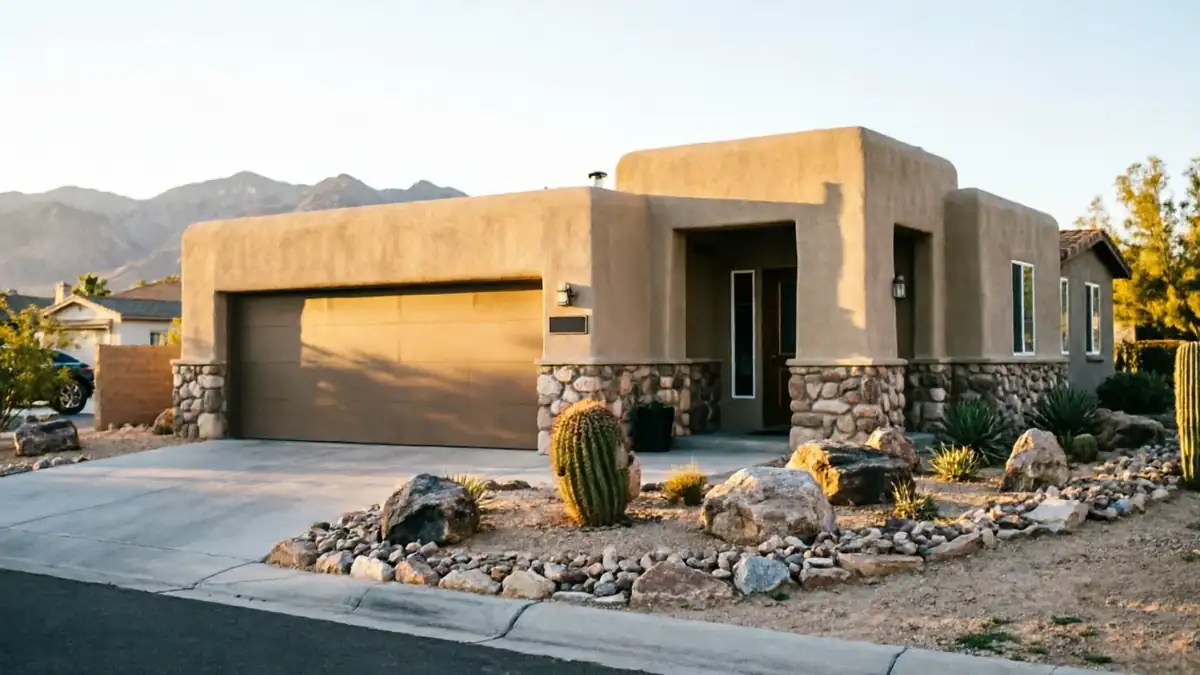
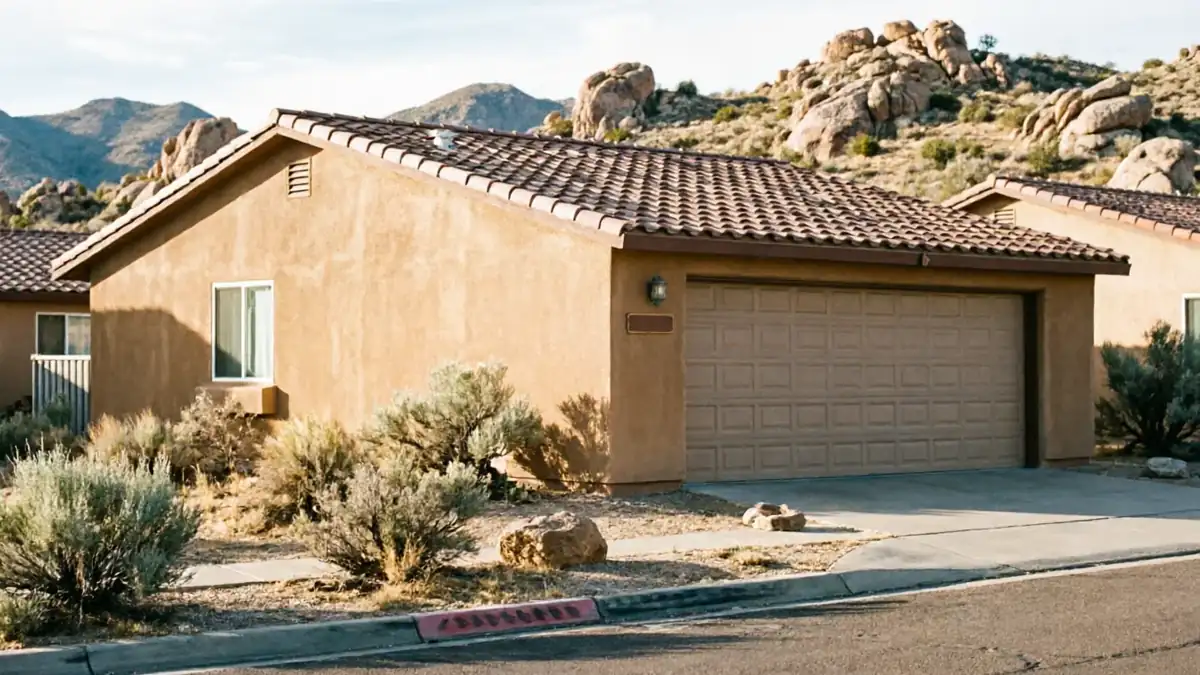
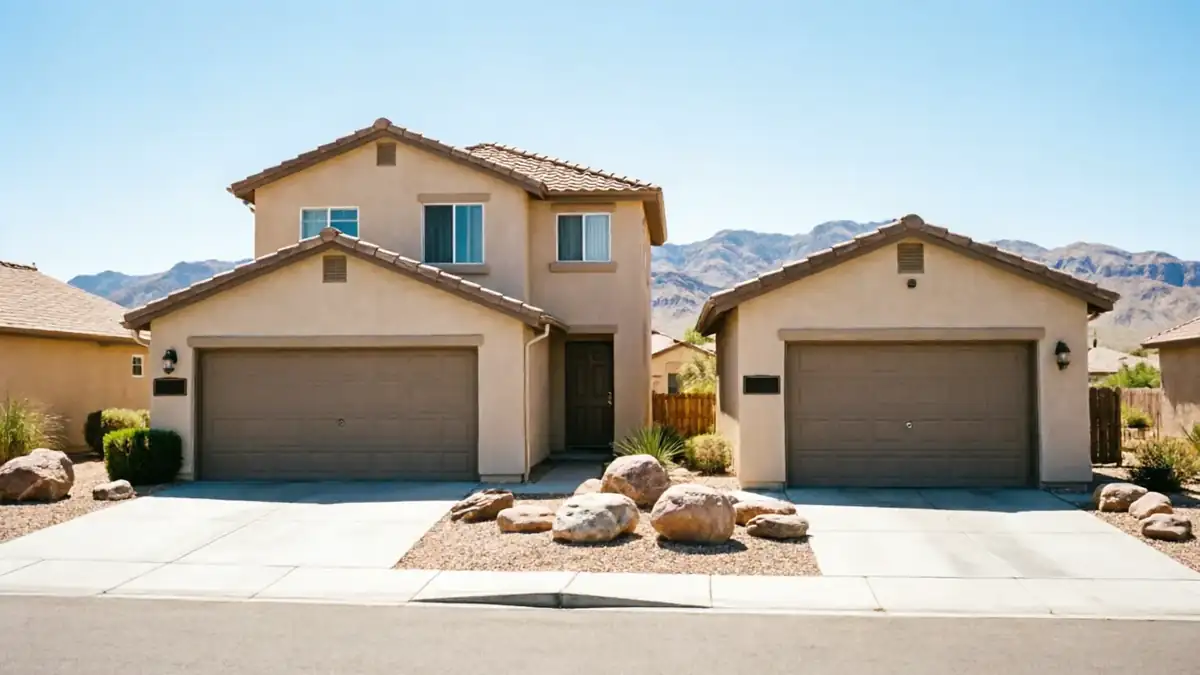
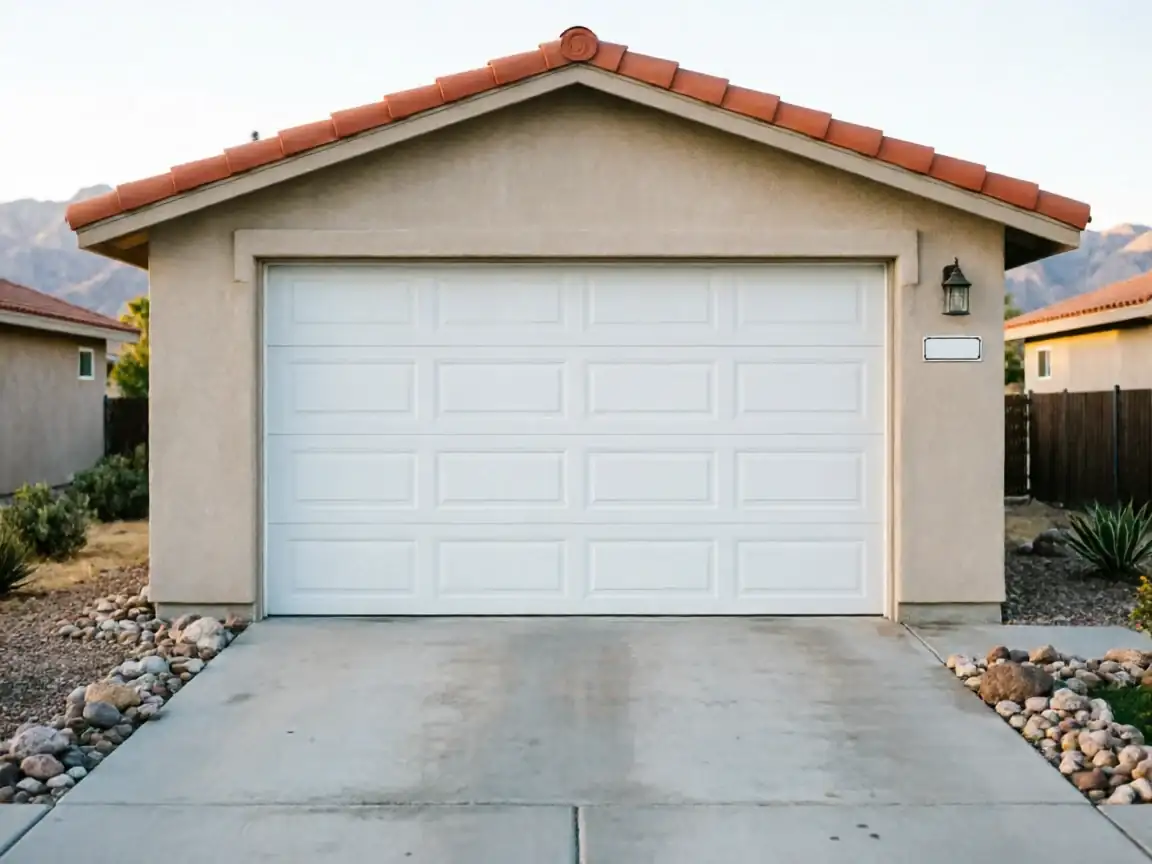
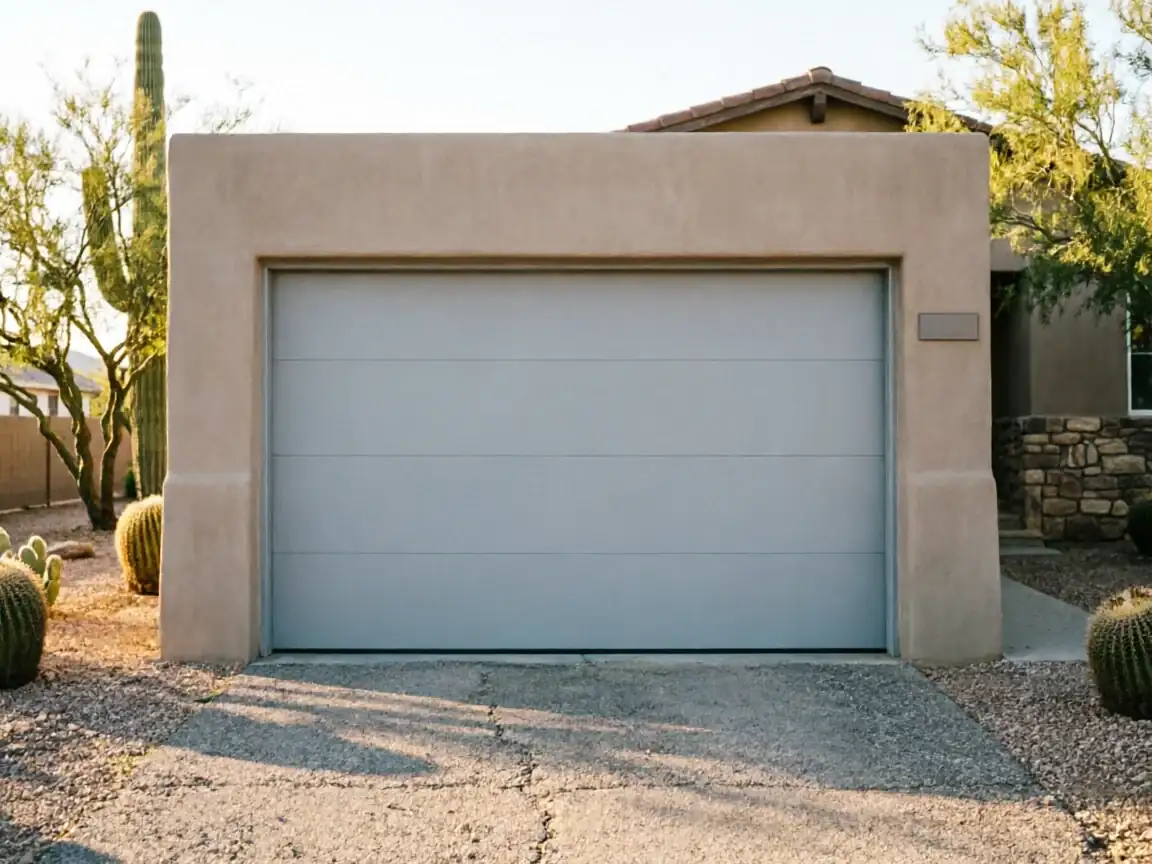
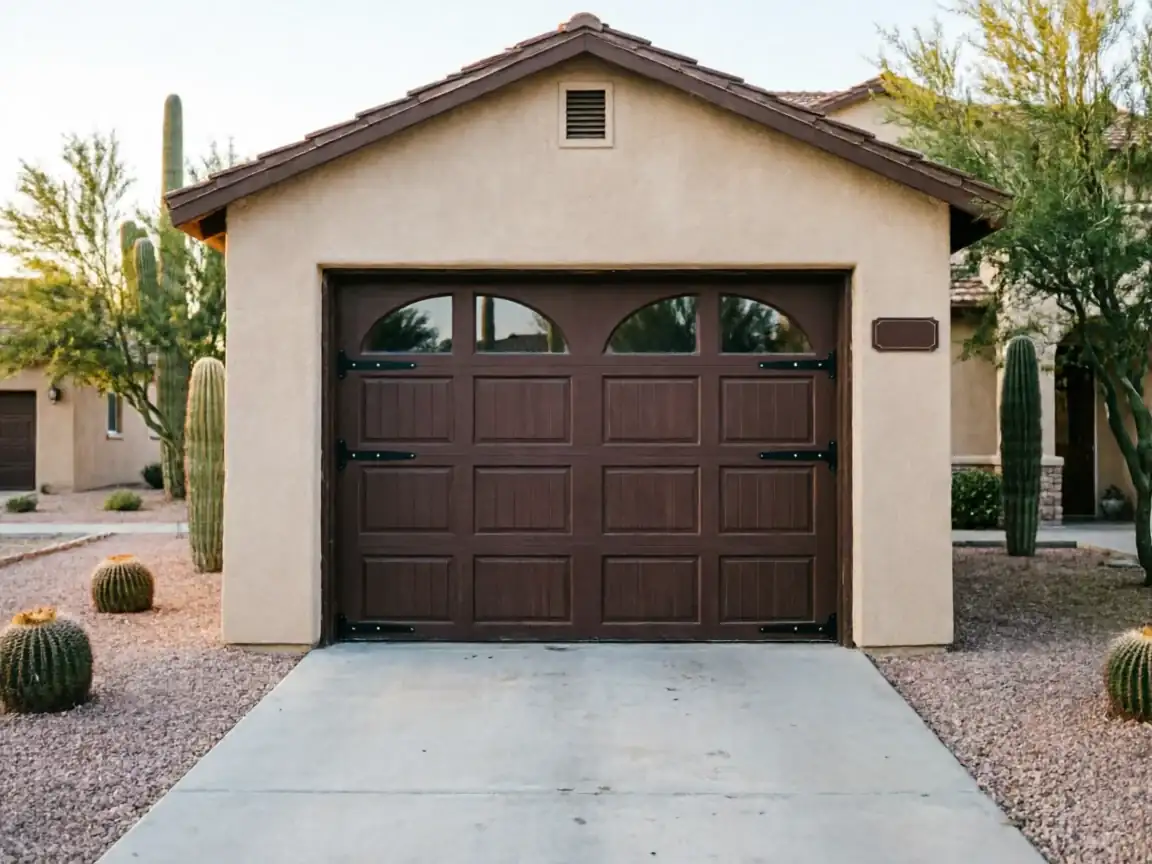
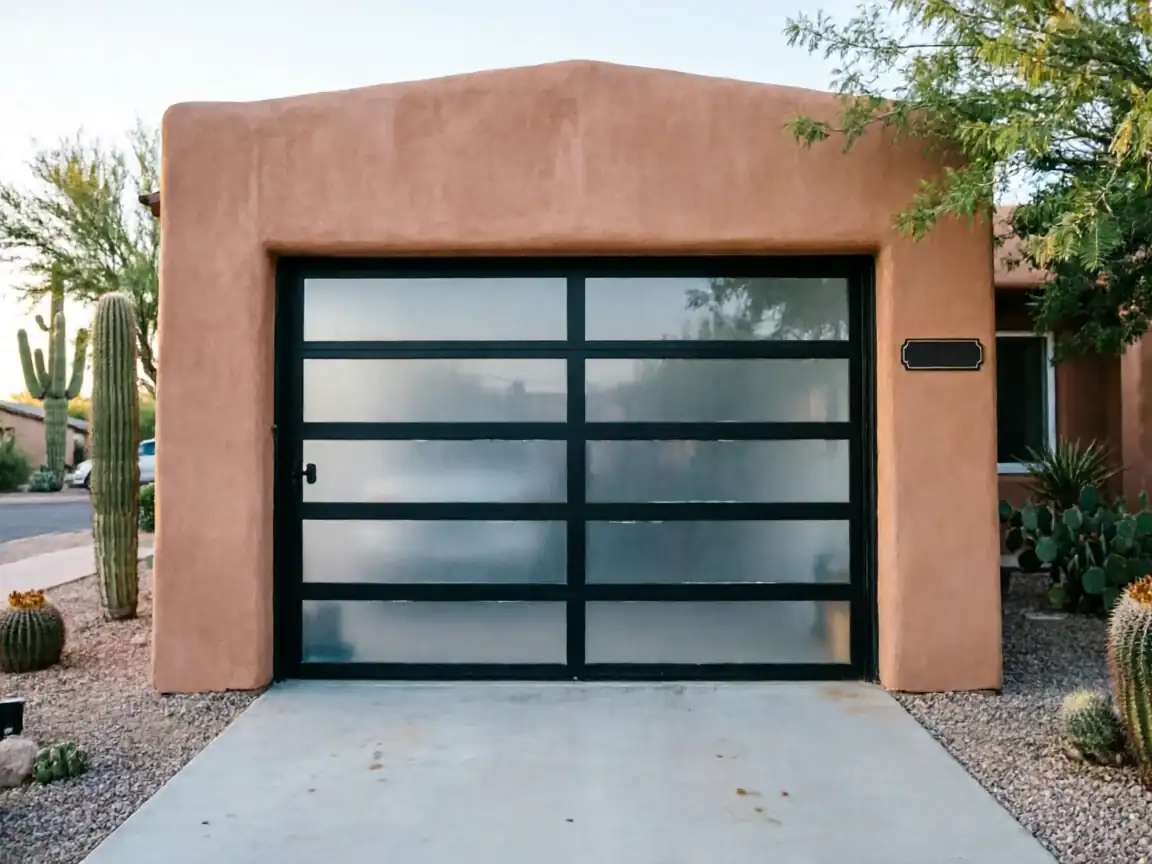
Eldorado at Santa Fe skews newer than a lot of the areas we cover out of Santa Fe. The median year built here is 1993, which puts most garage doors and openers on a different generation of hardware than what you'd find in the older pockets closer to the plaza. By the early 1990s, builders had mostly moved to steel sectional doors on extension or torsion spring setups with chain-drive openers - not the older one-piece doors or the barrel-bolt locks you still see in pre-1970s stock elsewhere in the service area. With 2,756 households in this community, that 1993 build year isn't an outlier, it's the norm, so when we quote a job here we're usually looking at 30-year-old factory openers and original torsion springs that have never been swapped, not Frankenstein'd hardware from three different decades. That consistency actually makes diagnosis faster. We know roughly what we're dealing with before we pull up: a door and track system designed around early-90s spring tension charts, openers nearing or past the end of their realistic service life, and rollers that were steel, not nylon, because that's what shipped standard back then.
Common Jobs Here
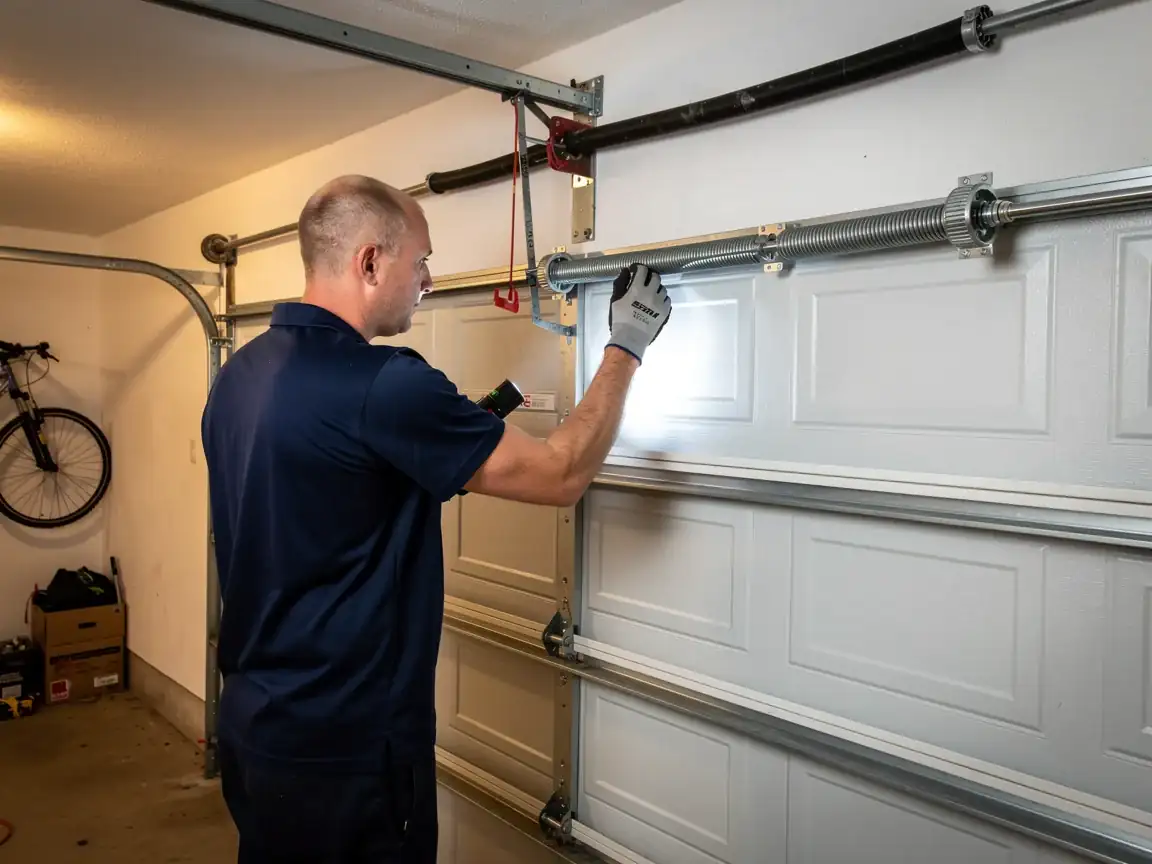
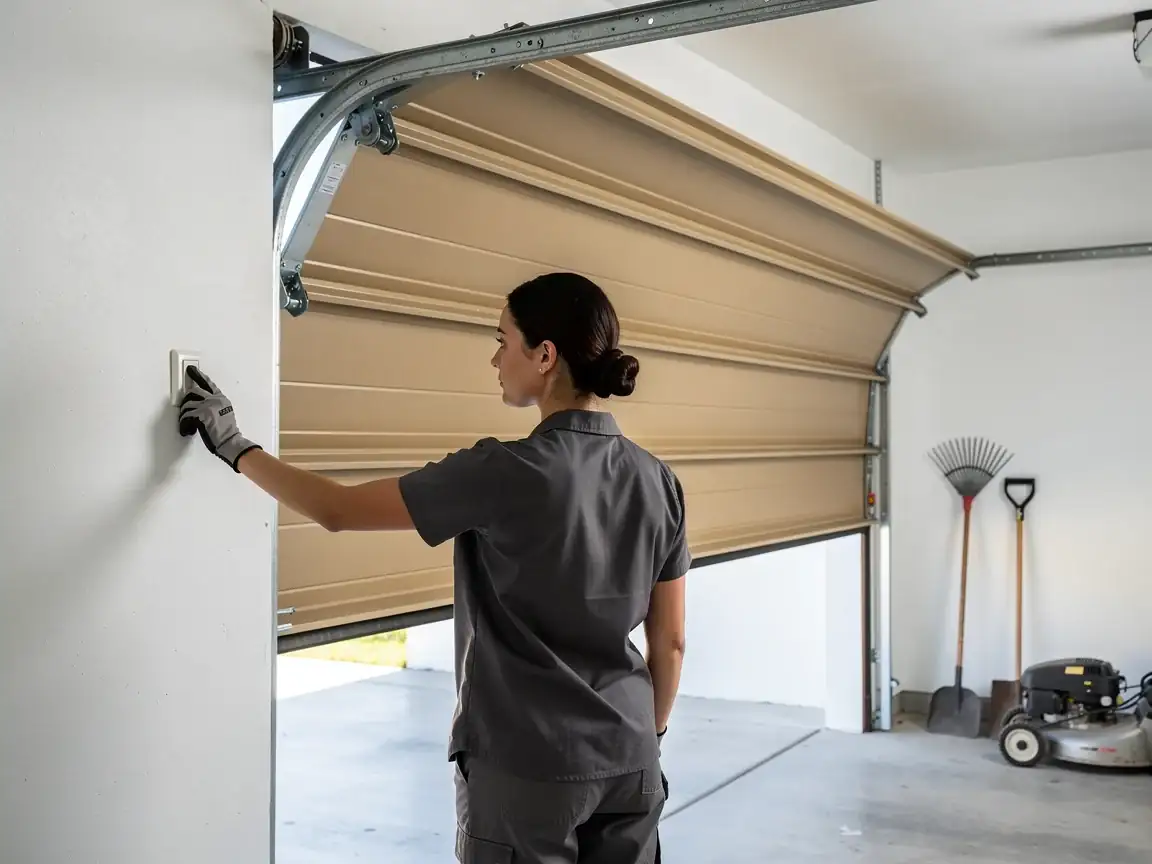
The calls we get from Eldorado at Santa Fe cluster around end-of-life parts for early-90s doors: torsion springs that have cycled through 25-30 winters and finally let go, chain-drive openers with worn gear sprockets or dead logic boards, and steel rollers that have ground their way through the track lining. We also see a fair number of opener replacements where the homeowner wants a belt-drive or a modern safety-sensor setup to bring a 30-year-old system up to current standards. Panel damage shows up less often here than in older neighborhoods, since the doors themselves tend to be in decent shape structurally - it's the moving parts and the motor that give out first on a house this age. One honest limitation: if a part is truly obsolete - some early-90s opener logic boards aren't made anymore - replacement is often the more sensible move than chasing a part that may take weeks to source. We'll tell you straight if that's where your job is headed instead of running up a bill trying to patch something that's done.
When We Can Get There
We run out of Santa Fe, and Eldorado at Santa Fe sits about 10 miles out. We don't keep a separate crew or depot in this area - every job here is a drive from the shop, so we schedule around that distance rather than pretending we're already around the corner. It doesn't change the work once we're on site, but it's worth knowing up front if you're comparing us to someone based closer in.
What the Housing Means for Your Door
Household income in Eldorado at Santa Fe runs noticeably higher than the broader service area - $96,692 here versus $68,432 across the wider footprint we cover. In practice that shows up less in what breaks and more in what homeowners choose to do about it: more requests for insulated steel doors, quieter belt-drive openers, and full torsion spring and cable replacement rather than a patch job meant to squeeze another year out of original 1990s hardware. The winters here are cold and severe enough that an uninsulated 30-year-old door is doing noticeably less for the garage, and for the attached wall, than a new one would. None of that means every door here needs replacing - plenty of these doors are structurally fine and just need a spring, a roller set, or an opener swap. But when a homeowner in this area does decide to replace rather than repair, the decision tends to be about comfort and noise as much as about something being broken.
How it works
From “it’s stuck” to “it’s fixed”
01
Tell us what’s wrong
Describe the symptom - won’t open, loud bang, opener runs but the door won’t move.
02
On-site diagnosis
A technician tests the door under power and by hand and finds what actually failed.
03
Clear, up-front plan
You get the fix that’s needed and what drives the cost - before any work starts.
04
Repaired & tested
The repair is done, the door is set true and tested, and the work area left clean.
Not sure which repair your door needs in Santa Fe, NM? Describe what it’s doing - every job starts with a diagnosis.
Why are garage door jobs in Eldorado at Santa Fe different from other parts of the service area?
Most homes here were built around 1993, which is newer than much of the broader service area. That means steel sectional doors on torsion or extension springs with chain-drive openers, not the older one-piece doors or outdated hardware found in pre-1970s housing elsewhere. The failures we see are mostly age-related wear on 30-year-old parts, not structural or design issues.
Do you have a crew based in Eldorado at Santa Fe?
No. We work out of Santa Fe and drive out to Eldorado at Santa Fe, about 10 miles away, for every job. We don't keep a separate depot or crew stationed in the area, so we schedule the trip as part of the job rather than claiming a local presence we don't have.
My opener is original to the house from the early 1990s. Can it be fixed?
Sometimes, but not always. Some logic boards and parts from that era are no longer manufactured, and chasing an obsolete part can take longer and cost more than just replacing the unit. We'll look at what's actually wrong and tell you honestly whether repair or replacement makes more sense for your situation.
Is it worth replacing an old door instead of repairing it?
Depends on the door. If the springs, rollers, or opener are worn but the panels and track are solid, repair usually makes sense. If you're dealing with an old uninsulated door in a cold climate and you're thinking about comfort as well as function, replacement is worth considering, especially on a house pushing 30 years old.
Ready to get your garage door sorted?
Tell us what it’s doing and where you are in Santa Fe - we’ll take it from there.