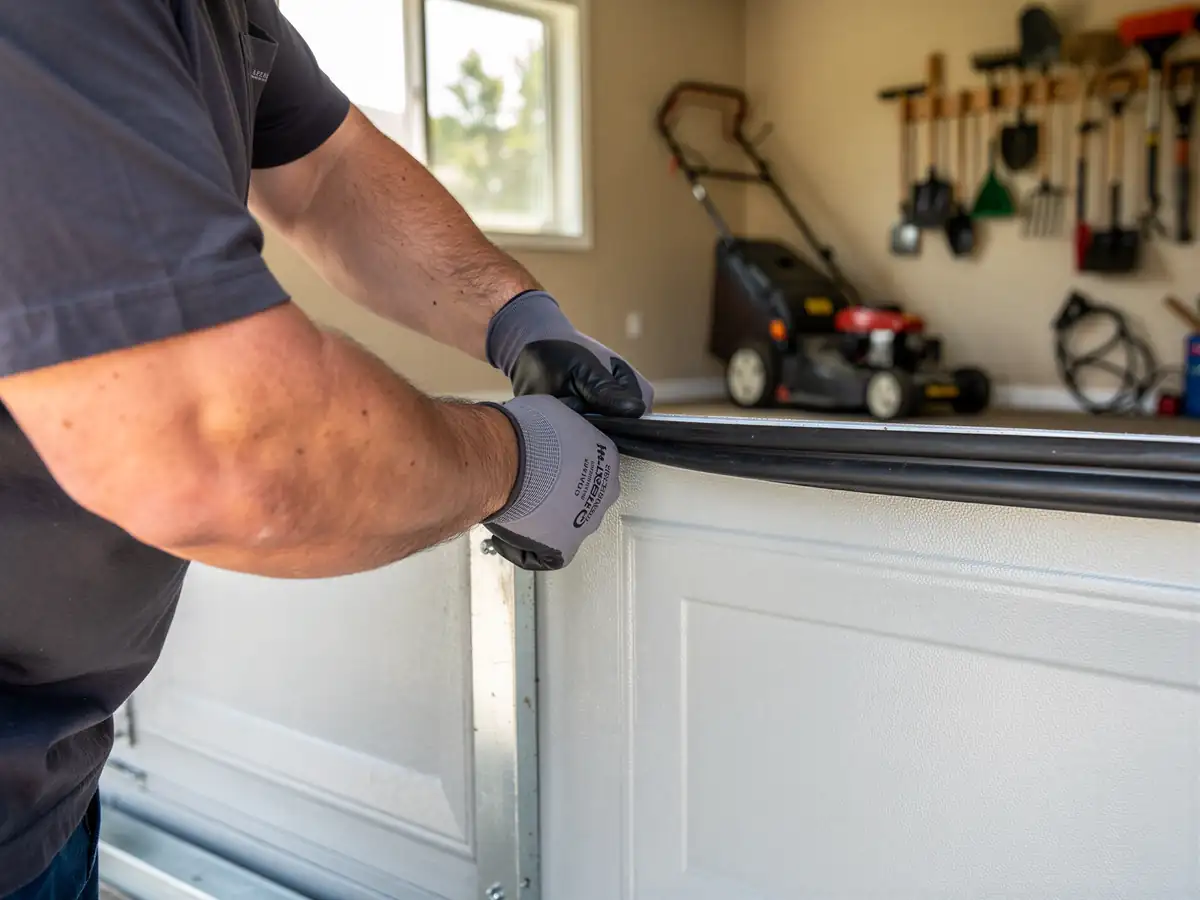
Garage Door Installation for Santa Fe's 1980s and 90s Homes
Santa Fe homes built between 1973 and 1999 carry original hardware built for a different climate load. Here's what installation looks like for this housing stock.
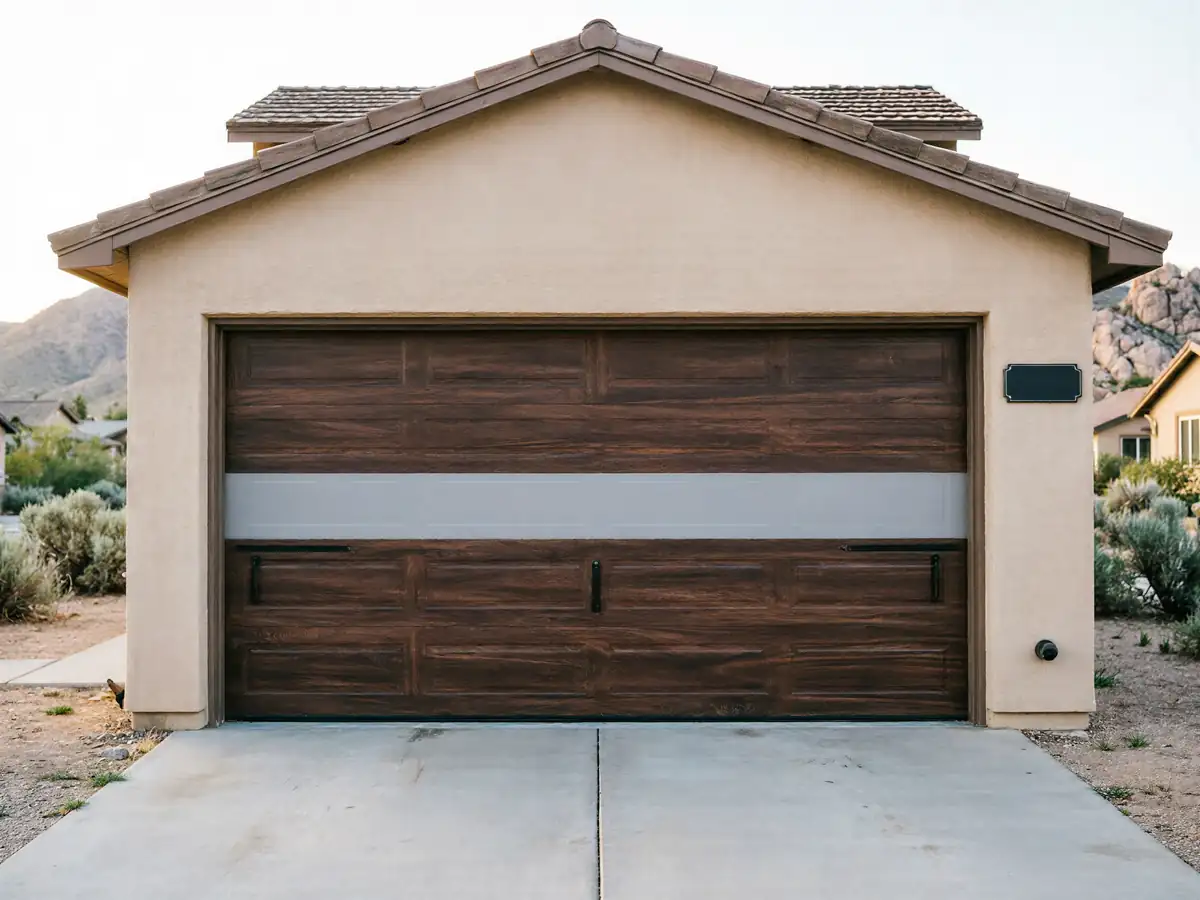
Most of the garage doors we get called out on in Santa Fe trace back to the same window of construction: 1973 to 1999, with the bulk of the stock dating to the 1990s. That's not a coincidence. A door installed new in 1985 is pushing forty years old, and a door from the late 90s isn't far behind. What you're seeing is usually one of two things: a panel section that's delaminated or warped at the bottom where snowmelt and runoff sit against it, or a track and roller setup that's rattling loose because the hardware was never rated for the thermal swing this area sees. Across the 13 areas we work in - from Agua Fria out to Pecos - the symptom looks the same even when the cause differs: a door that used to close tight and quiet now hesitates, drags, or won't seat flush at the bottom. On older sectional doors especially, the steel skin can be sound while the insulation core behind it has broken down, so the door looks fine from the driveway but performs like an uninsulated slab. That gap between appearance and function is what usually brings people to install rather than repair.
What It Costs
We don't publish a flat number here because the job isn't flat - a single-car replacement on a house built in the 90s is a different scope than a double door on an older frame that needs the opening squared up first. What we can tell you is how we price: we look at the door, the opener, the track condition, and whether the jamb needs work before we quote anything. If you want a number specific to your house, that's a walk-through, not a guess over the phone. One honest limit: if your opening is out of square by more than a small margin, that adds labor before a single panel goes in, and we'll show you that in person rather than bury it in a phone quote.
What Causes It Around Here
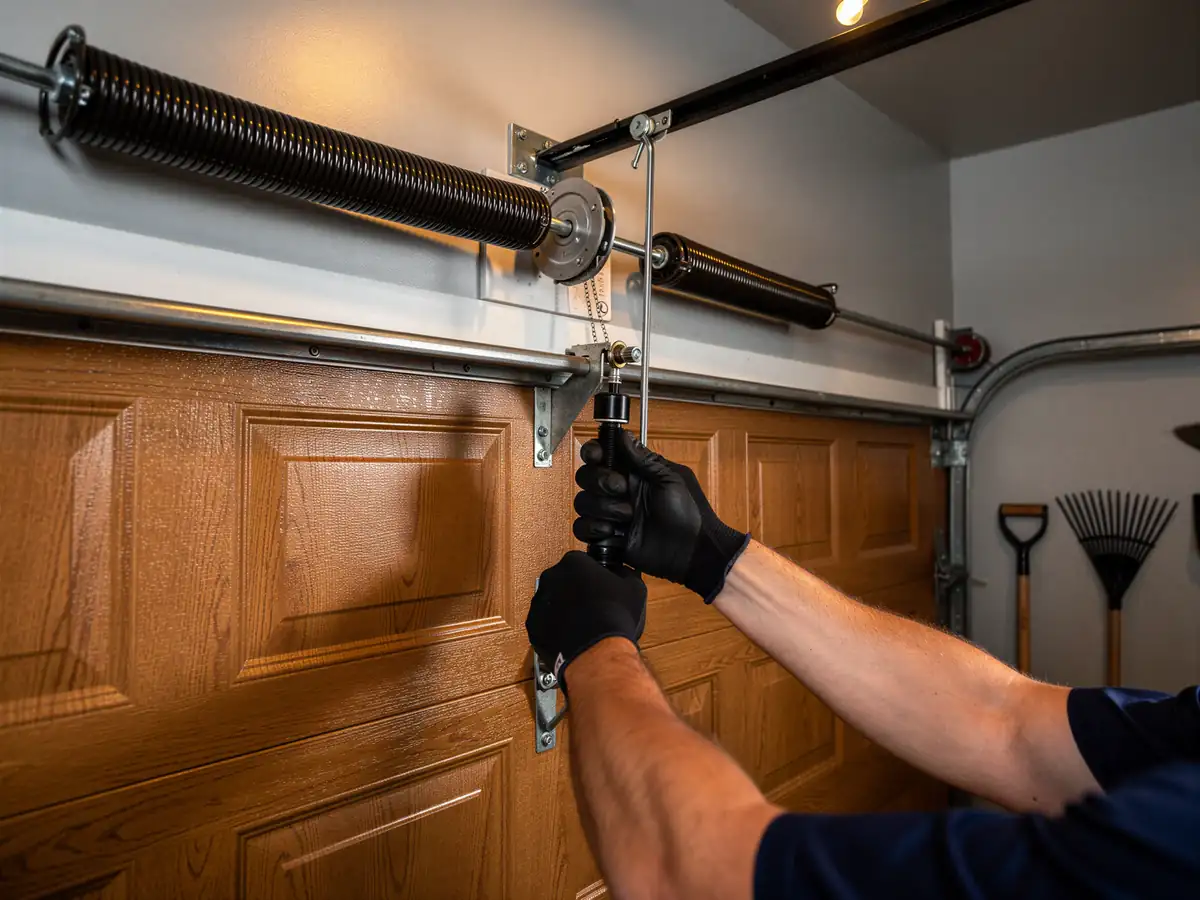
Santa Fe sits in a cold, severe climate band, and that matters more for garage doors than people expect. A door built or installed in the 1980s or 90s was speced to a building code and a set of materials assumptions from that era - lighter gauge steel, thinner insulation, hardware galvanized for moderate conditions. Decades of hard freeze-thaw cycling work on those seams and welds in a way that doesn't show up fast, but shows up eventually. Torsion springs lose tension unevenly in cold swings, track bolts back out as wood jambs shrink and swell, and vinyl or rubber bottom seals crack and let heat out exactly where you don't want it to. Because most of our area's housing - across Agua Fria, Arroyo Hondo, Tesuque, and the rest of the 13 named areas we cover - was built in that same 1973 to 1999 window, we see the same failure pattern on a lot of driveways. It's not that Santa Fe homes are poorly built; it's that thirty to fifty years of cold-climate stress on original-era hardware adds up the same way on every one of them.
How We Fix It
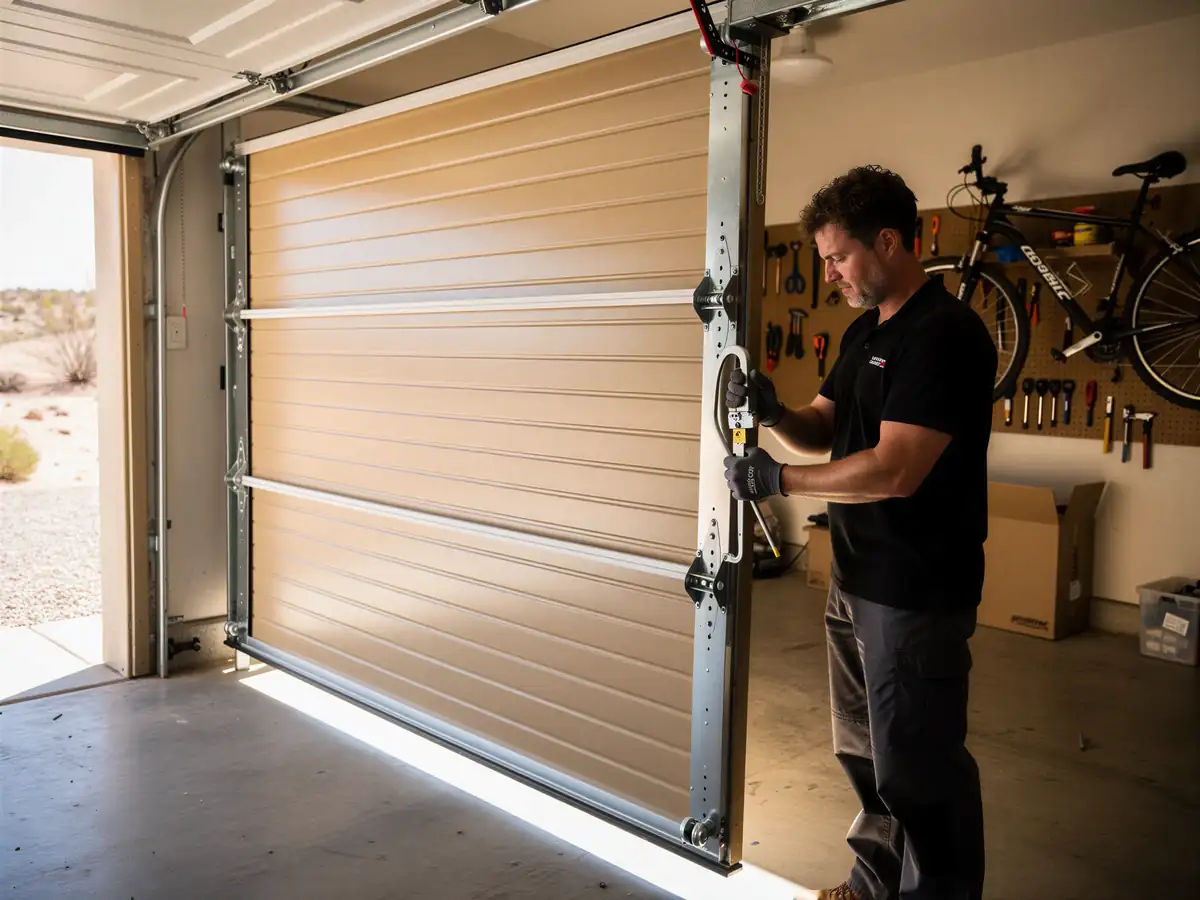
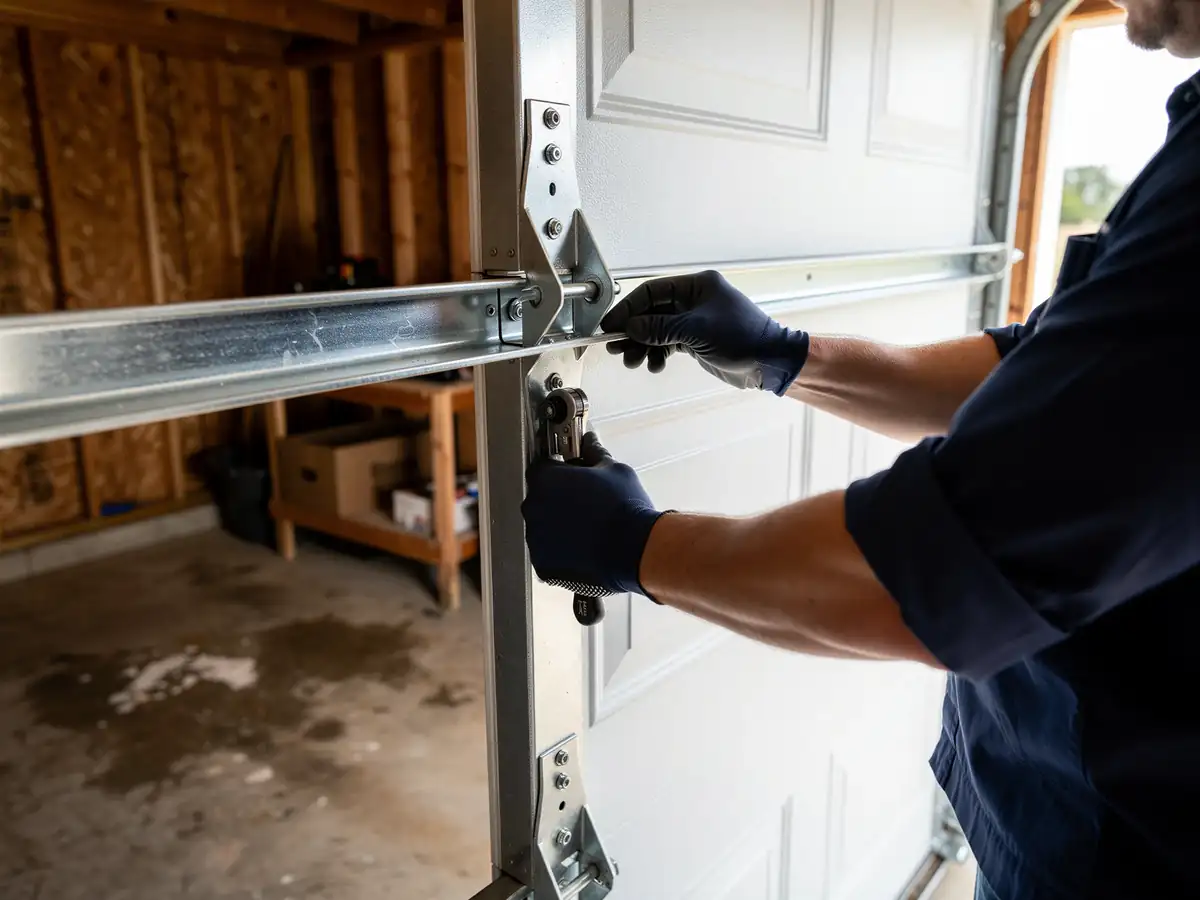
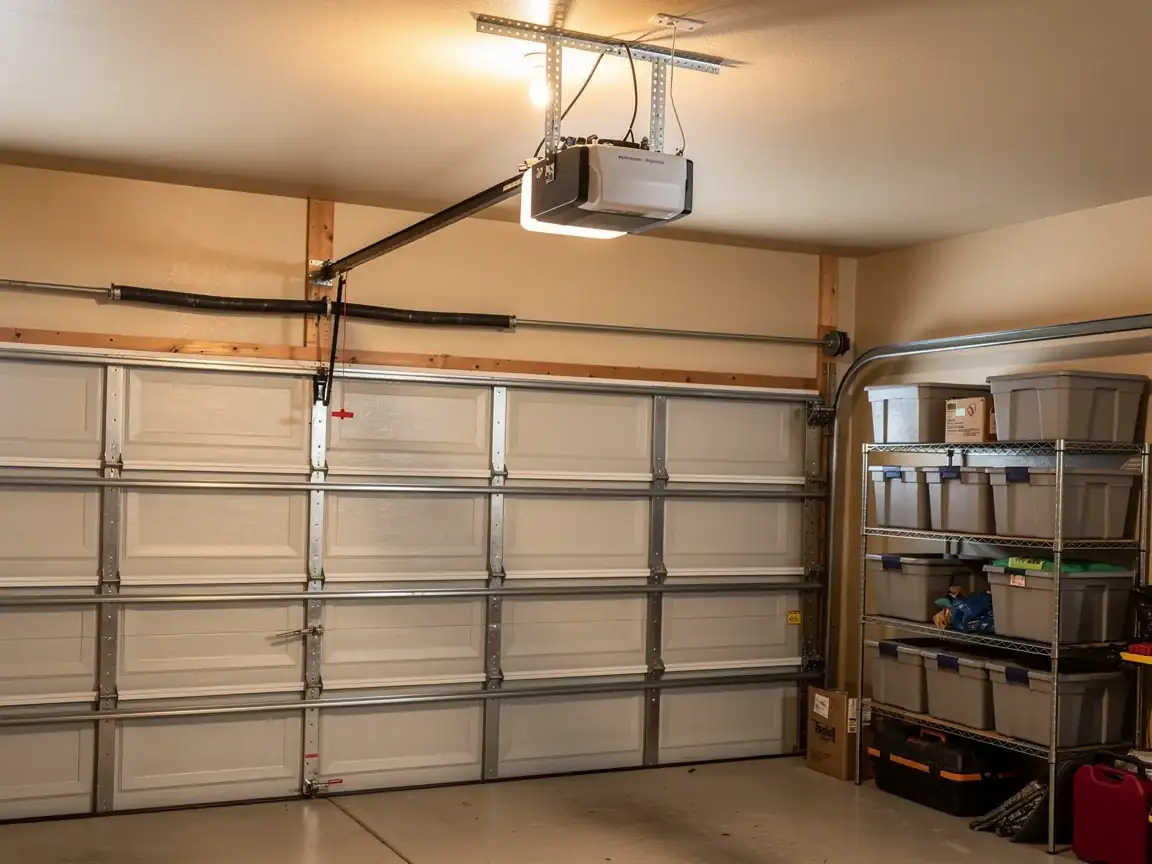
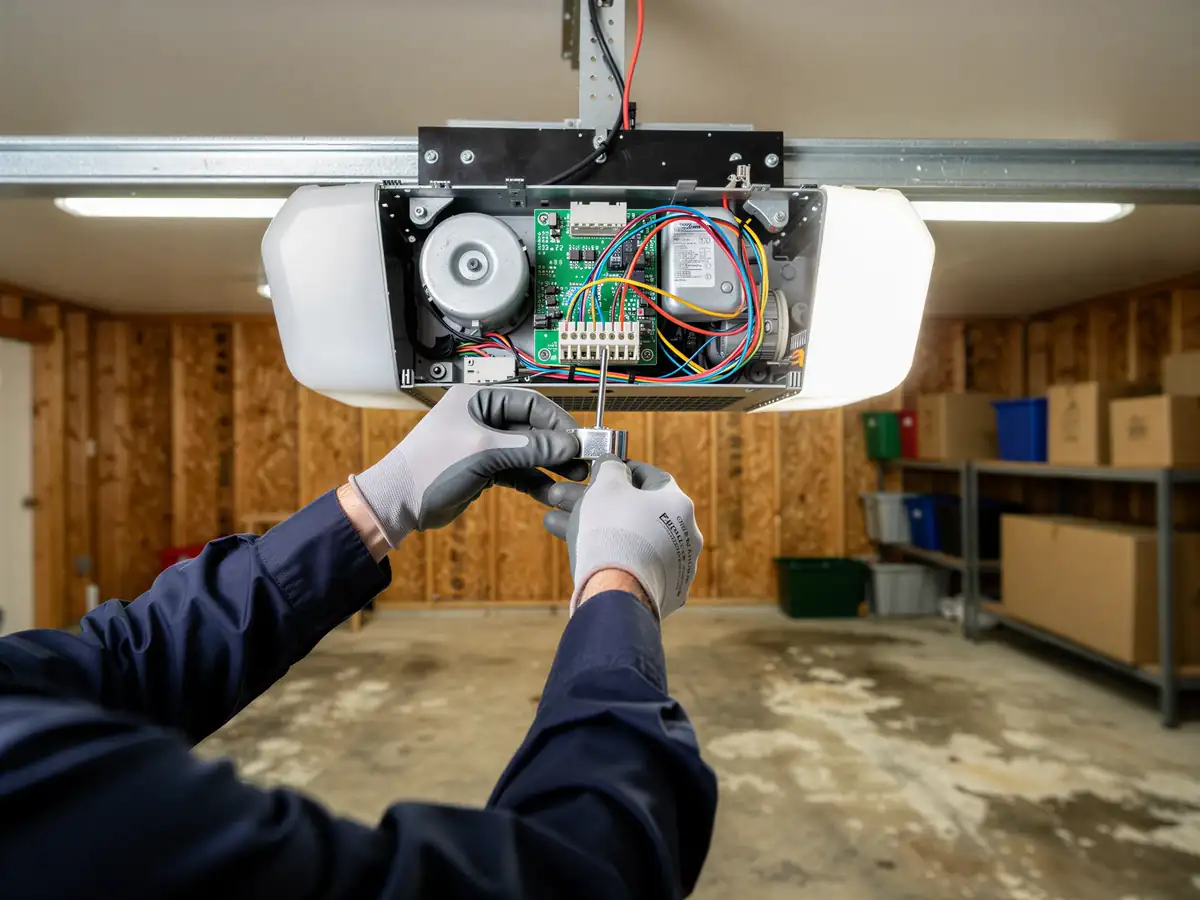
For a straight installation, we pull the old door and track, check the opening for square, and set a new door sized and insulated for a cold climate - not whatever the builder spec'd in 1990. If the jamb or header has shifted, we address that before the door goes in, because a door installed against an out-of-square opening fails again within a few years regardless of how good the door itself is. We match opener horsepower and drive type to the door weight rather than defaulting to whatever was there before, since a lot of original 80s and 90s openers were undersized for anything heavier than the original uninsulated panel. We serve the household base across this part of Santa Fe County - around 10,772 households, most of them owner-occupied houses - and we size every install to the specific door and opening in front of us, not a generic template.
How it works
From “it’s stuck” to “it’s fixed”
01
Tell us what’s wrong
Describe the symptom - won’t open, loud bang, opener runs but the door won’t move.
02
On-site diagnosis
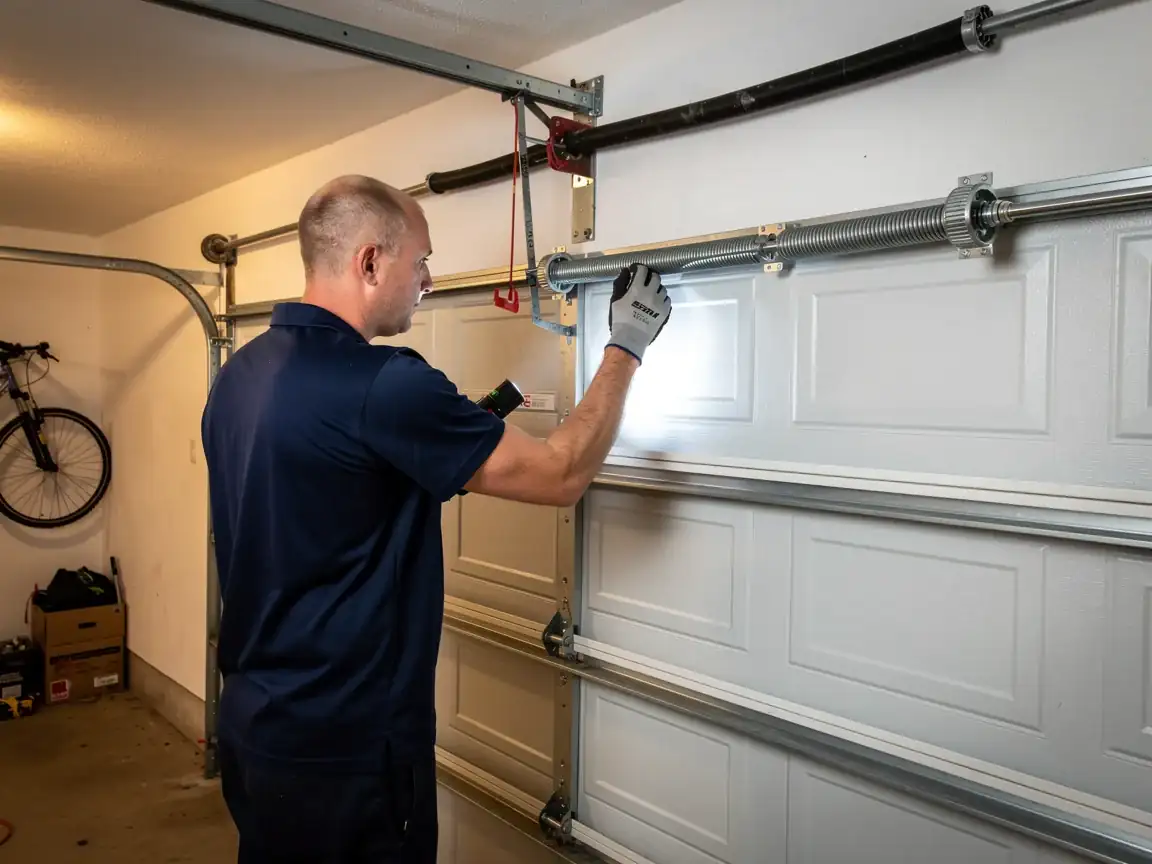
A technician tests the door under power and by hand and finds what actually failed.
03
Clear, up-front plan
You get the fix that’s needed and what drives the cost - before any work starts.
04
Repaired & tested
The repair is done, the door is set true and tested, and the work area left clean.
Not sure which repair your door needs in Santa Fe, NM? Describe what it’s doing - every job starts with a diagnosis.
Why does my garage door feel heavier or slower in winter?
Cold temperatures stiffen lubricant in rollers and tracks, and torsion springs lose a small amount of tension as steel contracts. On a door original to a 1980s or 90s build, decades of that cycle add up, and the door starts dragging or closing unevenly. It's one of the most common reasons we get called for a Santa Fe installation rather than a spot repair.
Will a new door fit my original 1980s or 90s opening without framing work?
Often yes, but not always. Openings in houses from that era can shift slightly over decades of freeze-thaw movement in the jamb. We check square and plumb before quoting, and if framing work is needed we tell you before we order the door, not after.
Do you install in areas outside Santa Fe proper?
We work across the surrounding area including Agua Fria, Arroyo Hondo, Tesuque, La Cienega, Eldorado at Santa Fe, Valencia, Glorieta, Cuyamungue, White Rock, Pojoaque, El Rancho, Los Cerrillos, and Pecos.
How do I know if I need a new door or just a repair?
If the panels are sound and the problem is a spring, cable, or opener, repair usually makes sense. If the door is original to a 1970s-90s build and the insulation core has broken down or the panels are warped, replacement is usually the better value long term. We'll tell you honestly which situation you're in.
Ready to get your garage door sorted?
Tell us what it’s doing and where you are in Santa Fe - we’ll take it from there.