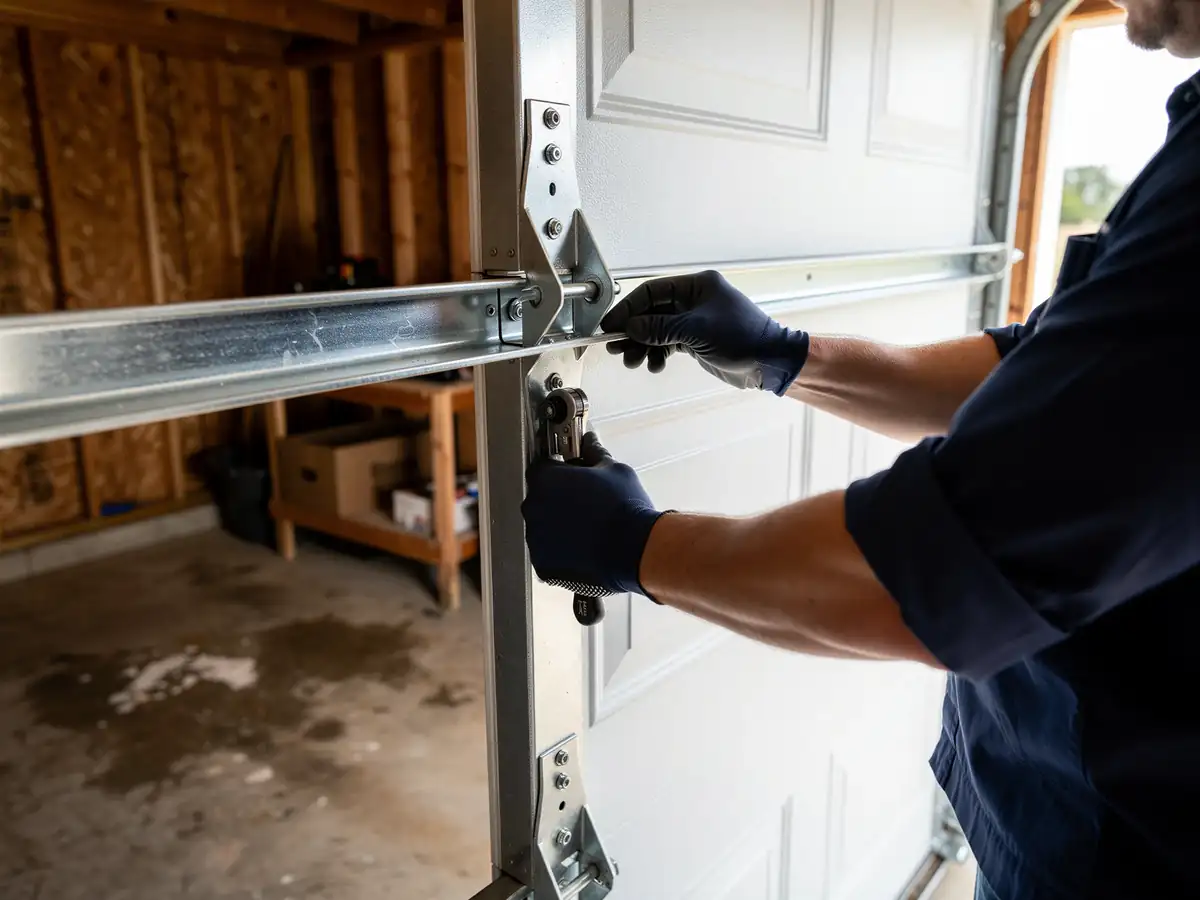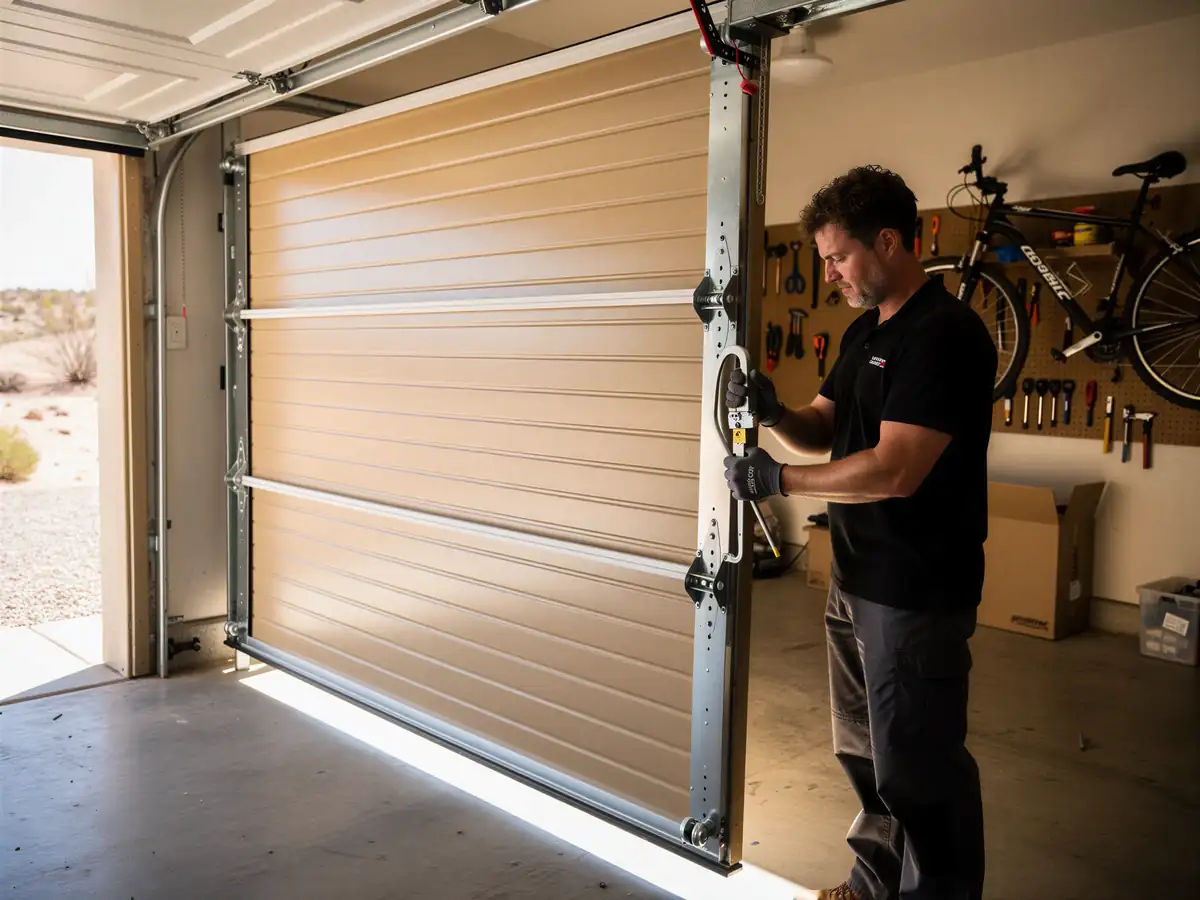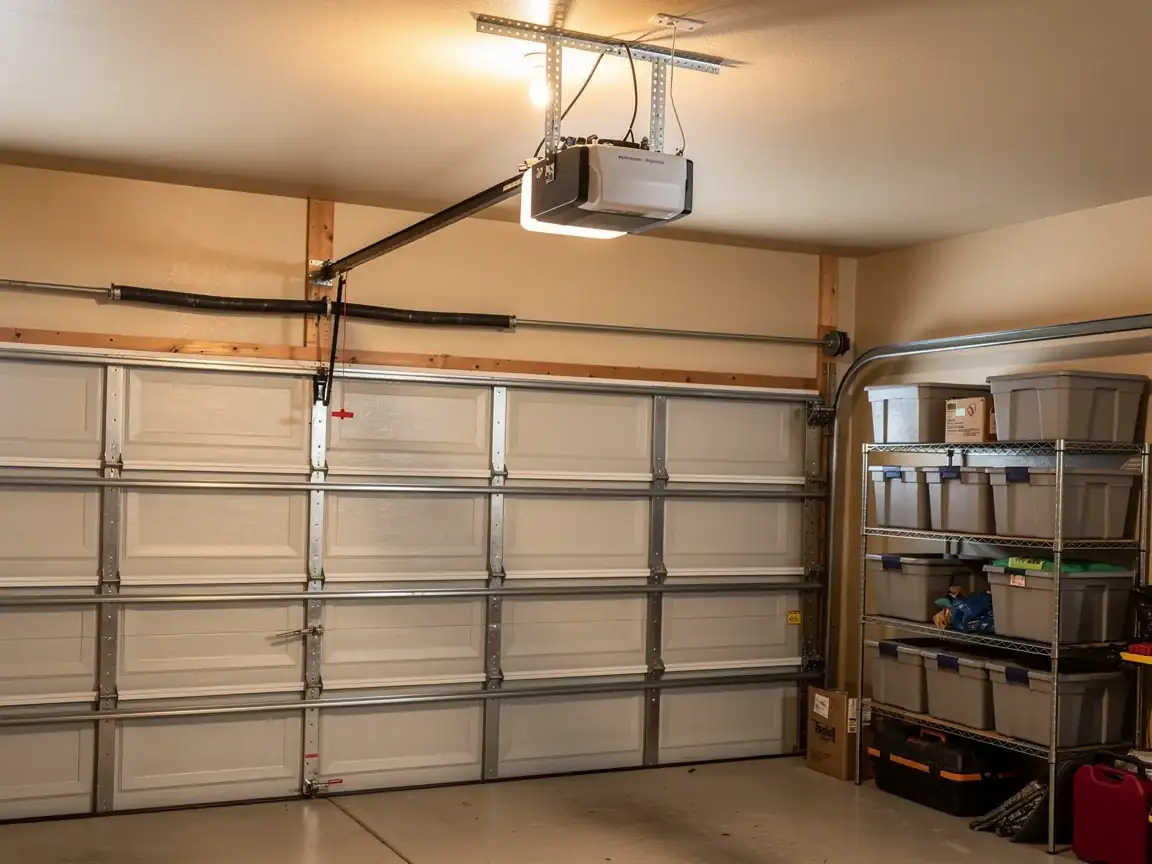
What You Are Seeing
Most calls start the same way
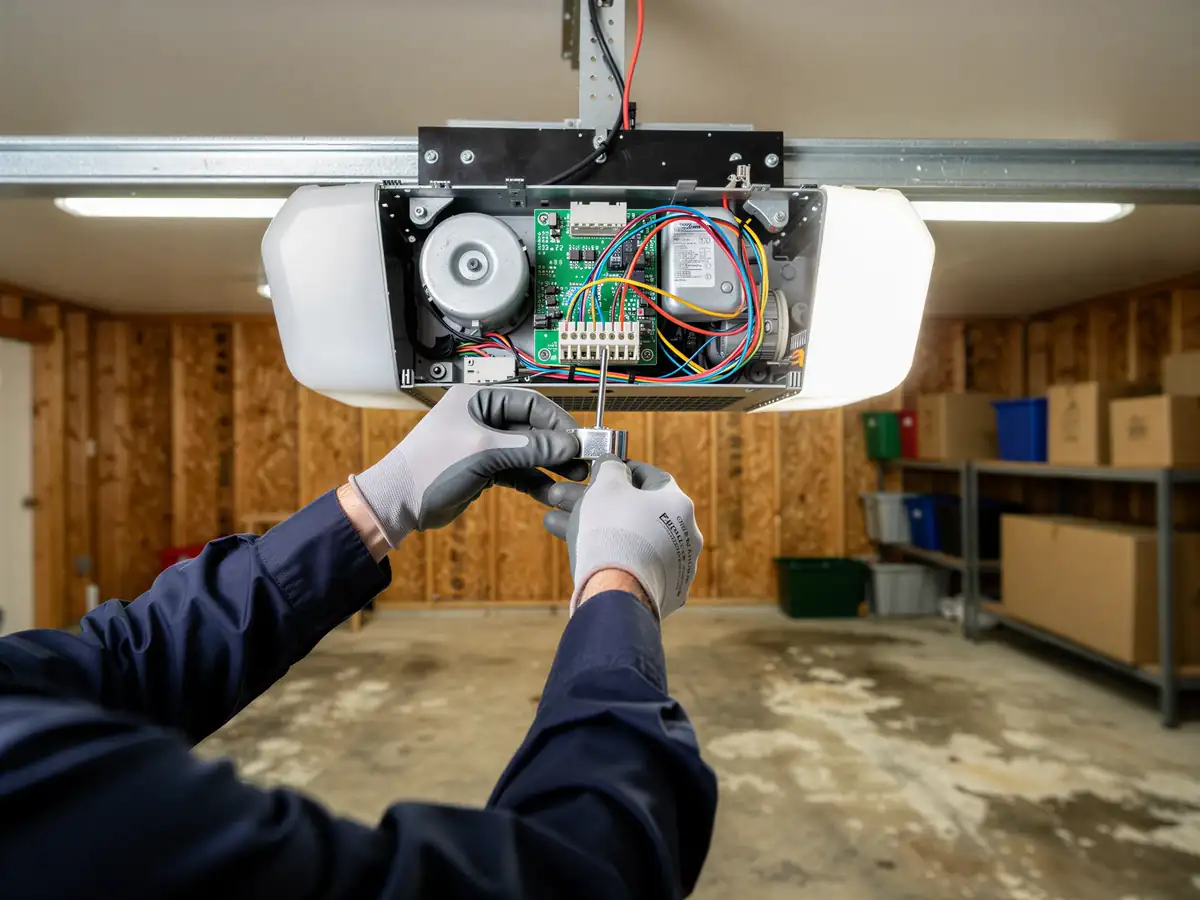
You hit the button on the wall or the remote and the opener hums, clicks, or does nothing at all. Sometimes the door starts up and reverses halfway. Sometimes the light flashes a pattern and the motor won't engage. On older chain-drive units common in houses built through the 1980s and 90s, you'll often hear the motor run while the trolley sits still - the drive gear has stripped. On belt and screw-drive units from the same era, failing capacitors or worn limit switches are more common, and the door just won't respond at all.
A dead opener isn't always the opener
Sometimes the wall switch has a cracked wire, or the safety sensors near the floor are out of alignment and the unit refuses to close as a safety measure. We sort out which it is before we talk about parts, because swapping a motor when the real problem is a ten-dollar sensor wastes your money. If your door moves fine by hand with the opener disconnected, the problem is almost certainly in the opener itself, not the spring or track.
What It Costs
We don't post a flat number here because opener repair cost depends on what's actually failed - a logic board, a capacitor, a gear set, or a full motor swap - and on whether the unit is still a model with parts available. What we can tell you is how we price a job: we diagnose first, quote the repair before we touch anything, and you decide whether to repair or replace before we start work. If your opener is original to a house built in the 1970s through 1990s, which covers a large share of homes across the Santa Fe area, parts for that specific motor may already be out of production, and replacement ends up cheaper than chasing a repair. We'll tell you straight when that's the case instead of billing you for a part we can't source.
What Causes It Around Here
Santa Fe's housing stock across the service area was mostly built between 1973 and 1999, with a median build year around 1990, and that generation of openers is now 25 to 50 years old in a lot of garages. These units were never designed to run this long, and many are the original motor that came with the house. Add the climate: this area sits in a severe cold band, and temperature swings between a freezing night and a sunny afternoon put real stress on opener circuit boards, capacitors, and the plastic drive gears inside chain-drive units. Cold also thickens old grease in the gearbox, which makes the motor strain harder on every cold-morning start - that strain is what eventually burns out a motor or strips a gear.
Across the roughly 10,772 households we see in this area, a large share are owner-occupied houses with original openers nobody has touched since the garage was built. That combination - 1980s and 90s equipment, repeated freeze-thaw cycling, and original hardware - is why opener failure here skews toward gear and board issues rather than the belt-snap failures you'd see in a milder, newer-built market.
How We Fix It
We start by running the opener through its paces with the door connected
Then disconnected, to isolate motor problems from door or track problems. If it's a safety sensor out of alignment, that's usually a ten-minute fix. If it's a stripped gear or a dead capacitor on a unit old enough to match Santa Fe's 1980s-90s housing stock, we check whether the manufacturer still makes parts for that chassis before we quote a repair - a lot of those lines are discontinued, and we won't pretend otherwise.
Where a repair makes sense, we do the repair
Where the unit is original equipment and parts aren't available, we'll say so and walk you through a replacement that matches your door's weight and your garage's wiring, with a cold-rated setup suited to this climate band. One limitation worth saying plainly: we don't carry every obsolete gear kit on the truck, so a same-day fix on a 30-year-old motor sometimes means a short parts wait instead of a one-visit repair. We serve the wider Santa Fe area, including Agua Fria, Arroyo Hondo, Tesuque, La Cienega, and Eldorado at Santa Fe.