Most of the houses we work on here went up between 1973 and 1999, with the median landing around 1990. That's not a small detail. A torsion spring rated for a certain cycle count and a certain temperature range was sized for the door it shipped with, and after thirty-plus years of New Mexico cold, that steel has been through a lot of expansion and contraction it was never going to shrug off forever. Santa Fe sits in a cold-severe climate band, which means the galvanized coating and the spring's temper both take a harder hit each winter than they would somewhere milder. Cold steel is less elastic. It doesn't flex the way it does at sixty degrees, and that's exactly the state it's in during the first hard cold snap before sunrise, which is when a lot of our calls come in. The door stock across the 13 areas we cover, from Agua Fria and Tesuque to Eldorado at Santa Fe and Pojoaque, is largely from that same late-20th-century build window, so the same spring fatigue shows up in similar ways house to house, even when the neighborhoods look nothing alike.
The Situation
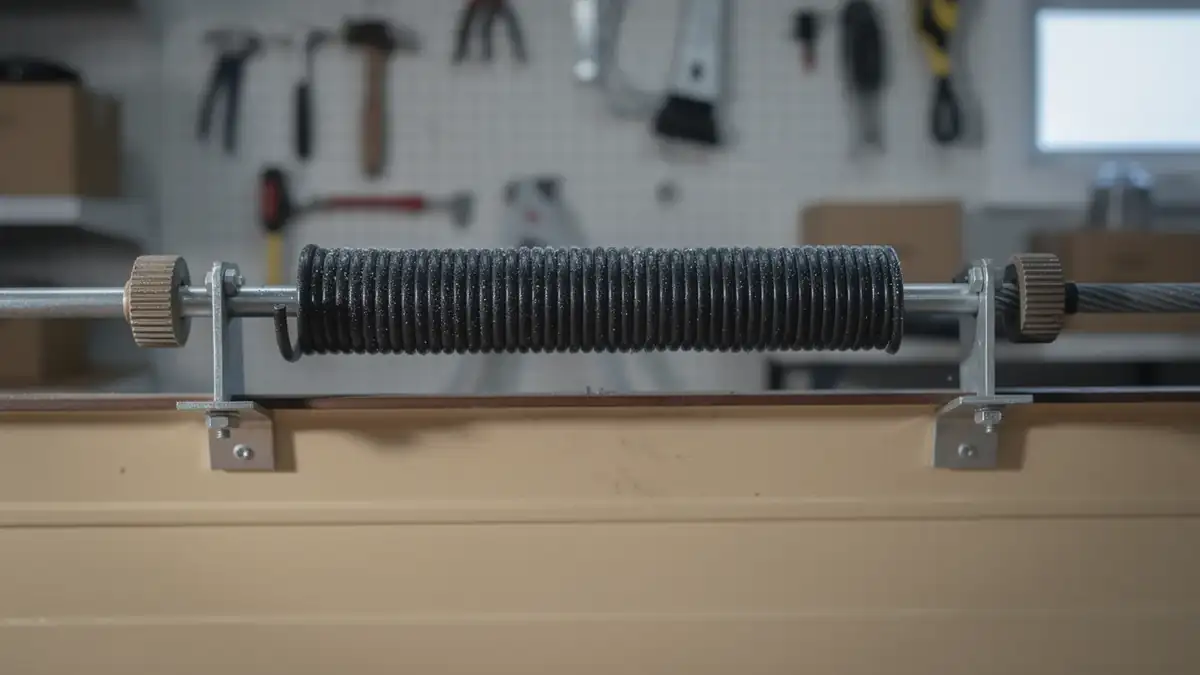
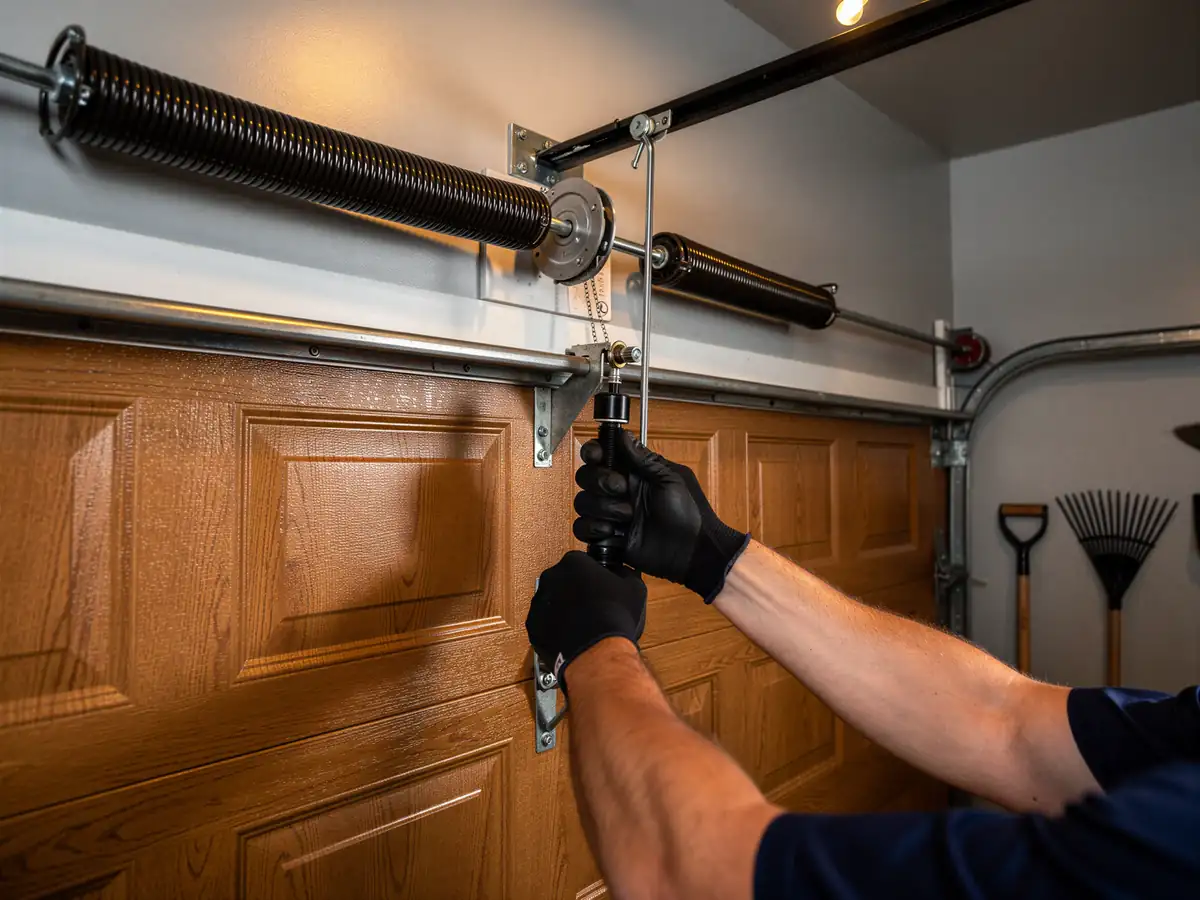
A spring that's been quietly losing temper for two decades doesn't usually give warning. It holds until a cold morning adds the last bit of stress, and then it goes, often with a bang loud enough that owners think something hit the house. If your door was installed when the place was built, sometime in that 1973-1999 window, you're working with original or close-to-original hardware in a lot of cases. That's the honest math: a spring built for 1990s cold-severe winters here has been cycling through freeze-thaw stress for thirty-plus years, and steel fatigue is cumulative, not cosmetic. It doesn't announce itself with noise until the day it breaks. On a two-car door, the cables usually come slack fast, and the door either won't lift at all or drops hard the instant someone tries by hand.
The Common Mistake
The mistake we see most is someone trying to force the door up by hand, or running the opener against a broken spring to see if it'll push through. The opener motor isn't built to carry the door's full weight, that's the spring's job, and running it anyway usually burns out the motor or strips the drive gear on top of the spring problem you already had. The second mistake is replacing just the one spring that broke. On a door this age, if one torsion spring has fatigued from cold-cycle stress, the other one on the shaft is the same age and the same metal, and it's not far behind. We've had to go back out within a season more than once for someone who only wanted the broken side done.
When to Call Someone
Call as soon as the door won't move right, not after you've tried three things to get it open yourself. A spring under tension is dangerous to handle without the right bars and clamps, and a cold garage only makes grip and footing worse. If your home is in that 1973-1999 range and the door hasn't had the springs replaced since it was built, treat a hard winter morning as the likely failure point, not a surprise. One limitation worth being straight about: if the drums, shaft, or cables are also worn or rusted from age, a spring-only repair may not be worth doing, and replacing the full hardware set is the better call. We can tell you which situation you're in once we see the door.
How it works
From “it’s stuck” to “it’s fixed”
01
Tell us what’s wrong
Describe the symptom - won’t open, loud bang, opener runs but the door won’t move.
02
On-site diagnosis
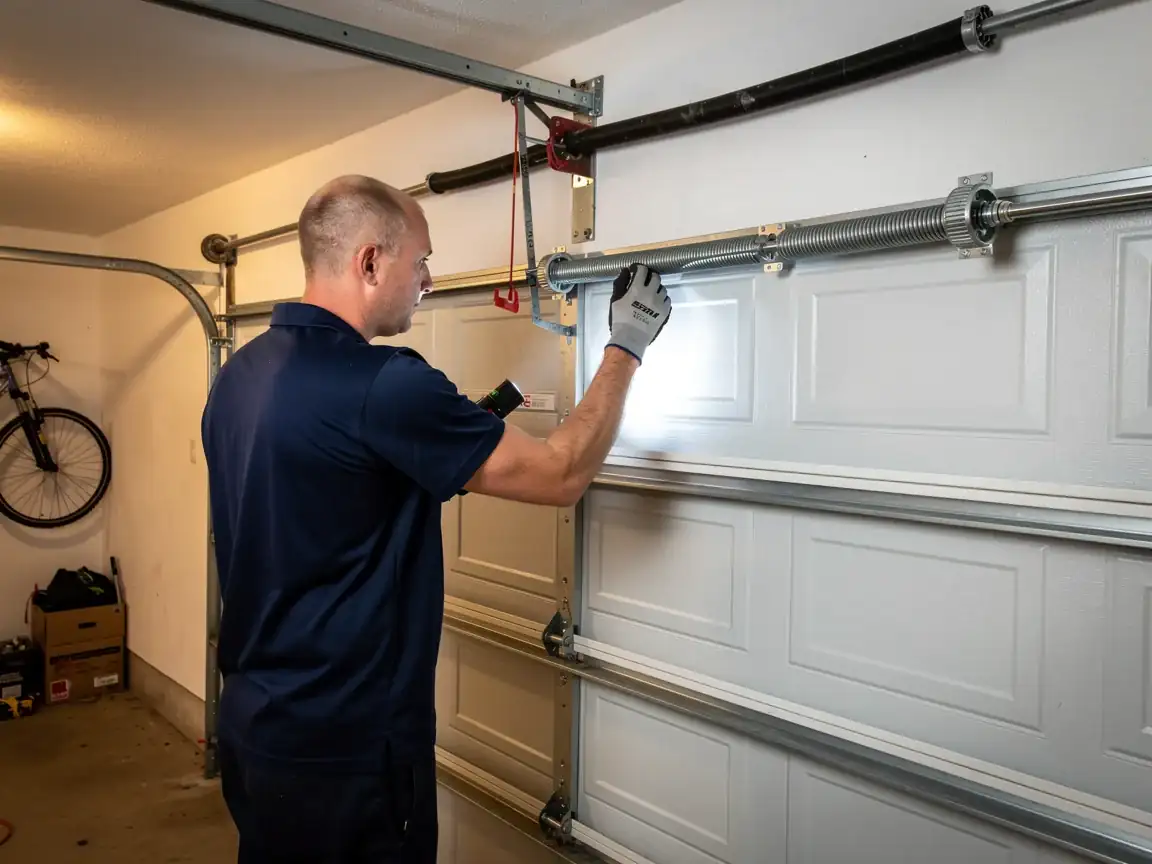
A technician tests the door under power and by hand and finds what actually failed.
03
Clear, up-front plan
You get the fix that’s needed and what drives the cost - before any work starts.
04
Repaired & tested
The repair is done, the door is set true and tested, and the work area left clean.
Not sure which repair your door needs in Santa Fe, NM? Describe what it’s doing - every job starts with a diagnosis.
Why do garage door springs break more in winter here?
Cold steel loses elasticity, and Santa Fe's cold-severe winters put extra stress on springs that are already fatigued from age. Most local doors date to the 1973-1999 building boom, so by now a lot of that original hardware is at or past its expected cycle life, and a cold morning is often the final straw.
Can I just replace the spring that broke?
You can, but if your home was built in the same era as most of the area's stock, the second spring on the shaft is the same age and under the same stress. We usually recommend replacing both so you're not back to square one in a few months.
Is it safe to open the door by hand after a spring breaks?
No. A broken torsion spring means the door's full weight is no longer counterbalanced, and forcing it up by hand or with the opener risks the cables, the drums, or a hand. Leave it closed and call for a repair rather than working around it.
Ready to get your garage door sorted?
Tell us what it’s doing and where you are in Santa Fe - we’ll take it from there.