What Can Go Wrong
Most of the trouble we see in La Cienega traces back to one thing
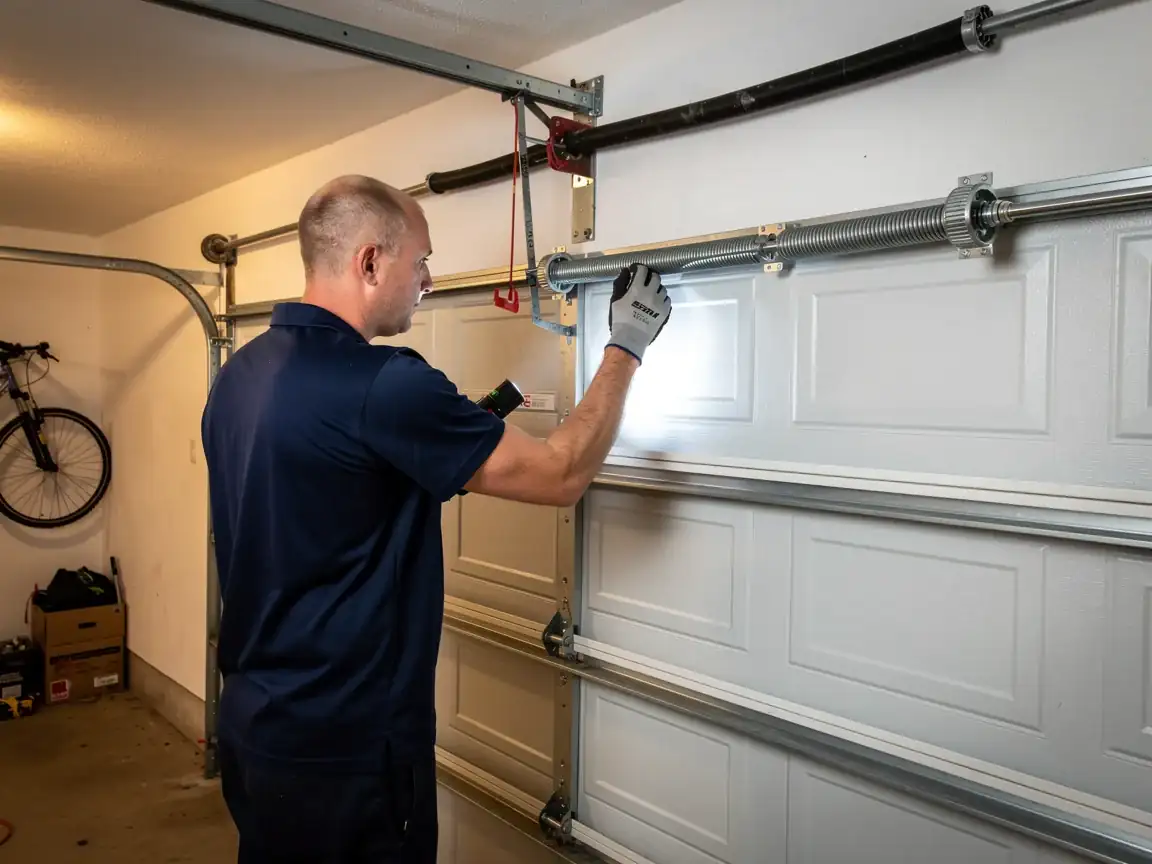
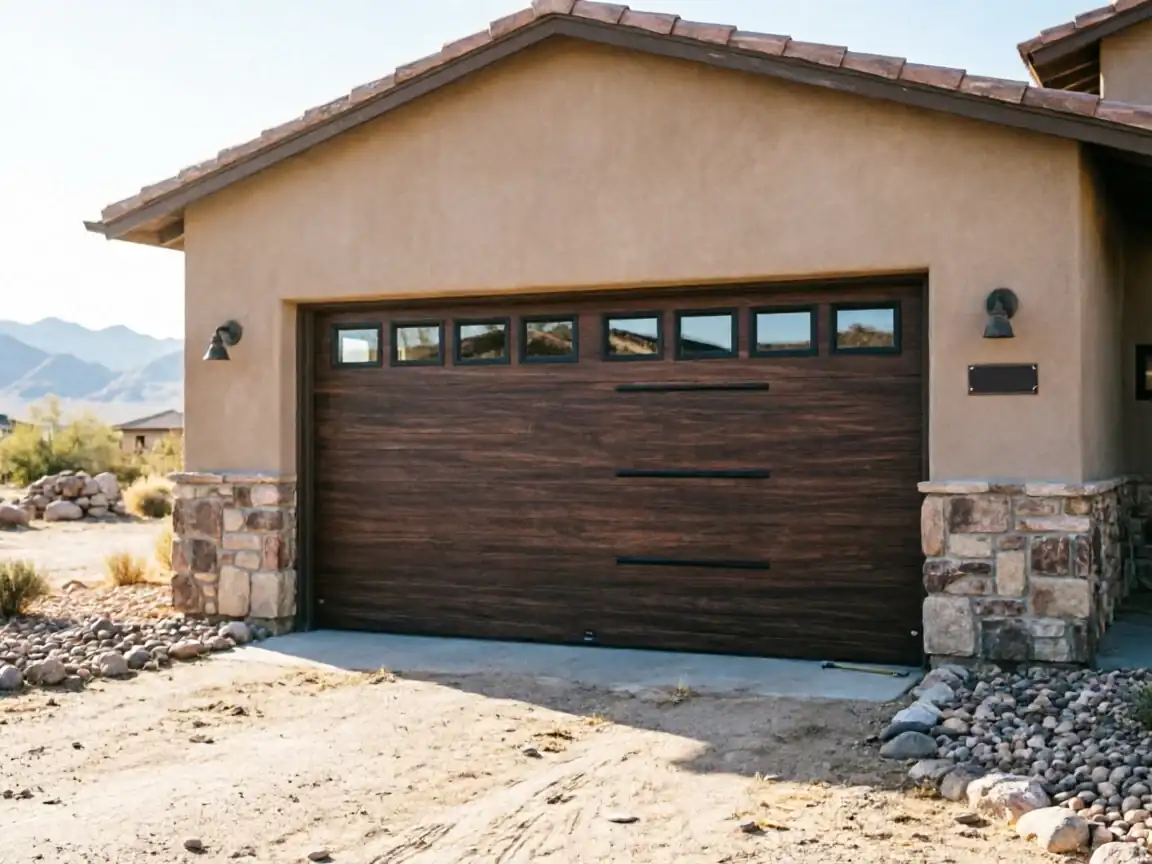
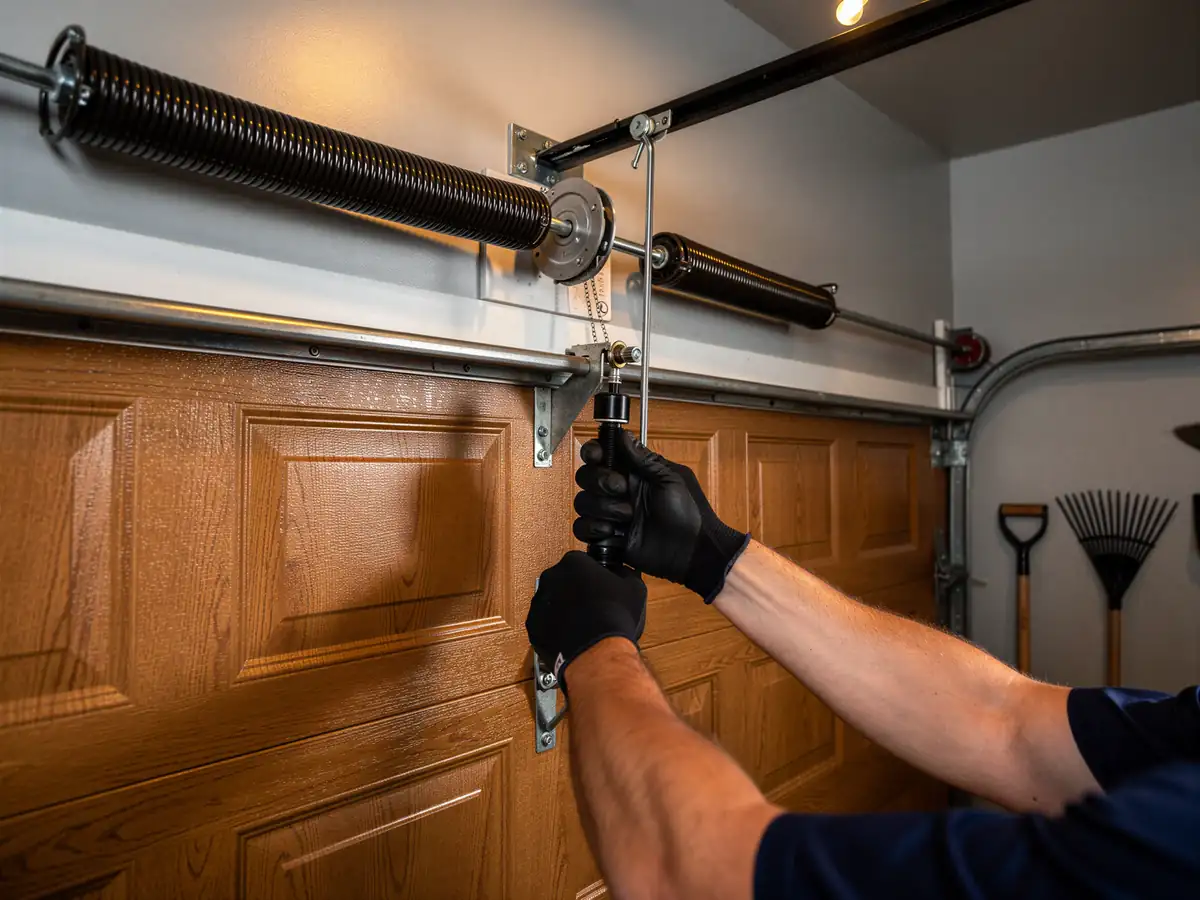
The houses out here were mostly built around 1993, and the garage door hardware that went in with them is now past its rated life. A torsion spring is good for roughly 10,000 cycles - about 7 to 9 years of normal use - so a door that opened and closed a few times a day since the early 90s has worked through several springs' worth of wear even if nobody's replaced one yet.
- 9 years
What that looks like on a call
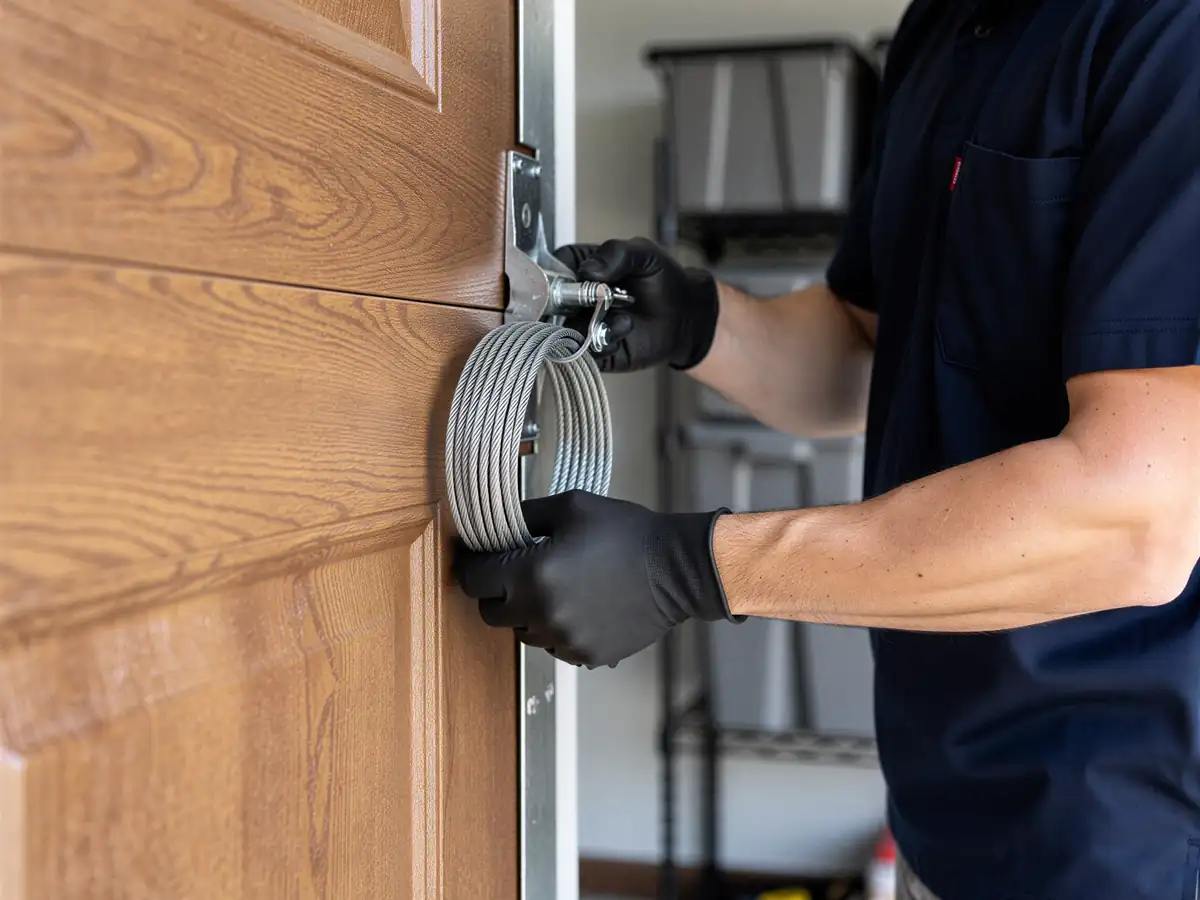
The spring that finally snaps instead of weakening gradually, because nobody checked it in 25-plus years. Galvanized cable fraying where it wraps the drum. Nylon rollers from that era going brittle and cracking rather than just wearing smooth. We also see openers from the same build window with worn drive gears or failing capacitors - not because anything was installed wrong, but because that's what a garage door opener looks like after three decades in a high-desert climate with hard freezes every winter. Cold makes steel brittle and grease stiff, and that combination is what turns a slow leak of wear into a sudden break on a January morning.
Parts We Carry
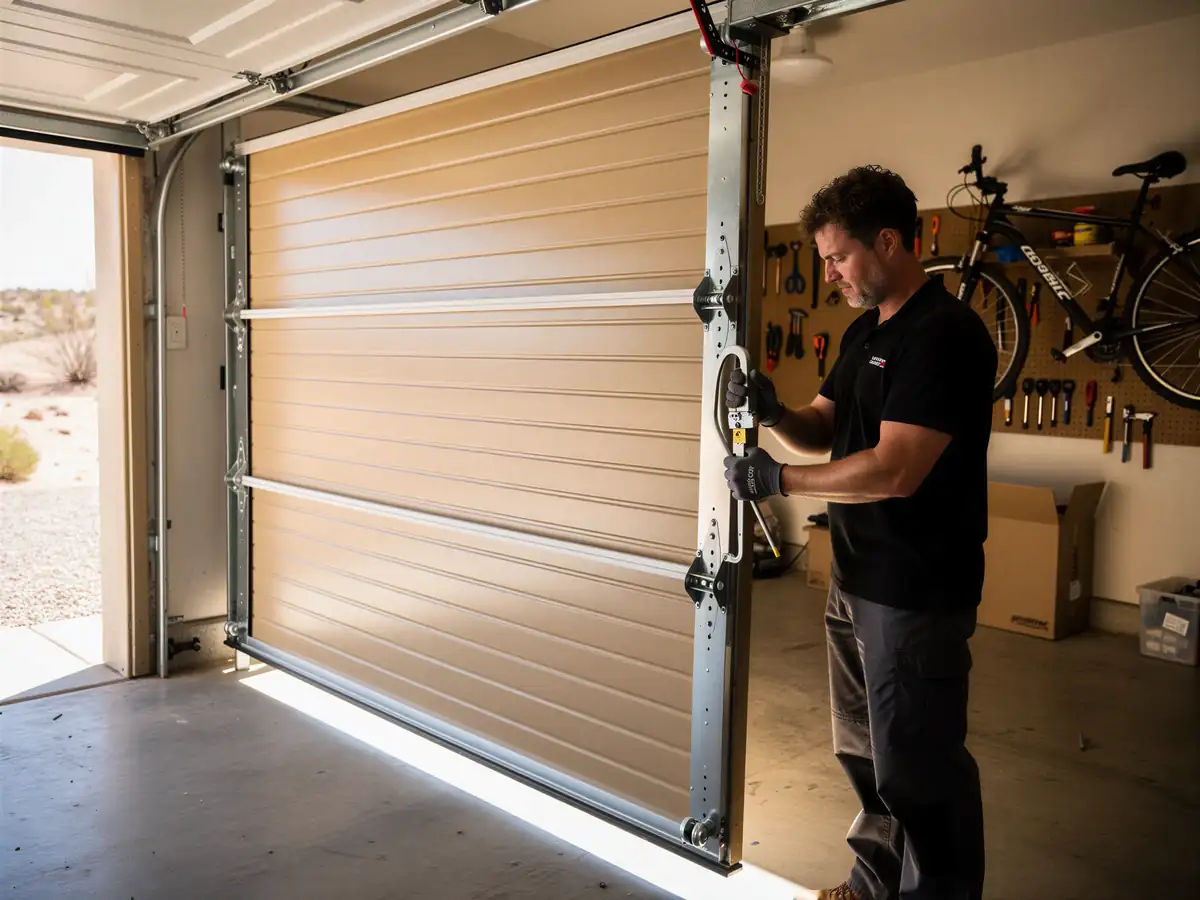
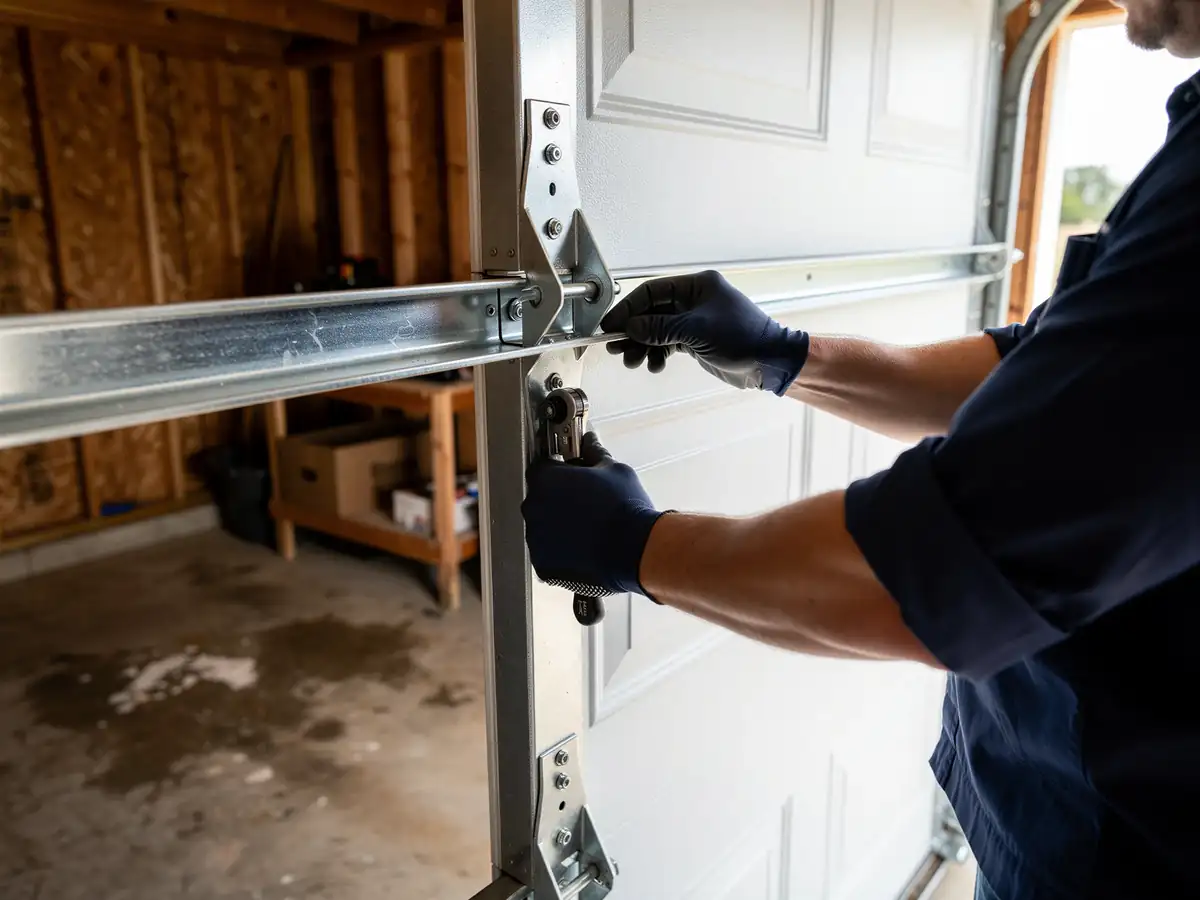
We carry torsion springs sized for the single and double doors common to 1990s New Mexico construction, along with standard-lift cable, galvanized rollers, and hinges that match that era's track hardware. Most jobs in La Cienega are a straight swap: old spring or cable out, correctly sized replacement in, door balanced and tested.
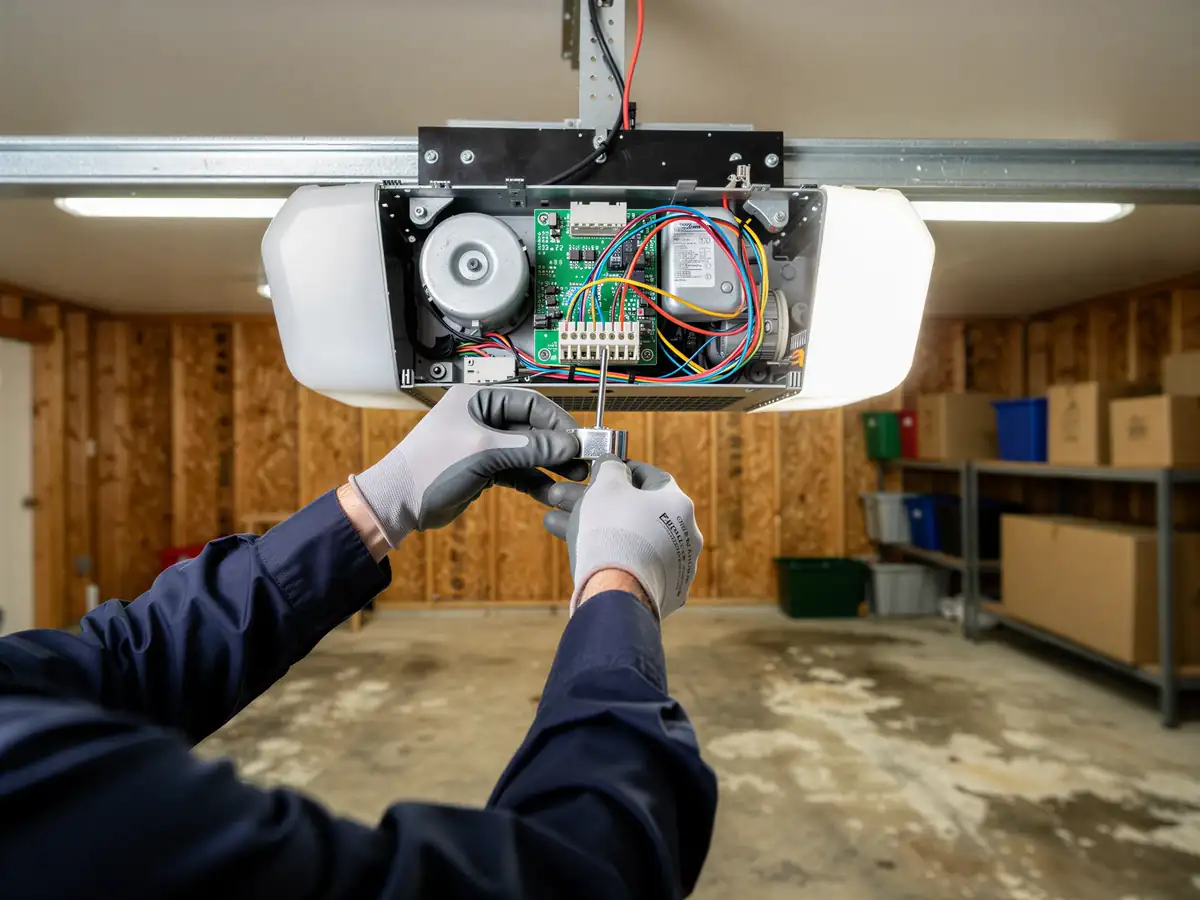
Where we run into limits is openers. If a unit from that original 1993 build is still in the garage, the logic board or wall control may be a style that's been discontinued for years, and we're not going to pretend we can source a part that doesn't exist anymore. In that case the honest call is a new opener rather than chasing a part number nobody stocks. We'll tell you straight when that's the cheaper and more reliable path instead of trying to keep a 30-year-old board alive.
Booking a Visit
We run out of Santa Fe, about 9 miles from La Cienega, so when you call we're scheduling a drive, not dispatching from a depot in town. Tell us what the door is doing - won't open, opens but won't stay up, loud bang then stuck - and we'll bring the parts most likely to match a door from this area's build era rather than showing up to diagnose cold.
We don't carry every part for every possible opener model on the truck at all times, so if your issue turns out to be an obscure electronic part rather than spring, cable, or roller hardware, there may be a short wait while we order it. We'd rather tell you that up front than promise a same-visit fix we can't back up.
What You Are Seeing
A door that slams down the last foot instead of lowering smooth usually means the spring has lost tension
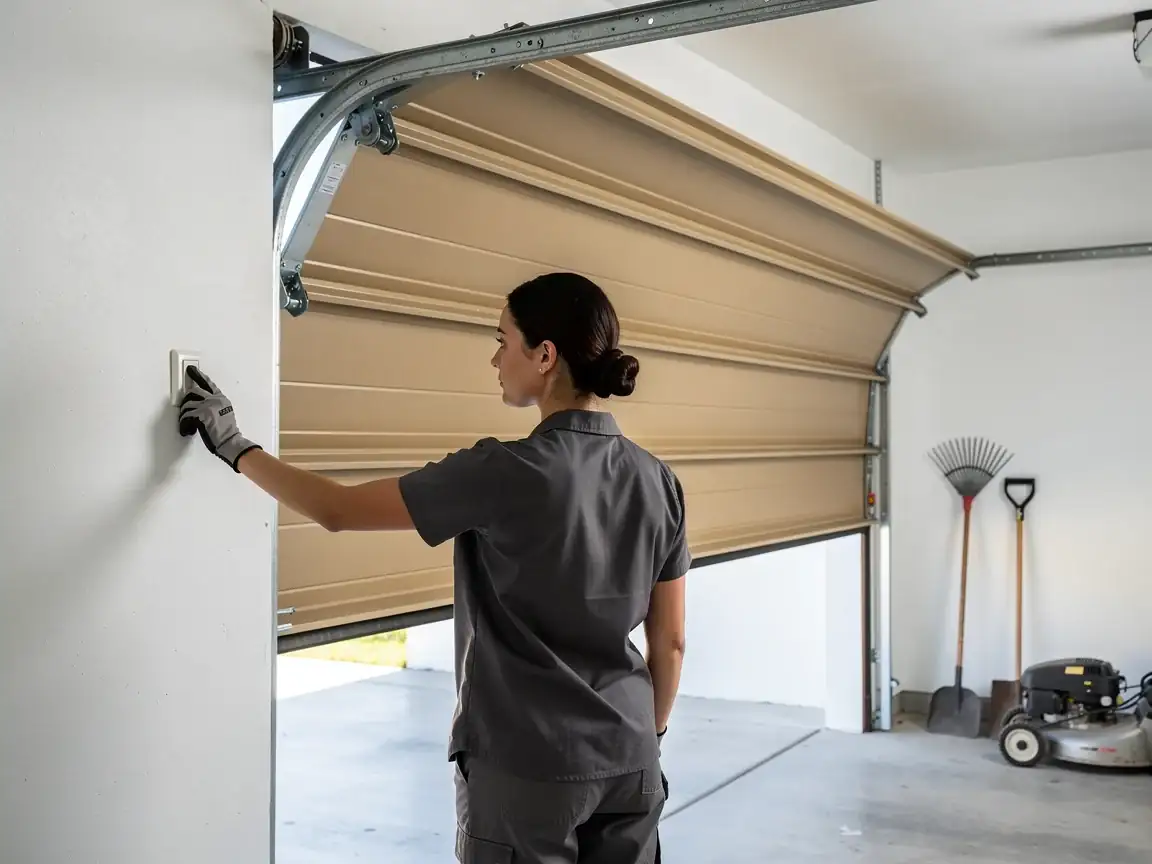
Common on doors original to a 1993 build that have never been serviced. A door that opens partway and reverses, or won't respond at all, often points to the opener's travel limits drifting out of adjustment, or a sensor that's gone out of alignment, which happens more in homes with original wiring from that same period.
If you hear a loud bang from the garage and then the door won't move, that's almost always a spring breaking
Not something to force open with the opener, since that strains the cables and drum next. A door that's noticeably heavier to lift by hand than it used to be is telling you the spring is weakening before it fails outright, which is the point where a repair is cheap. Past that point, you're often looking at cable or drum damage too.
How Long You Are Without the Door
A broken spring or worn cable is usually a same-visit fix once we're on-site with the right part, since those are the parts we carry for doors built in this stretch of years. What stretches things out is a discontinued opener board or a track bent badly enough that it needs a specialty part - those can mean a wait while we source the piece, since we're not going to install a mismatched part just to close the job faster.
If the door is original to the house and the spring, cable, and opener are all showing age at once, replacing the whole system can end up faster and cheaper than repairing each piece separately over multiple visits. We'll walk you through that math on-site rather than defaulting to the bigger job.