Booking a Visit
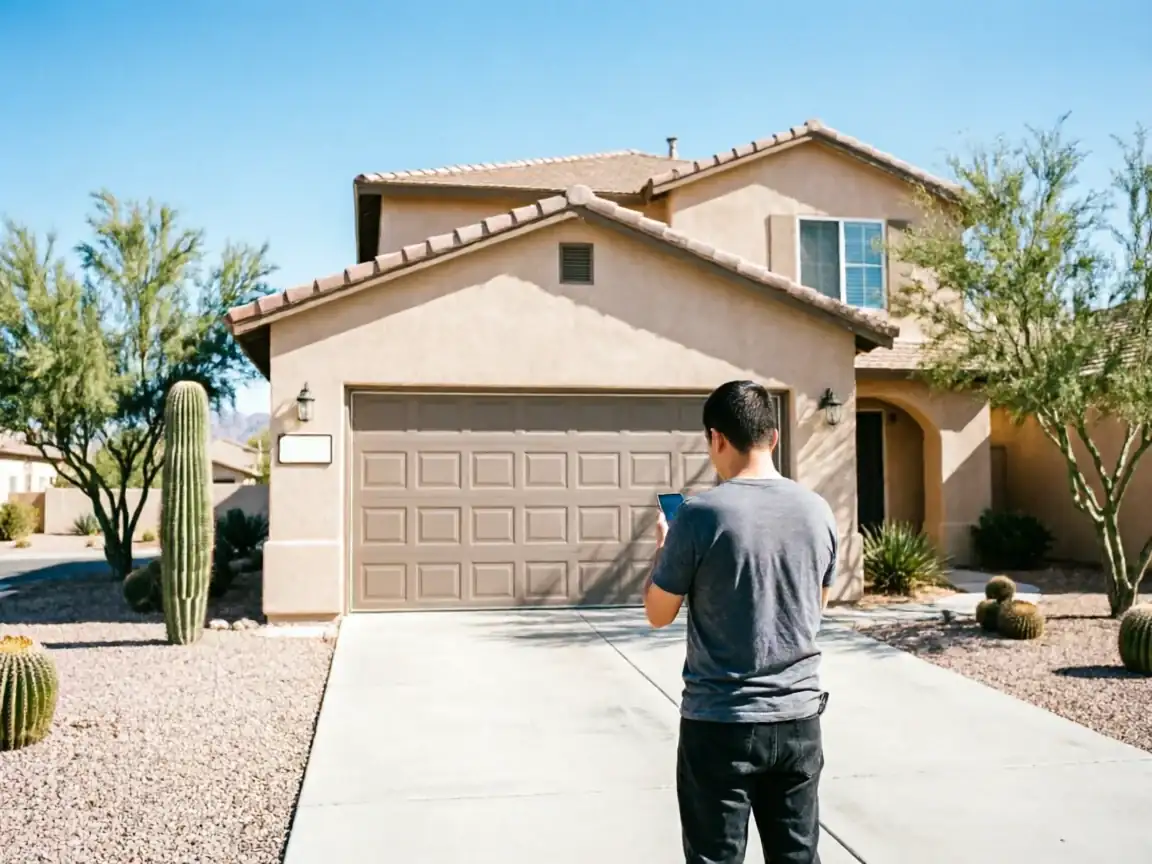
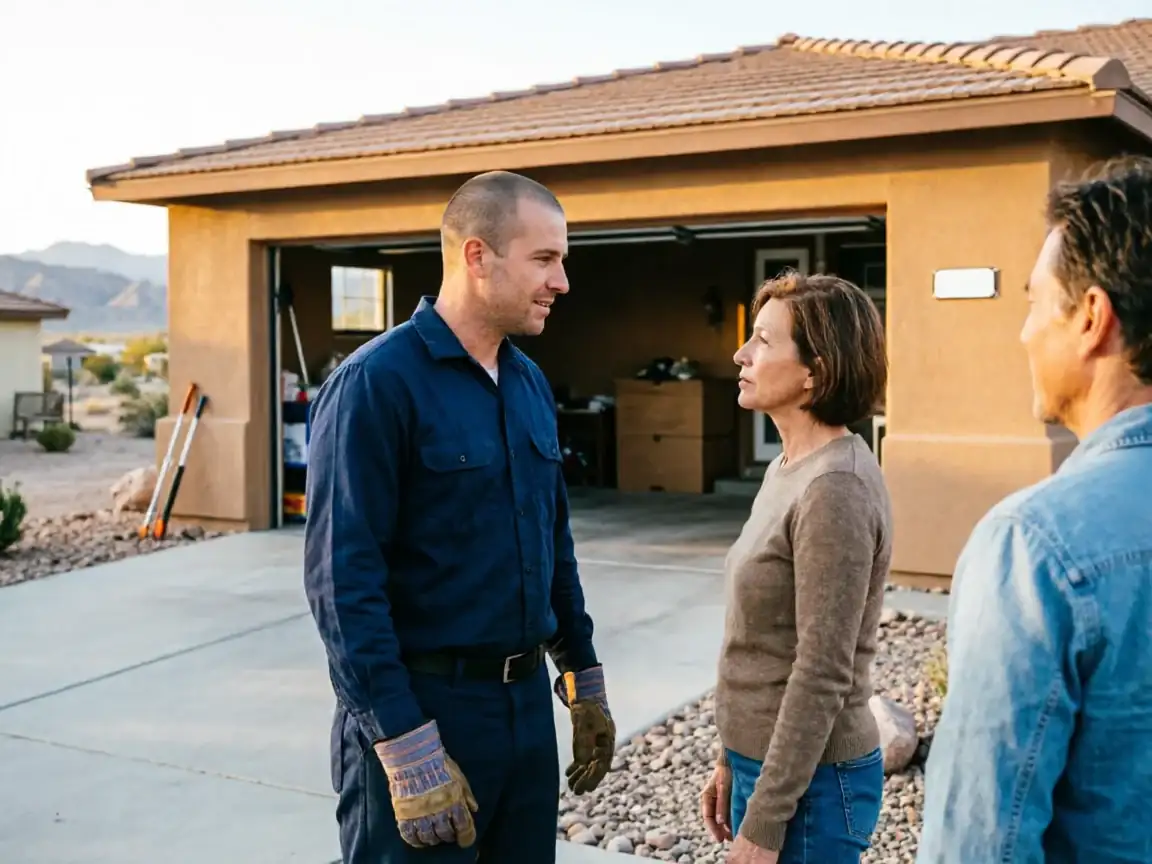
Call and describe what the door is doing, not just that it's 'broken.' Does it move but stop partway? Does the opener hum without lifting? Is a cable visibly off the drum? That tells us which parts to bring from Santa Fe instead of guessing on-site. Because we're traveling in rather than working from a local depot, a clear description up front saves a second trip. If your opener is original to a 1990s-era build, mention that too - older logic boards and older photo-eye brackets sometimes need a part we have to source rather than carry as standard stock.
The DIY Question
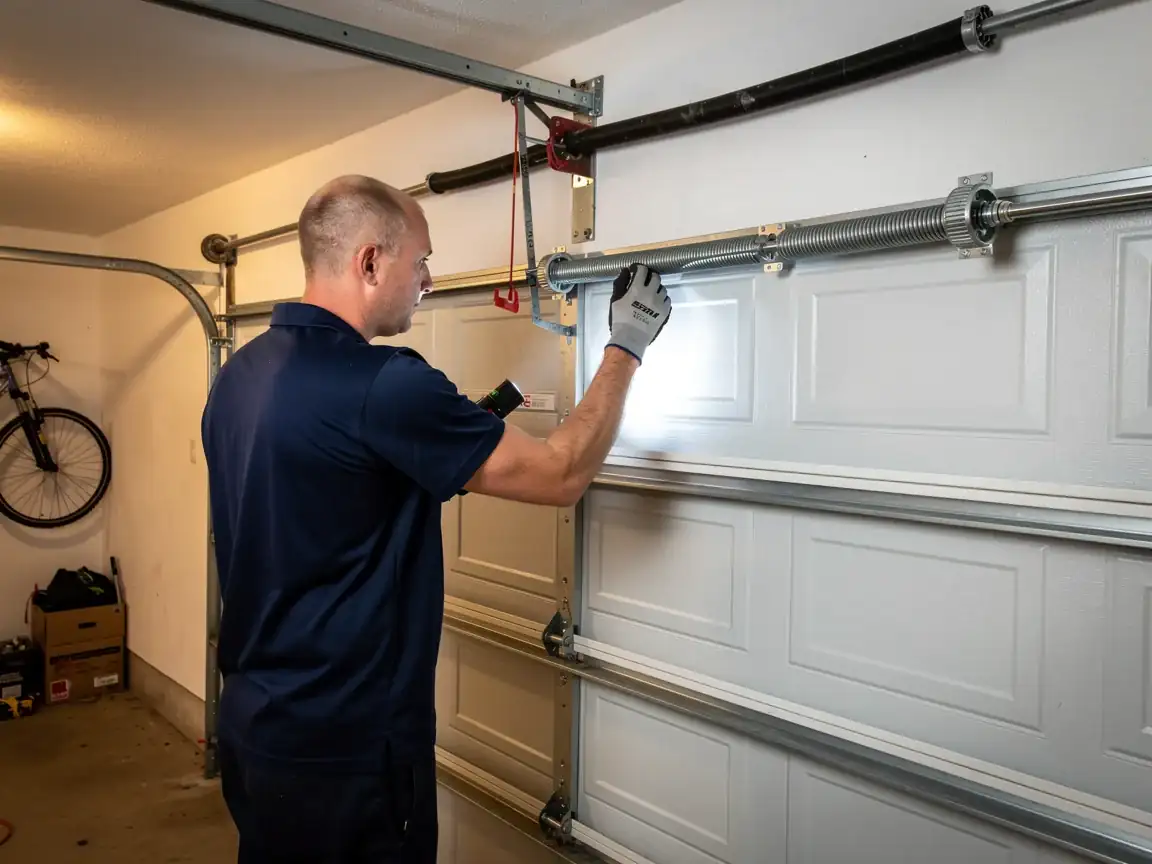
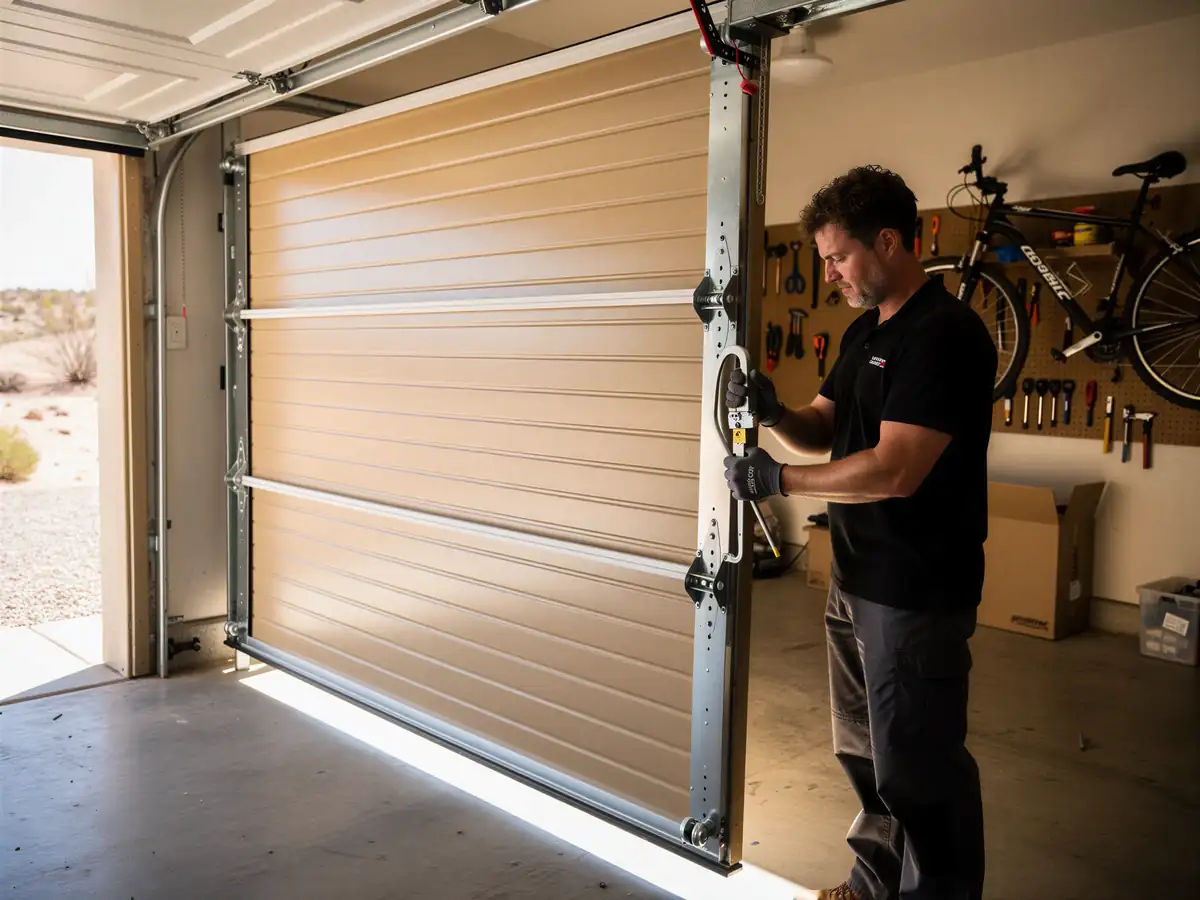
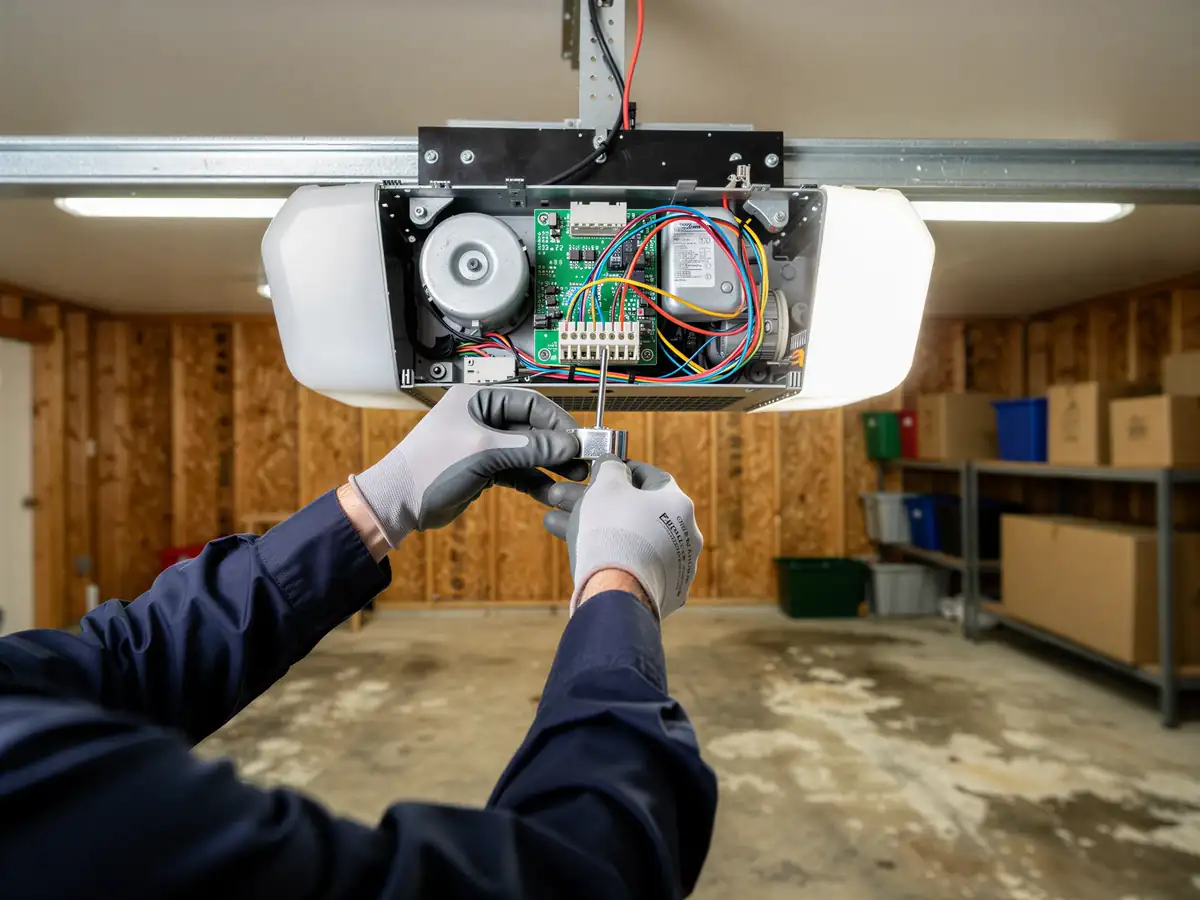
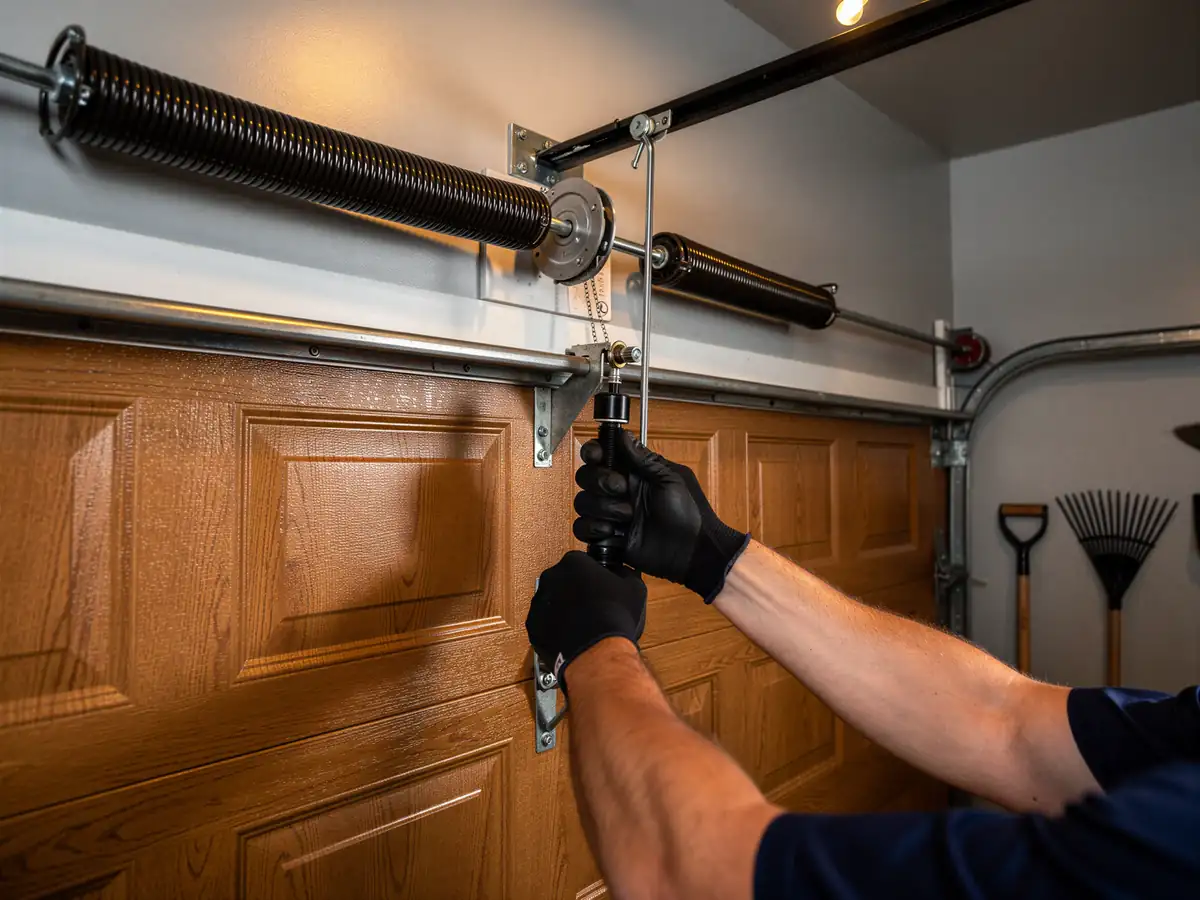
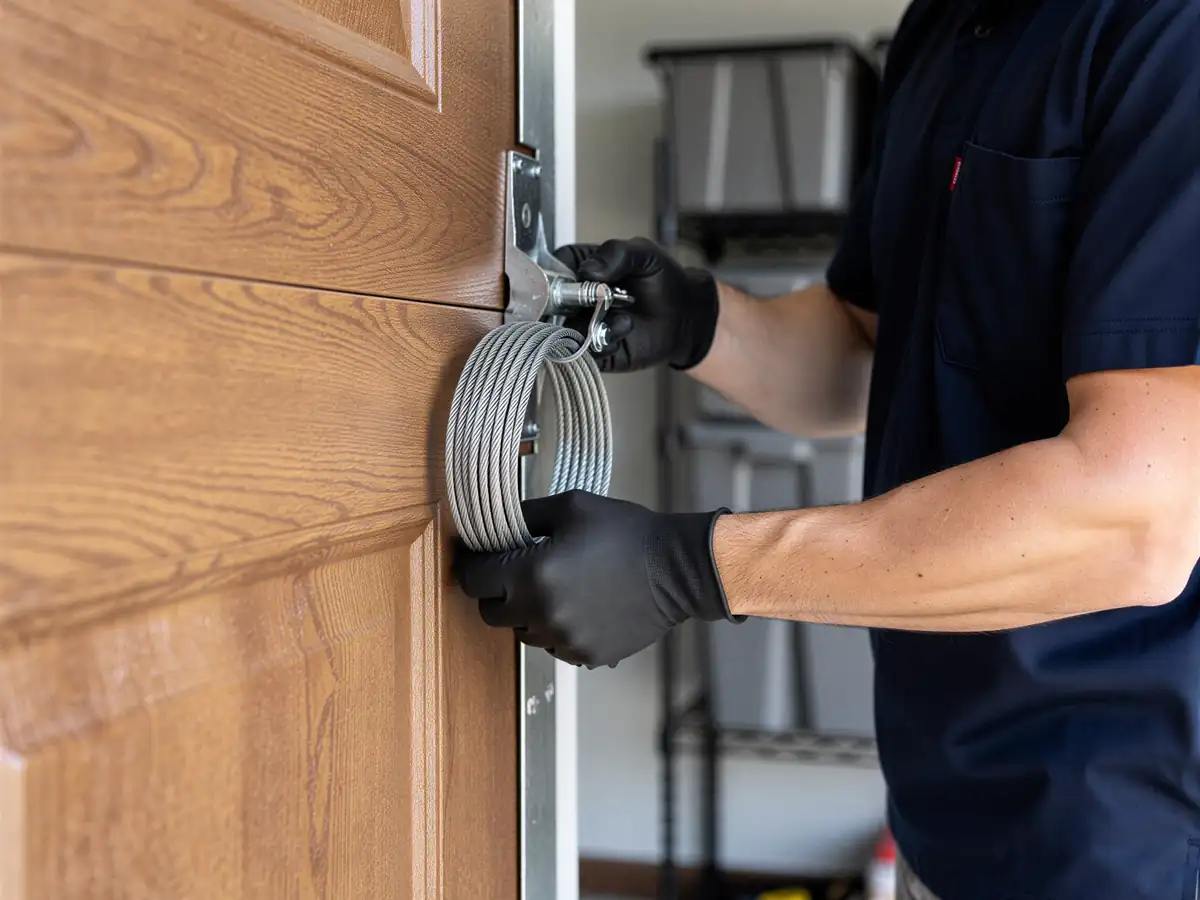
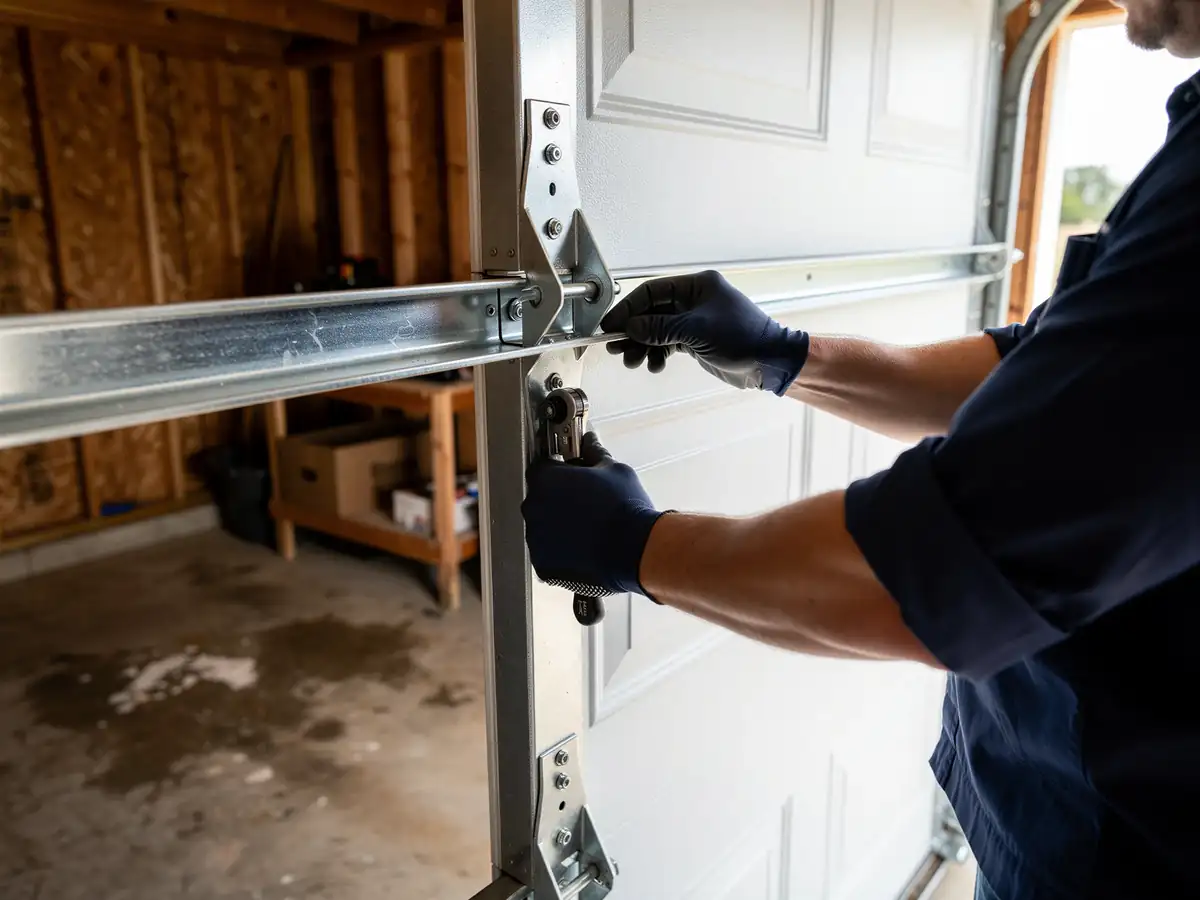
A loose bolt on a track bracket or a dirty photo-eye sensor, you can handle yourself. A broken torsion spring, a snapped cable, or an opener that's tripping its breaker is not a weekend project - torsion springs are under enough tension to break a bone, and on a 30-year-old door the hardware around them (end bearing plates, old-style drums) is often worn in ways you can't see until it's apart. With median household income here at $96,692, well above the wider service area's $68,432, we often see homeowners choose to replace rather than patch an original 1990s opener once it starts failing - but that's a budget call, not a safety one. The safety call is: springs and cables are not DIY.
What You Are Seeing
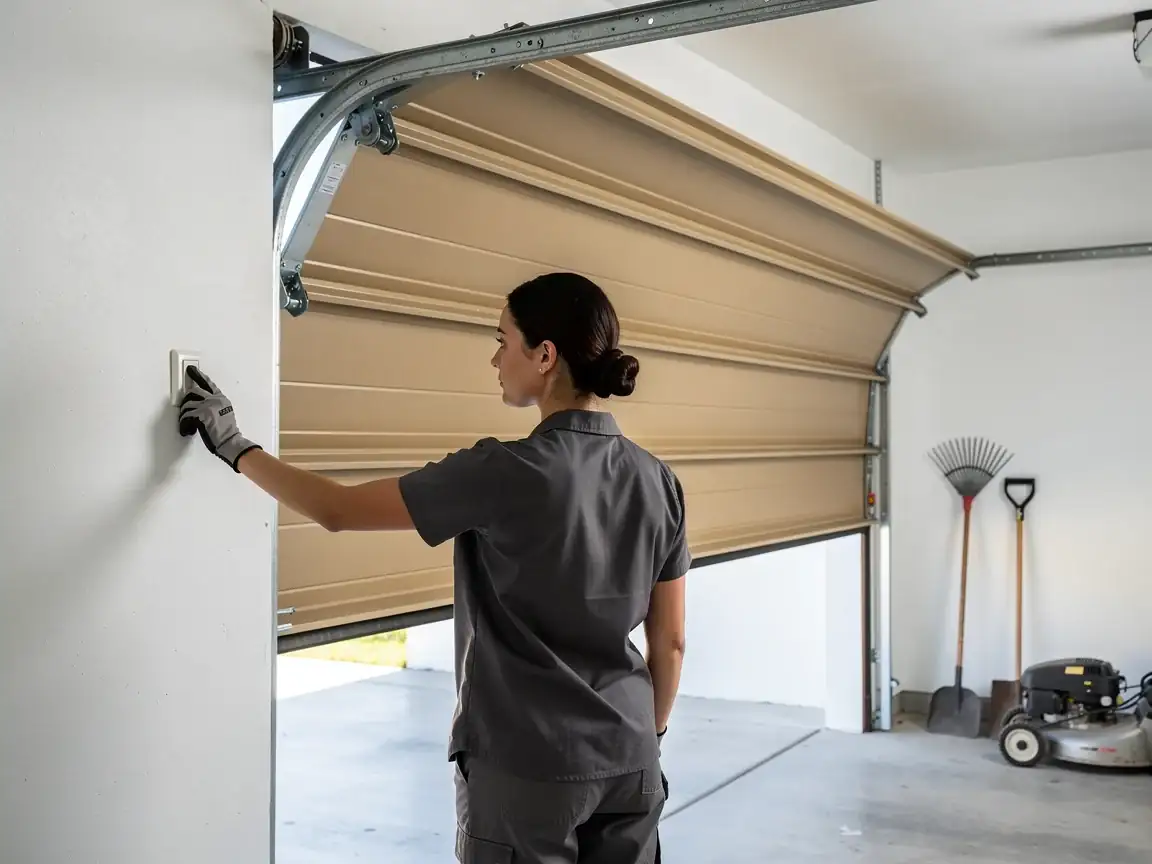
A door that jerks instead of gliding usually means rollers worn thin from age, not a motor problem. A loud bang followed by the door refusing to move is almost always a broken torsion spring - don't force the opener past that, you'll burn out the motor trying to lift dead weight. Opener remotes that work sometimes and not others, on a house this age, often point to a failing circuit board rather than a battery. If the door reverses right before it touches the floor, check the close-limit setting first, but on an original-to-1993 opener, that setting can drift with age regardless of what you do to it.
How We Fix It
We diagnose on site first - spring, cable, track, or opener board - because guessing leads to replacing the wrong part. On a house with original 1990s hardware, we'll tell you plainly if a repair is a patch on a system that's going to need the rest replaced within a year or two anyway; sometimes the honest answer is to replace the spring and opener together rather than fix one and have the other fail next winter. We carry common torsion springs and cables, and for older opener boards or less common roller sizes, we'll tell you upfront if it needs a special order rather than letting you wait and wonder.