Serving Santa Fe, NM & nearby
(505) 479-6421
Santa Fe, NM

Garage Door Maintenance for Eldorado at Santa Fe Homes

Eldorado at Santa Fe's houses mostly date to the early 1990s. We cover maintenance here from Santa Fe, 10 miles out, with the right fix for that era of hardware.

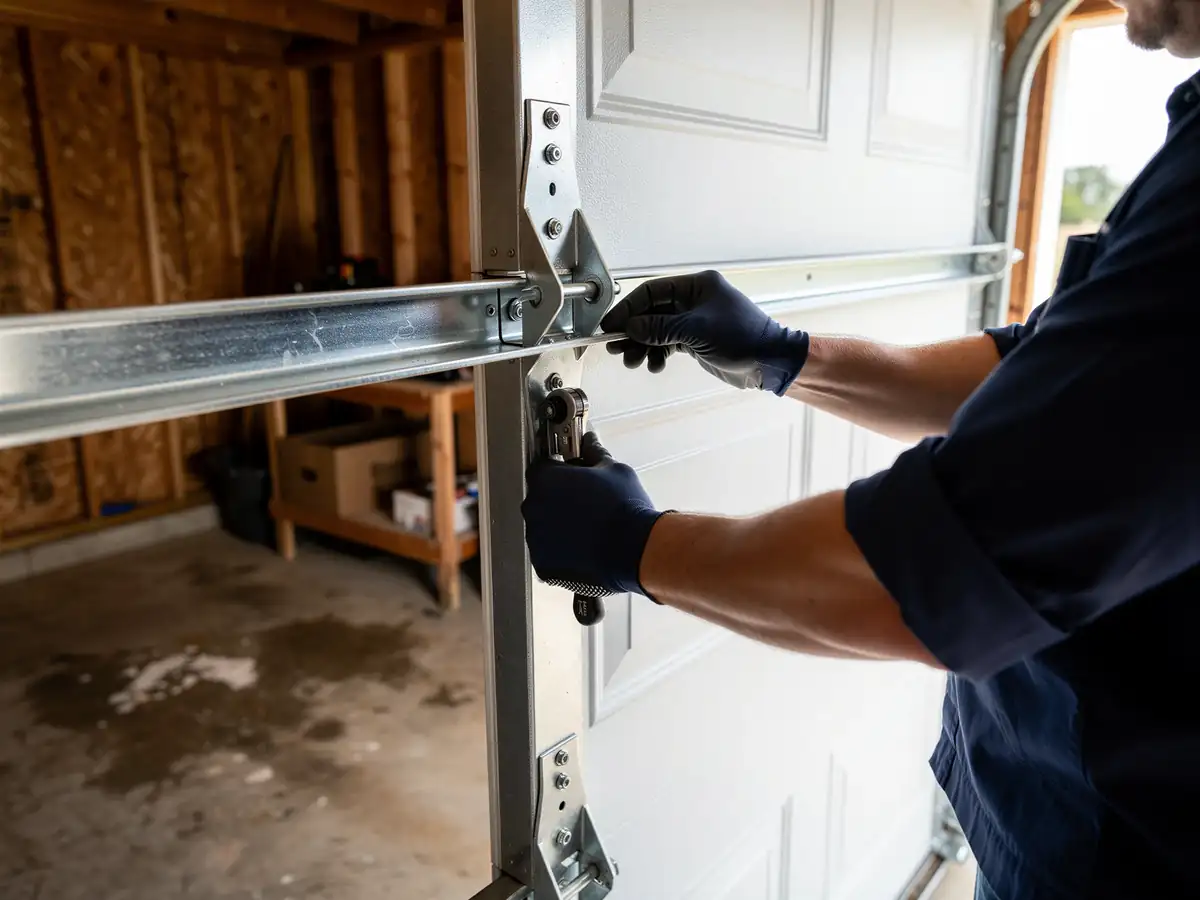
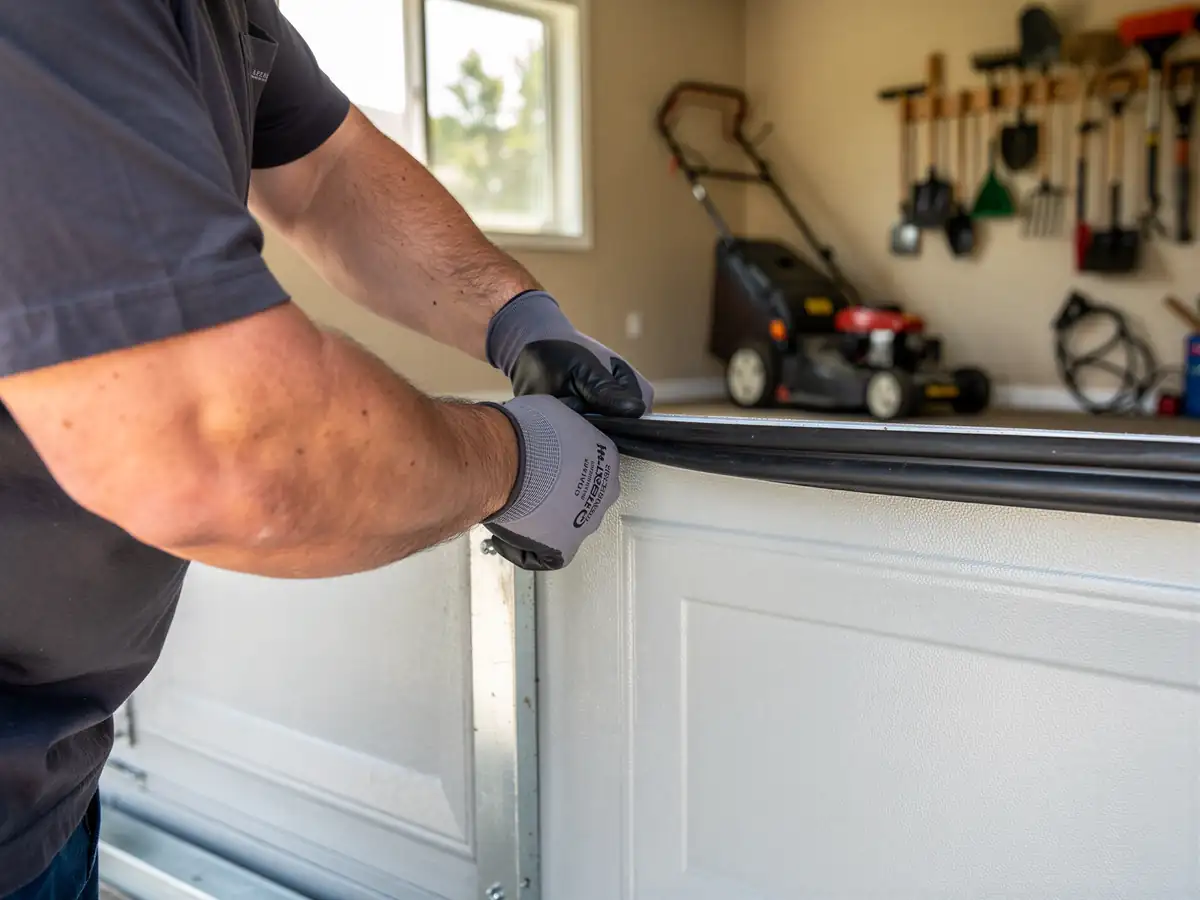
A technician wearing gloves installs a new weather seal on a white garage door.
Santa Fe, NM
8 services
5 service areas
Diagnosis first, then the fix

How Long You Are Without the Door

Eldorado at Santa Fe has around 2,756 households, a smaller slice of the roughly 10,772 across the whole area we cover out of Santa Fe. That matters for scheduling: a town this size doesn't generate enough call volume to justify a crew sitting idle nearby, so maintenance visits here get booked ahead rather than squeezed in same-day. We travel the 10 miles out to Eldorado on a set run, not a drop-in. If your door is still opening and closing, even roughly, that's a maintenance call, not an emergency one, and we'll say so plainly when you phone. If a spring has let go and the door won't move at all, that changes the timeline, but that's a separate conversation from the tune-up most owners here actually need. Either way, we're straightforward about when a visit can wait a few days and when it can't - and most of what we see in this neighborhood falls into the first category.

Booking a Visit

Because we come from Santa Fe, booking a maintenance visit in Eldorado at Santa Fe works best when you can tell us roughly how old the door and opener are. Most houses here date to around 1993, which puts the hardware squarely in the 1990s range - steel torsion doors, chain or belt openers from that decade, nylon rollers that are long past their service life even if nobody's replaced them yet. Knowing that up front lets us bring the right springs and parts on the first trip instead of a second one. We don't keep a branch in Eldorado, so same-day isn't something we promise for routine maintenance - we schedule it, usually within the week. If you've got a maintenance plan or a door that's never been serviced, either is fine to mention when you call; it changes what we check but not whether we'll come.

The DIY Question

Lubricating hinges and rollers, checking that the door is balanced, and tightening visible hardware are all things an owner can reasonably do between professional visits. What we don't recommend doing yourself is adjusting spring tension or taking apart the torsion assembly - the springs on a 1990s-era door store enough force to cause a serious injury, and we see that hardware fail in exactly the way it was built to fail three decades ago: wear, not drama, until it isn't. If your opener is original to a house built around 1993, it's also worth knowing that replacement parts for that generation of hardware are getting harder to source quickly, which is a limitation we're upfront about - sometimes the honest answer is that a full opener swap is cheaper and faster than hunting down a part for a thirty-year-old unit. We'll tell you which situation you're in rather than guess.

What Causes It Around Here

Winters in this region sit in a severe cold band, and that's true whether the house is near Santa Fe's older core or out in Eldorado. Steel track and nylon rollers both work harder through repeated freeze-thaw cycles, and grease that's fine in summer stiffens up and slows the door in January. What's different about Eldorado specifically is the age of the housing stock: at a median build year around 1993, most doors and openers here are newer than the 1973-1999 range that covers the rest of the service area, but they're also now old enough that original springs and rollers are wearing out together, on a similar schedule, across the whole neighborhood. We also see a higher median household income here than the area average - $96,692 against $68,432 - and in practice that tracks with owners who call for a tune-up before something breaks rather than after.

What You Are Seeing

A door that's noticeably louder than it used to be, especially on the way down, usually means the rollers on a 1990s door have worn past the point where lubrication helps. A door that drifts or hangs slightly uneven when you release the opener is a balance issue, often tied to a spring that's lost tension over thirty years of cold winters. If the opener runs but the door lags behind it, or reverses for no obvious reason, that's frequently the logic board or sensors aging out, not the door itself. None of these are emergencies, but they're the early signs that show up in houses this age, and catching them during a maintenance visit is cheaper than waiting for the spring to go or the opener to quit outright.

How We Fix It

For a typical maintenance visit on a house this age, we check spring tension and balance, inspect cables and the torsion bar for wear, replace rollers if they're cracked or flat-spotted, lubricate hinges and track, and test the opener's force and sensor settings. On original 1990s hardware, we'll tell you honestly if a part is worth replacing now versus waiting - some of what we find at this stage is wear that's cosmetic for another year or two, and some needs attention before next winter. We don't push a full door replacement on a maintenance call unless the hardware genuinely warrants it. The goal on a visit like this is to get the door running the way it did when the house was built, not to sell a bigger job than the one that walked in the door.
How it works

From “it’s stuck” to “it’s fixed”

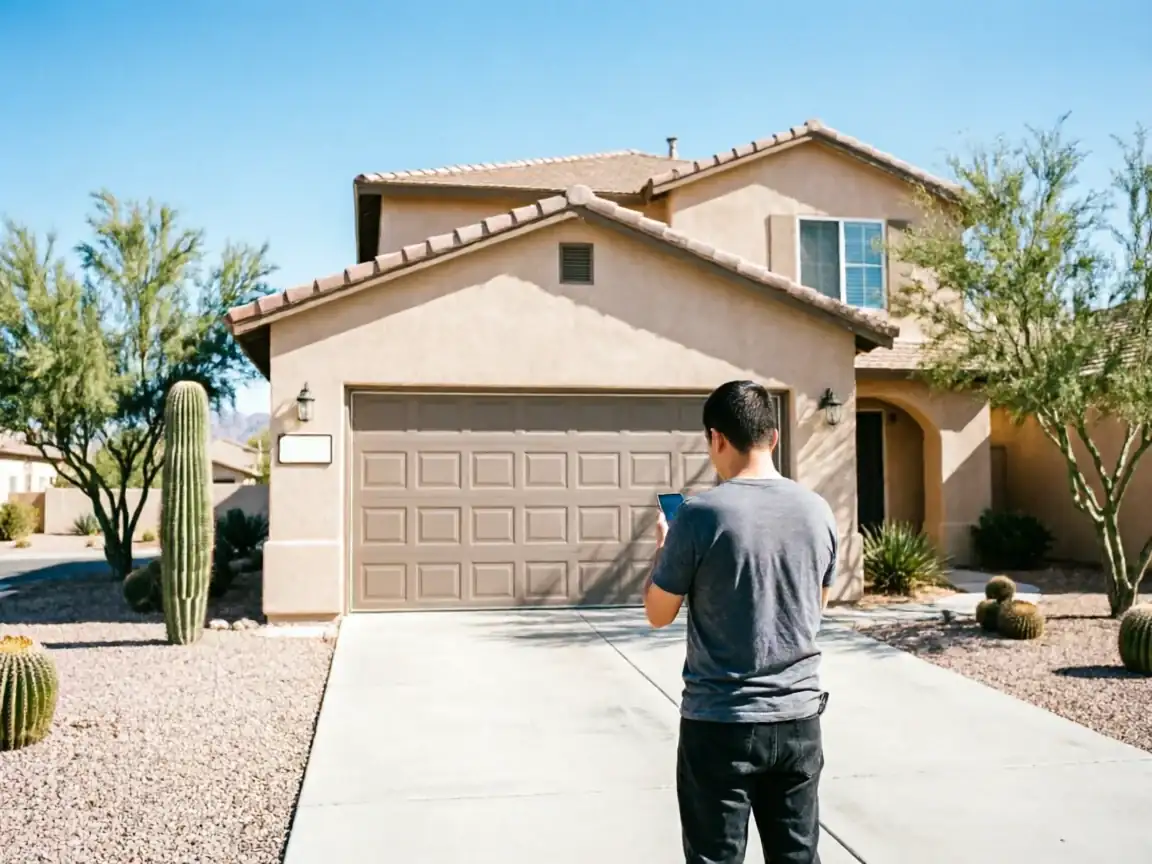
A man stands in a driveway, looking at his phone, facing a closed garage door.

Tell us what’s wrong

Describe the symptom - won’t open, loud bang, opener runs but the door won’t move.

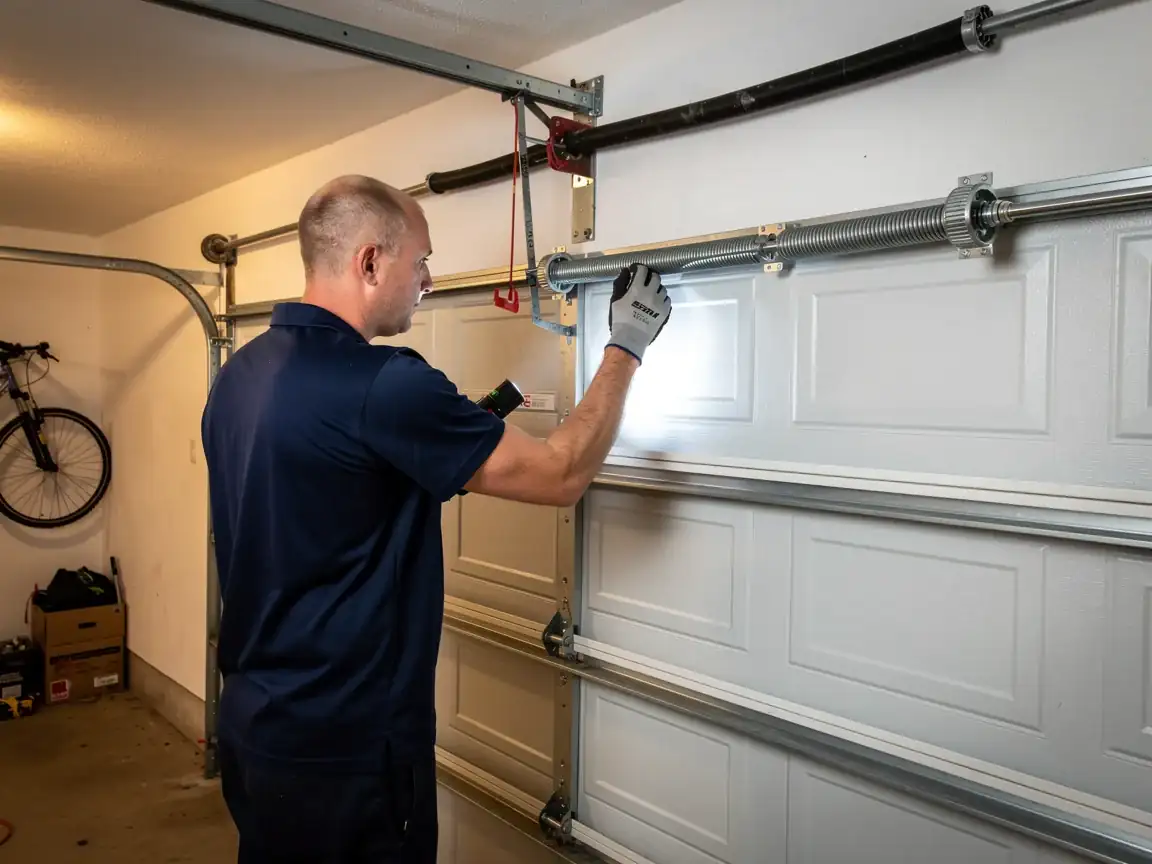
A technician shines a flashlight on a garage door torsion spring.

On-site diagnosis

A technician tests the door under power and by hand and finds what actually failed.

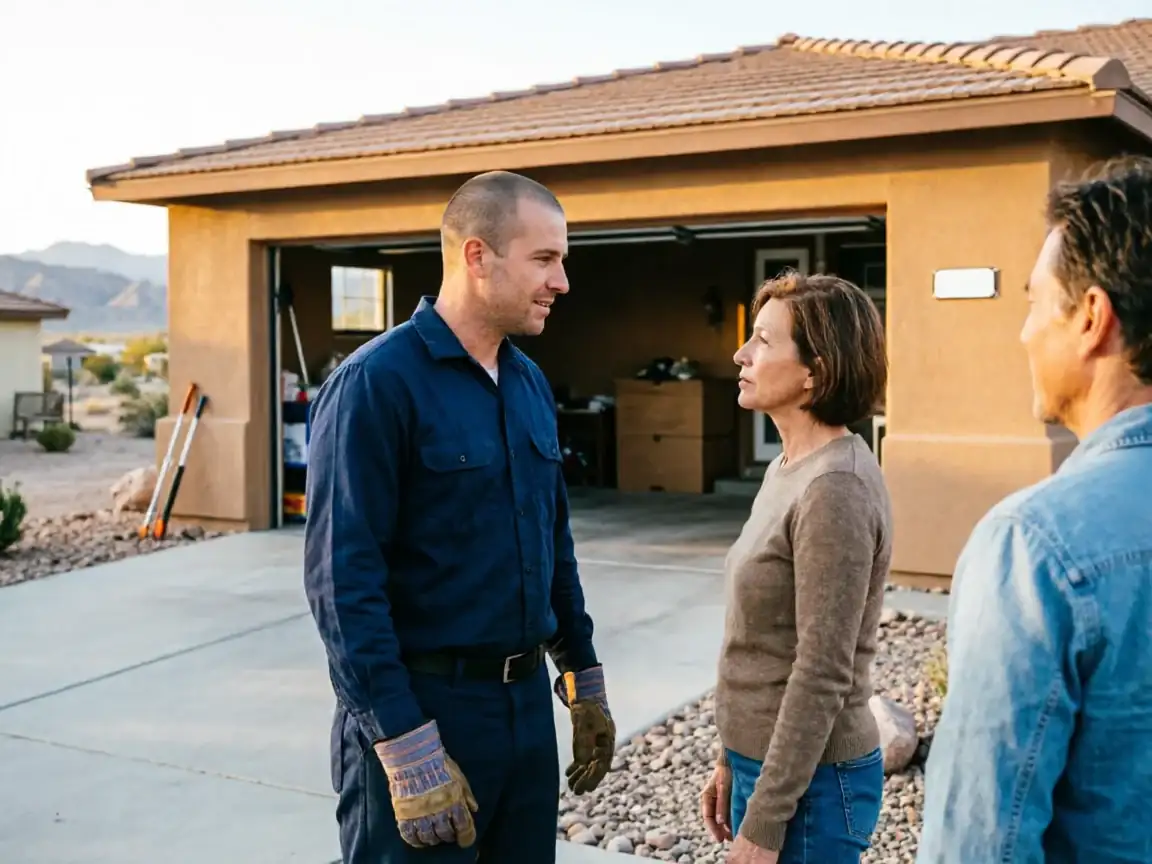
A technician in a blue uniform talks to a woman and a man in front of a garage.

Clear, up-front plan

You get the fix that’s needed and what drives the cost - before any work starts.

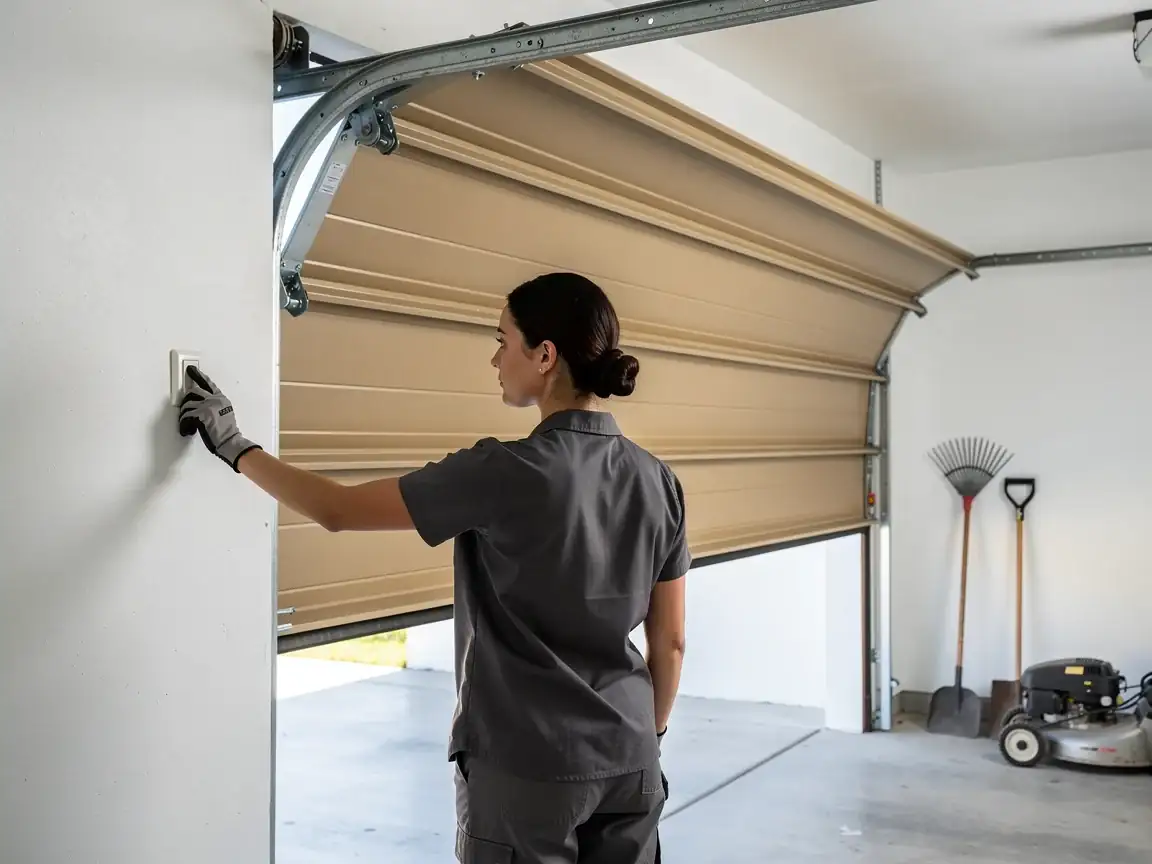
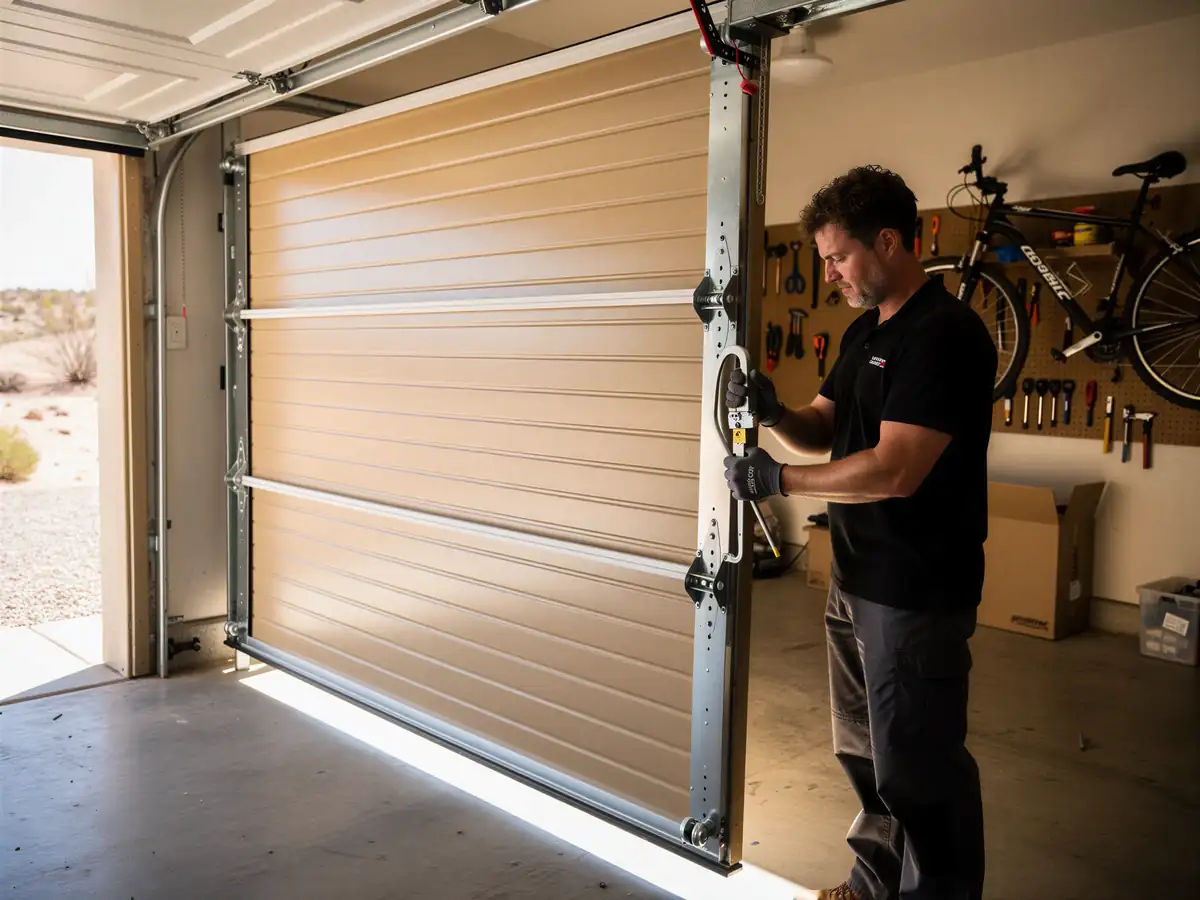
A technician in gray work clothes presses a button to open a tan garage door.

Repaired & tested

The repair is done, the door is set true and tested, and the work area left clean.

Not sure which repair your door needs in Santa Fe, NM? Describe what it’s doing - every job starts with a diagnosis.

How we work

What to expect

Diagnosis firstEvery visit starts by finding what actually failed - not a pre-written parts list.
The right part for the doorSprings and openers matched to the door’s weight and age, so the fix holds up.
Straight answersWhen a repair makes more sense than a replacement - or the reverse - you hear it plainly.
Clean, careful workTension released safely, hardware set true, the door tested under power before we leave.
87,505
Residents in Santa Fe
8Garage door services
5Neighborhoods & suburbs
NMServing Santa Fe, NM
Questions

Frequently asked

Straight answers about garage door repair in Santa Fe. Still unsure? Ask us directly.

How often should a door built around 1993 get serviced?

Once a year is reasonable for hardware this age, more often if you use the garage daily or park a second car in it. Annual maintenance catches worn rollers and loosening hardware before they turn into a stuck door or a snapped cable, which matters more once the original parts pass the 25-to-30-year mark.

Do you keep a crew based in Eldorado at Santa Fe?

No. We cover Eldorado at Santa Fe from Santa Fe, about 10 miles away, and schedule maintenance visits rather than offer same-day drop-ins for routine service. If your door is fully stuck, call and we'll tell you honestly how soon we can get out.

My opener is original to the house. Can you still get parts for it?

Sometimes, but parts for openers from the early 1990s are getting harder to source quickly. If a replacement part would take longer to find than it's worth, we'll say so and lay out whether a new opener makes more sense than chasing a part for the old one.

Ready to get your garage door sorted?

Tell us what it’s doing and where you are in Santa Fe - we’ll take it from there.

Request a QuoteCall