Booking a Visit
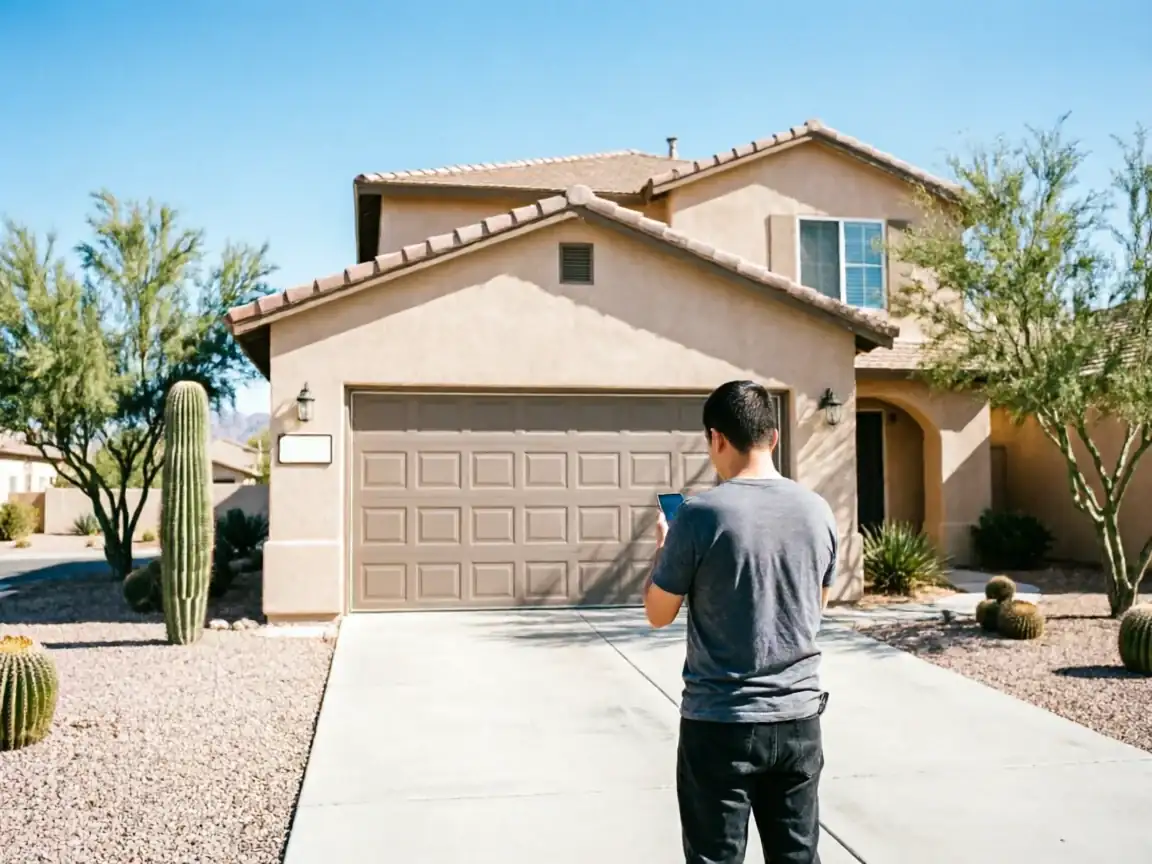
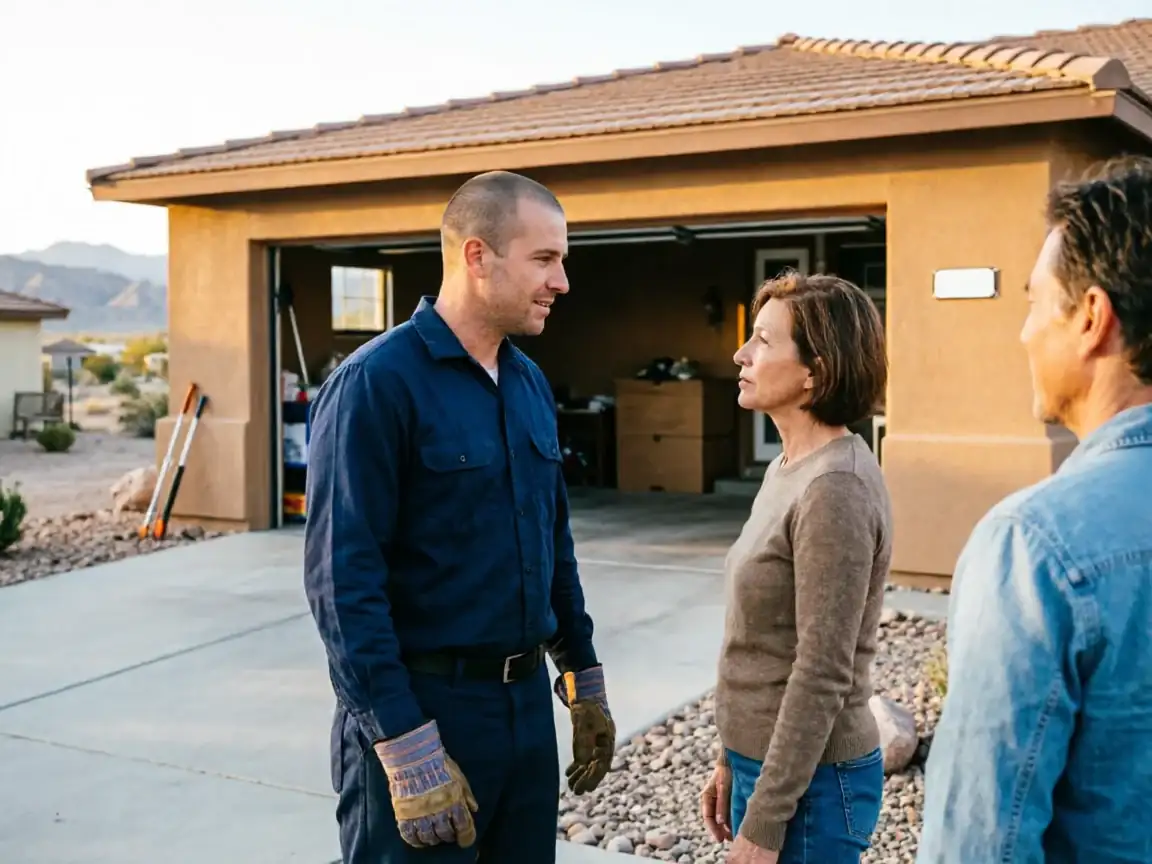
Call and tell us what the door is doing: won't budge, opens a few inches and stalls, or came down hard and fast. Those are different failures and they point to different repairs, so the more specific you are, the better we can plan the trip out from Santa Fe. We'll ask for the door's rough age or the age of the house, since Eldorado at Santa Fe's housing stock is tight around 1993, and that tells us a lot about what hardware is likely still on the track. We also ask about double doors versus single, because a 16-foot double usually carries two springs working together, and if one let go, the other is probably close behind it. We schedule the visit, bring springs sized to the door's actual weight rather than a generic size, and do the swap in one trip when the diagnosis holds up on site.
The DIY Question
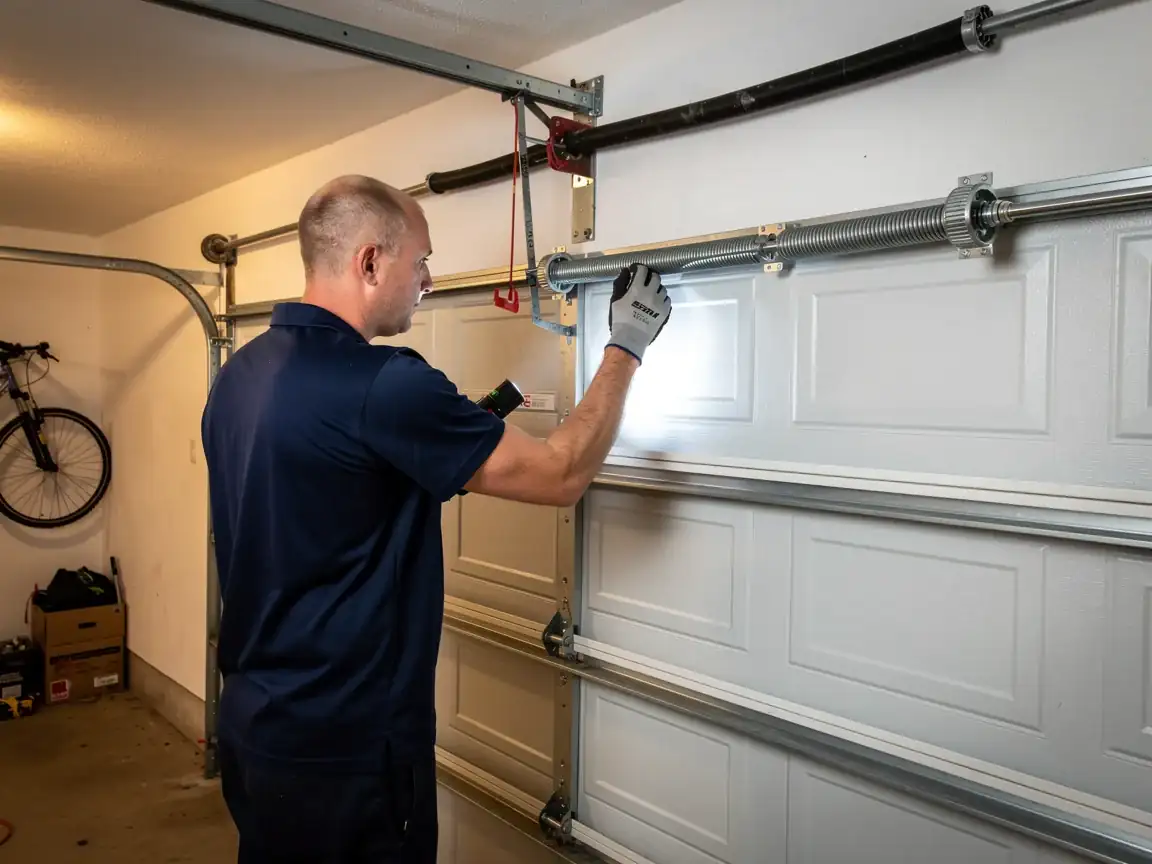
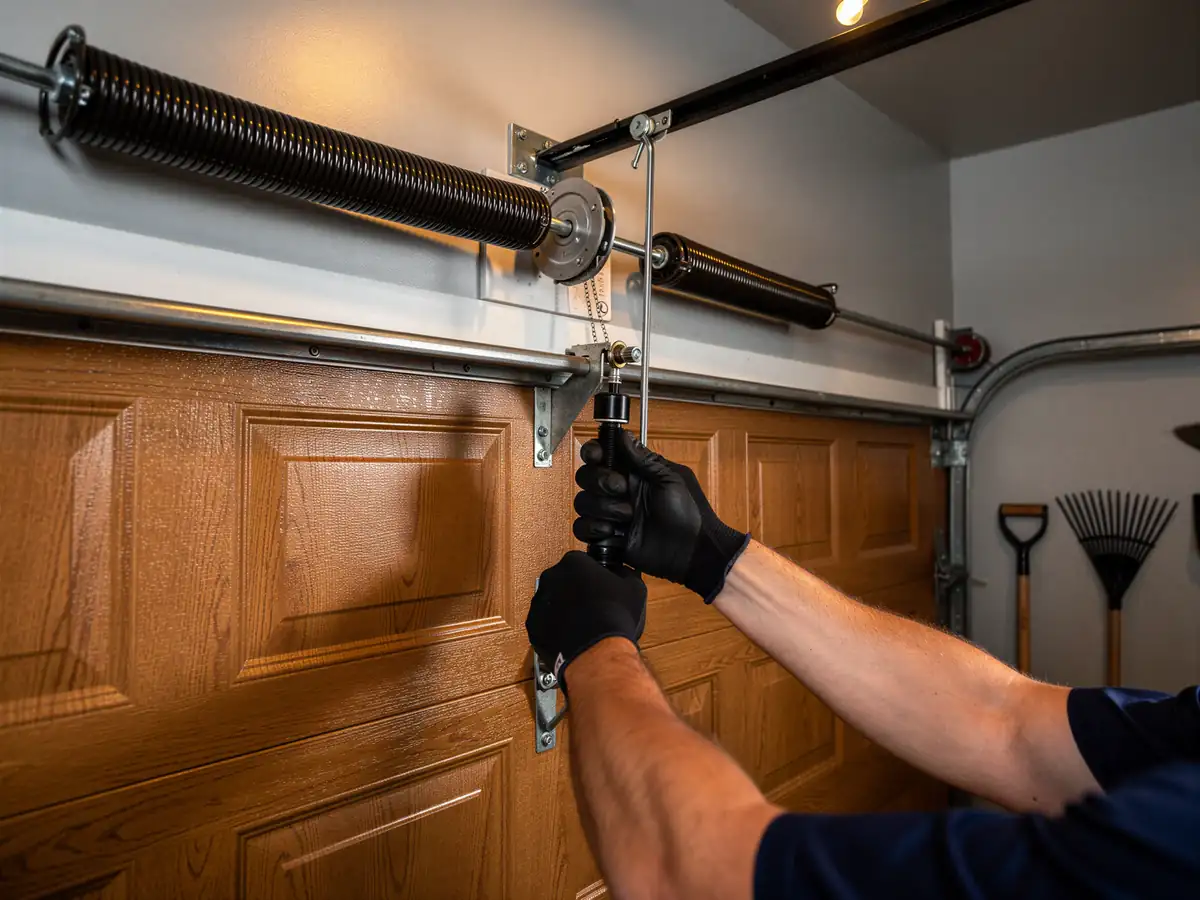
A torsion spring holds a lot of stored energy, enough to break fingers or worse if the winding bar slips. We're not going to walk you through doing this yourself, and any guide that makes it sound simple is leaving out the part where people get hurt every year trying it. If you're comfortable popping the plastic trim to look at the spring and read off a wire thickness, go ahead - that's useful information for us. But the winding and unwinding itself is where we draw the line. The one place DIY makes sense is the stuff around the repair: clearing the garage floor, pulling the car out, and having the opener unplugged before we arrive. That's the honest limit here. We'd rather tell you to leave the spring alone than show up to a trip that started with a homeowner already hurt trying to save the drive-out charge.
What You Are Seeing
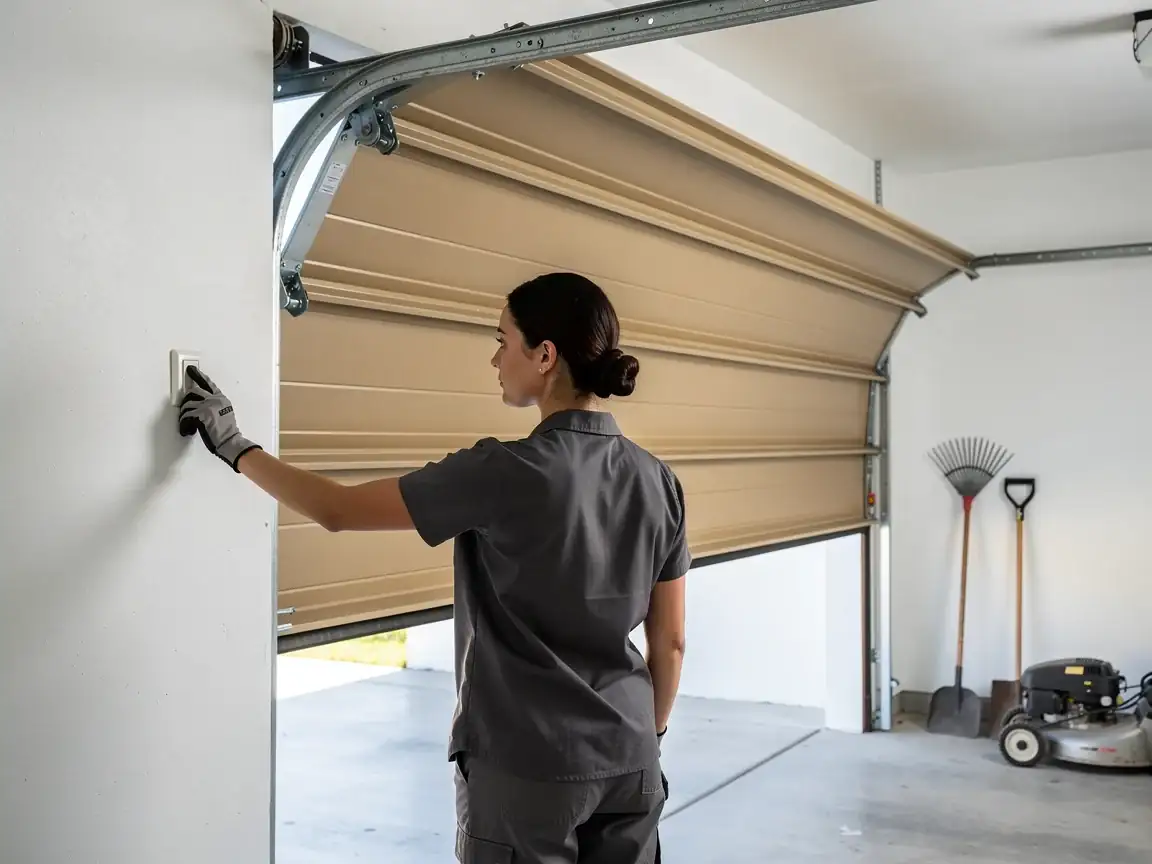
The clearest sign is a door that won't lift when you hit the opener button - the motor runs but the door barely moves, or it moves a few inches and stops. Sometimes you'll hear it before you see it: a loud bang from the garage, usually when nobody's touched the door at all, which is the spring letting go under tension rather than during use. A door that slams down fast instead of lowering evenly is another one, since the spring is what controls the descent, not just the lift. You might also notice the opener straining harder than usual for a week or two before the full break, which is the spring losing tension gradually rather than all at once. On double doors, one spring can fail while the other still holds partial weight, so the door might still open, just unevenly, tilting to one side as it goes up. That lopsided lift is worth calling about before the second spring goes too.
How We Fix It
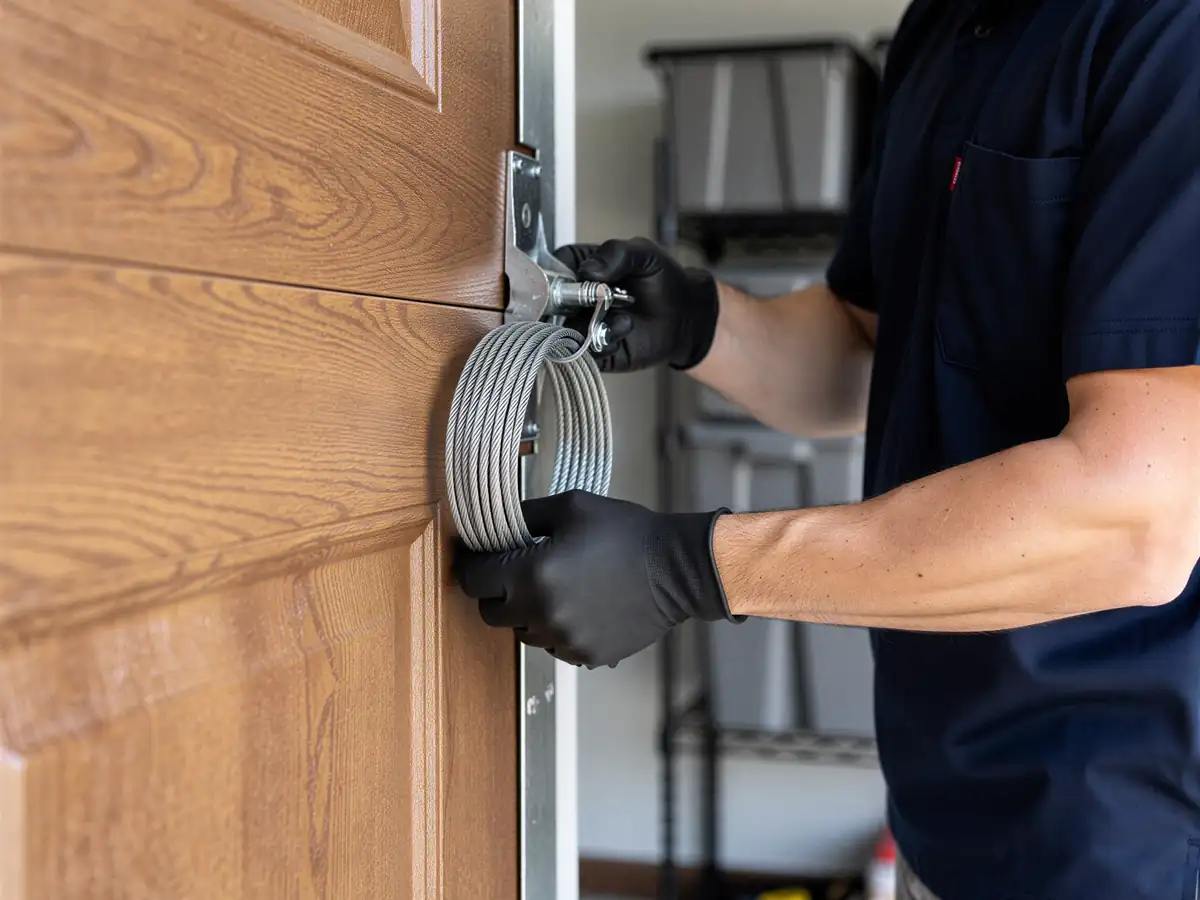
We replace the spring with one sized to the door's actual weight, not a generic stock size, since an undersized spring just fails again sooner. On a double door with two springs, we replace both, even if only one broke - the surviving spring is usually close behind on cycle count and replacing just one leaves a mismatched pair pulling unevenly. We check the cables, drums, and center bearing while we're in there, since a spring failure sometimes takes a cable with it, and finding that on this trip beats a second drive out from Santa Fe. Once the new spring is wound and balanced, we test the door through a full cycle by hand before handing it back to the opener, checking that it holds level partway open on its own. If the track or rollers show wear from the door running unbalanced before the break, we'll flag that honestly rather than fold it into the spring job unasked.