How Long You Are Without the Door
A snapped lift cable doesn't always mean the door won't move
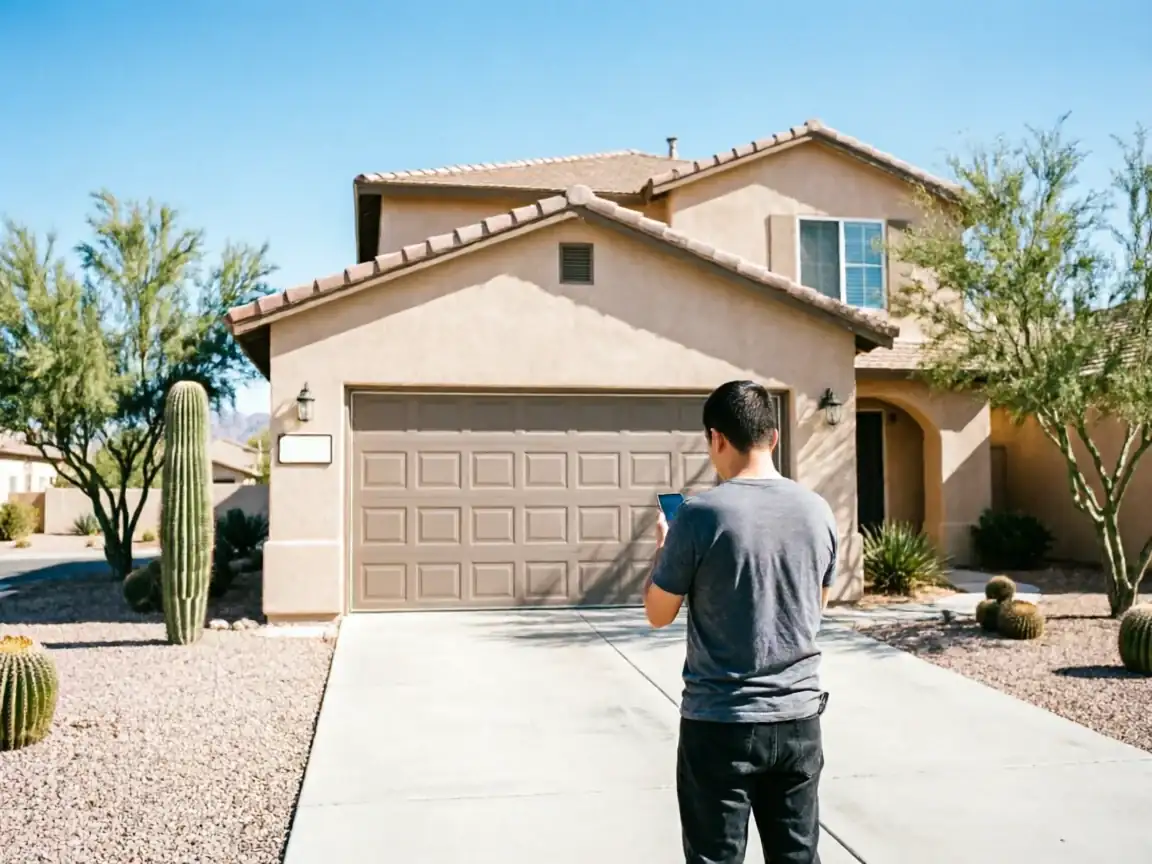
It means the door moves wrong, usually hanging crooked on one side or refusing to clear the floor. In El Rancho, where most houses went up around 1982, that crooked hang is almost always a cable that's frayed through at the drum or popped off the bottom bracket, not a spring failure. We travel the 17 miles out from Santa Fe for this call, so the door sits unusable until we get a truck there - we don't pretend otherwise. Once we're on site, a standard cable swap on a single door is usually finished the same visit; if both cables have gone and the drums are scored, that adds time because we're not leaving a mismatched set on a torsion system.
- 17 miles
What changes the timeline isn't the drive, it's what we find when the door opens
A 1982-era door that's never been touched has original hardware - cable size and drum pitch that newer stock doesn't always match on the shelf. We carry the common sizes on the truck; anything unusual means a short parts run before we finish the job.
Booking a Visit
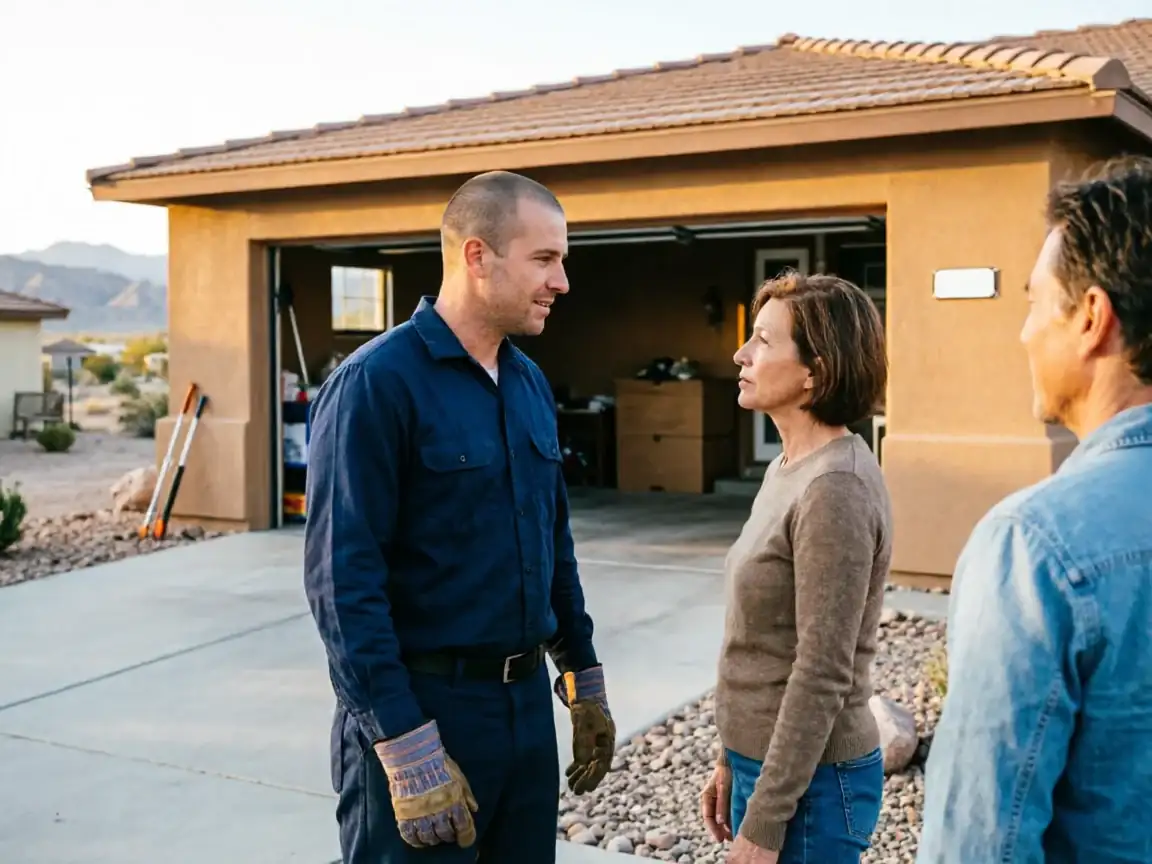
Tell us the door won't open past a foot, or that it's hanging tilted - that's enough for us to load the right cable stock before we leave Santa Fe. We don't run a branch in El Rancho, so every visit here is scheduled as a drive-out call, not a drop-in. Letting us know the door's rough age (builders in this area were mostly working in the 1980s and 90s) helps us bring the right drum and cable combination the first time instead of guessing.
Parts We Carry
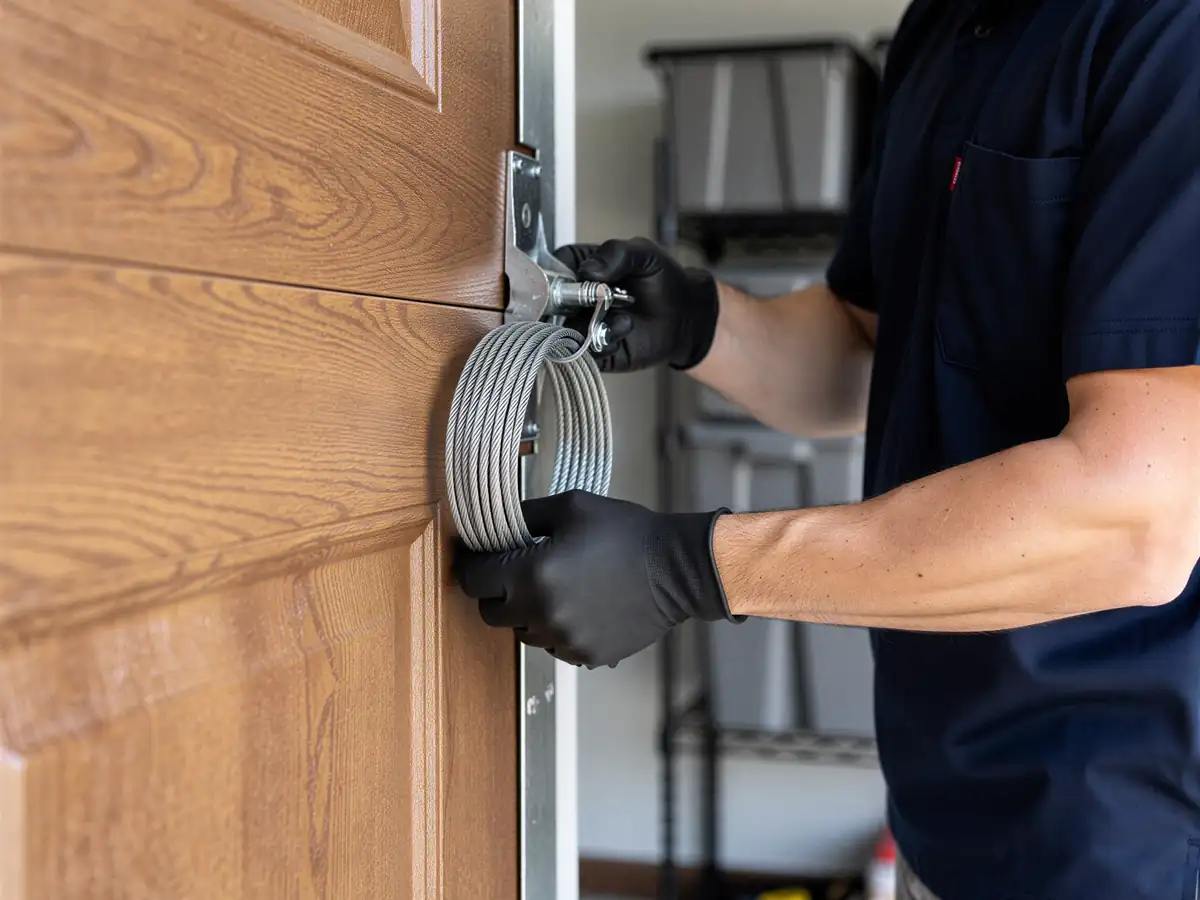
Lift cables come in a handful of diameters and lengths, and the drum pitch has to match the cable or it unwinds unevenly - that's the actual cause of most of the crooked-door calls we get from this stretch of homes built around 1982. We stock the standard 1/8-inch and 3/32-inch galvanized aircraft cable sizes that cover the vast majority of torsion and extension systems from that era. Bottom brackets and cable clips wear out alongside the cable itself, so we bring those too rather than reusing a stretched bracket on a new cable.
What we don't carry on the truck is obsolete drum stock for a handful of oddball openers that a few builders used in that period - if we hit one of those, we'll tell you straight rather than force a mismatched part onto your door.
What Can Go Wrong
Cables fail two ways
They fray gradually at the drum from UV and grit until a few strands let go, or they pop off a bottom bracket that's rusted or bent. Houses in this part of the service area are old enough now - most from 1982 - that original cable has had four decades of winters to work on it. Santa Fe's winters are cold enough that galvanized coating thins faster than in a mild climate, and once the zinc goes, the steel underneath rusts from the inside of the strand out, which you can't see until it snaps.
A door that drops suddenly on one side
Or one that creeps open crooked and jams a few inches up, is telling you a cable is close to done - not safe to keep running while you wait.
How We Fix It
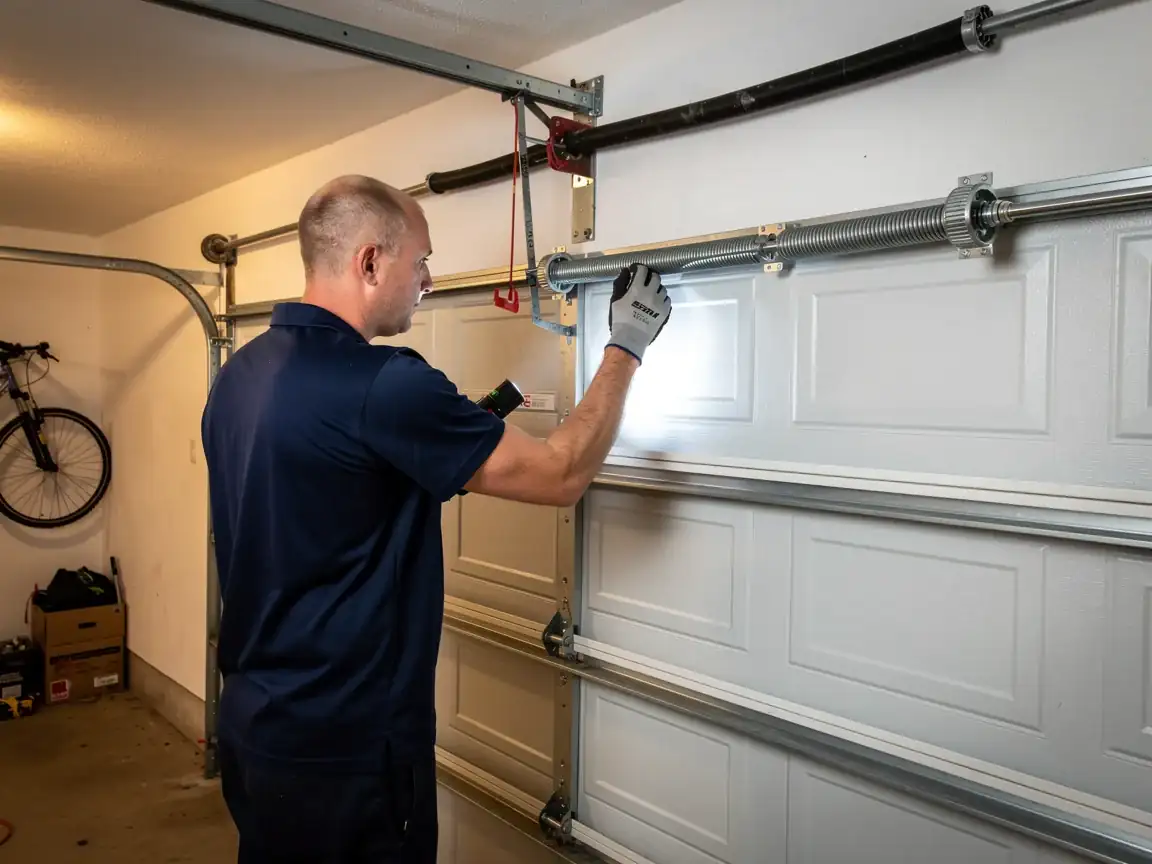
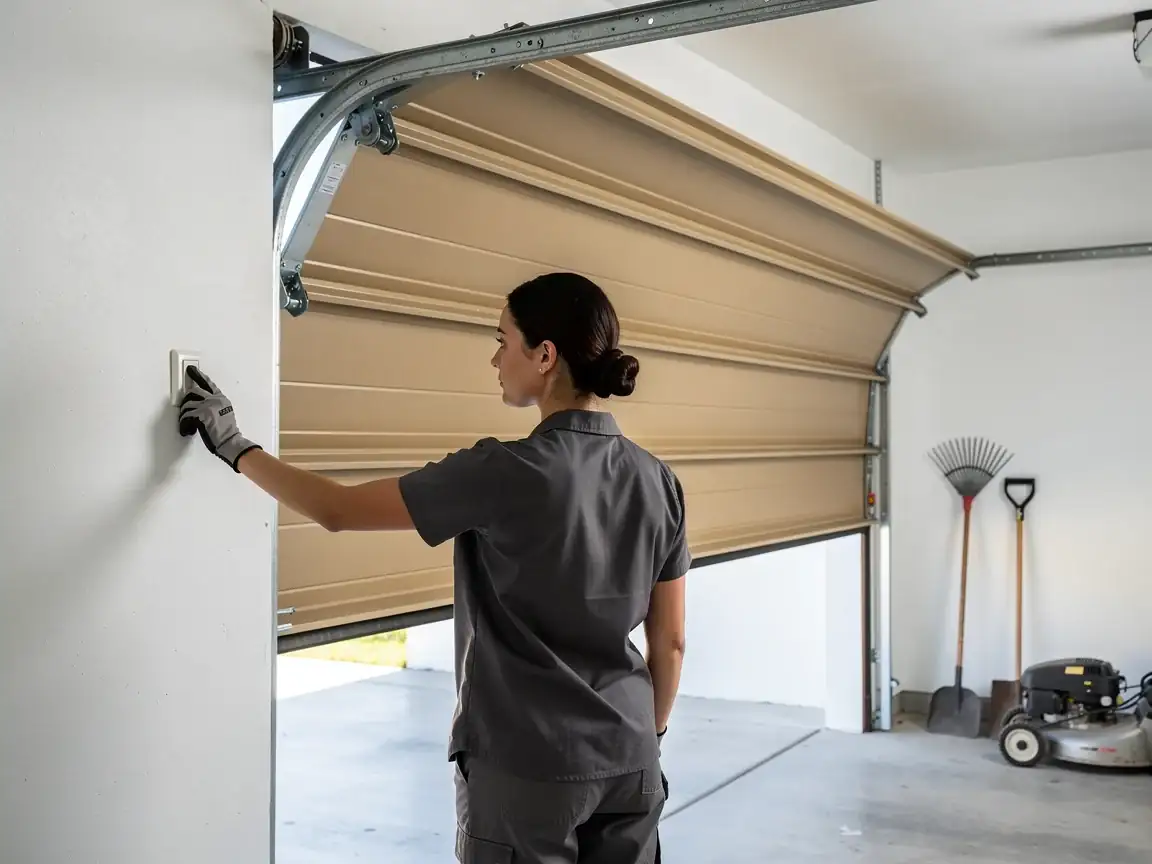
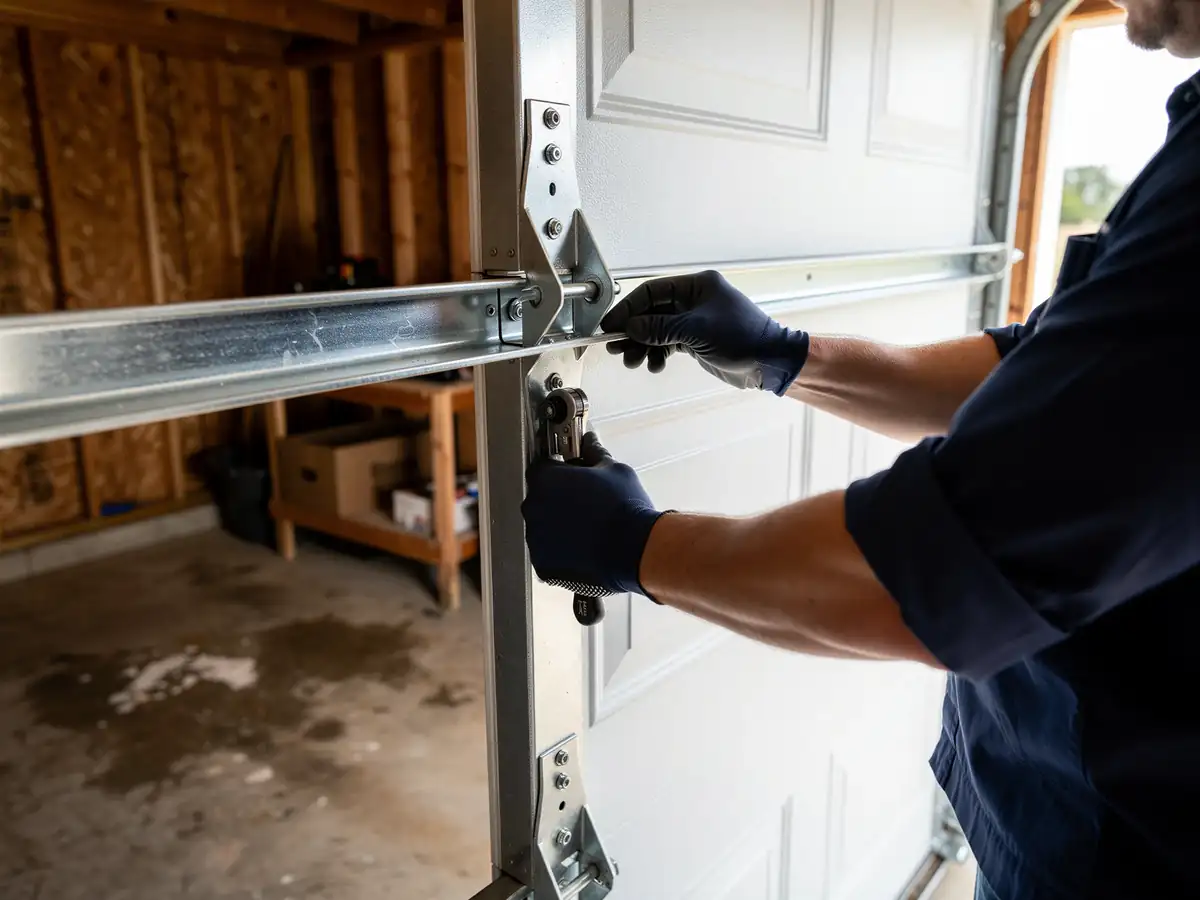
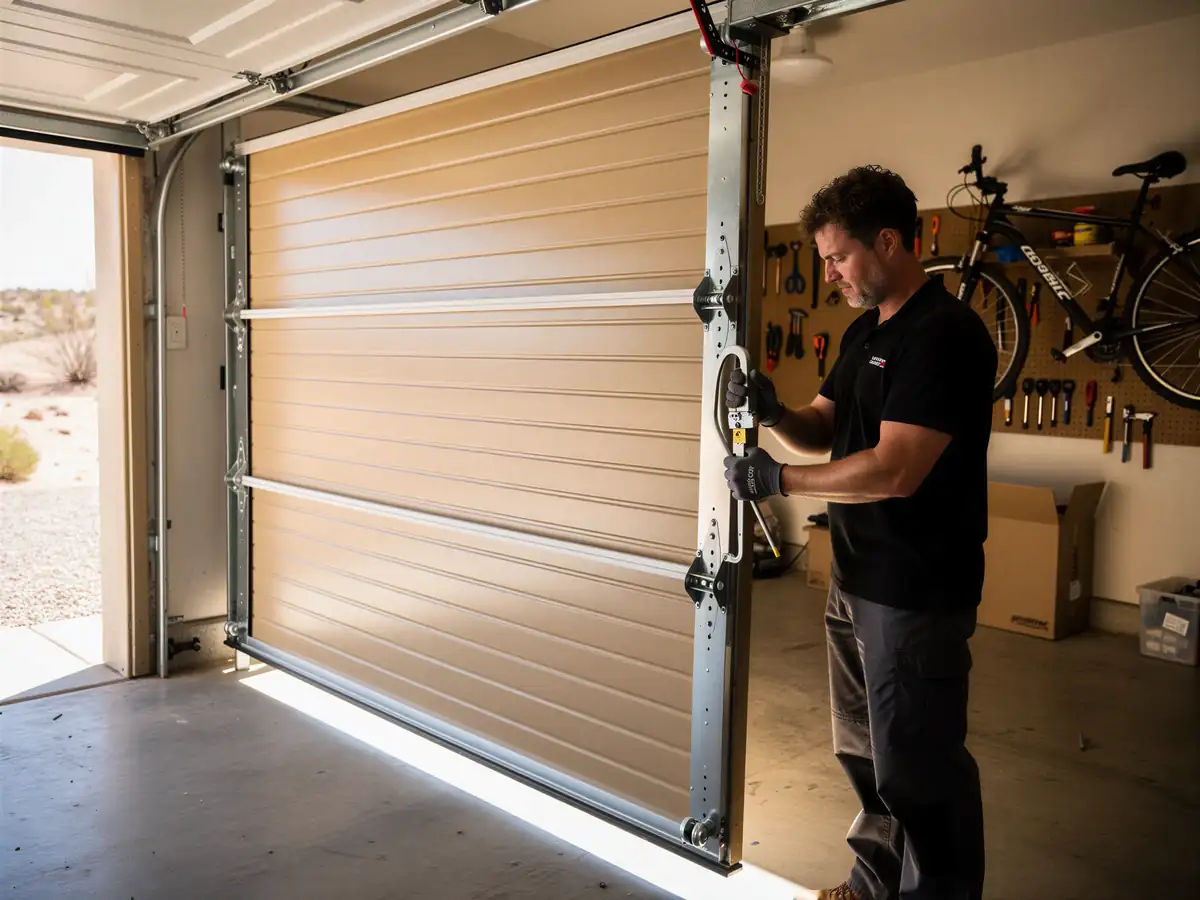
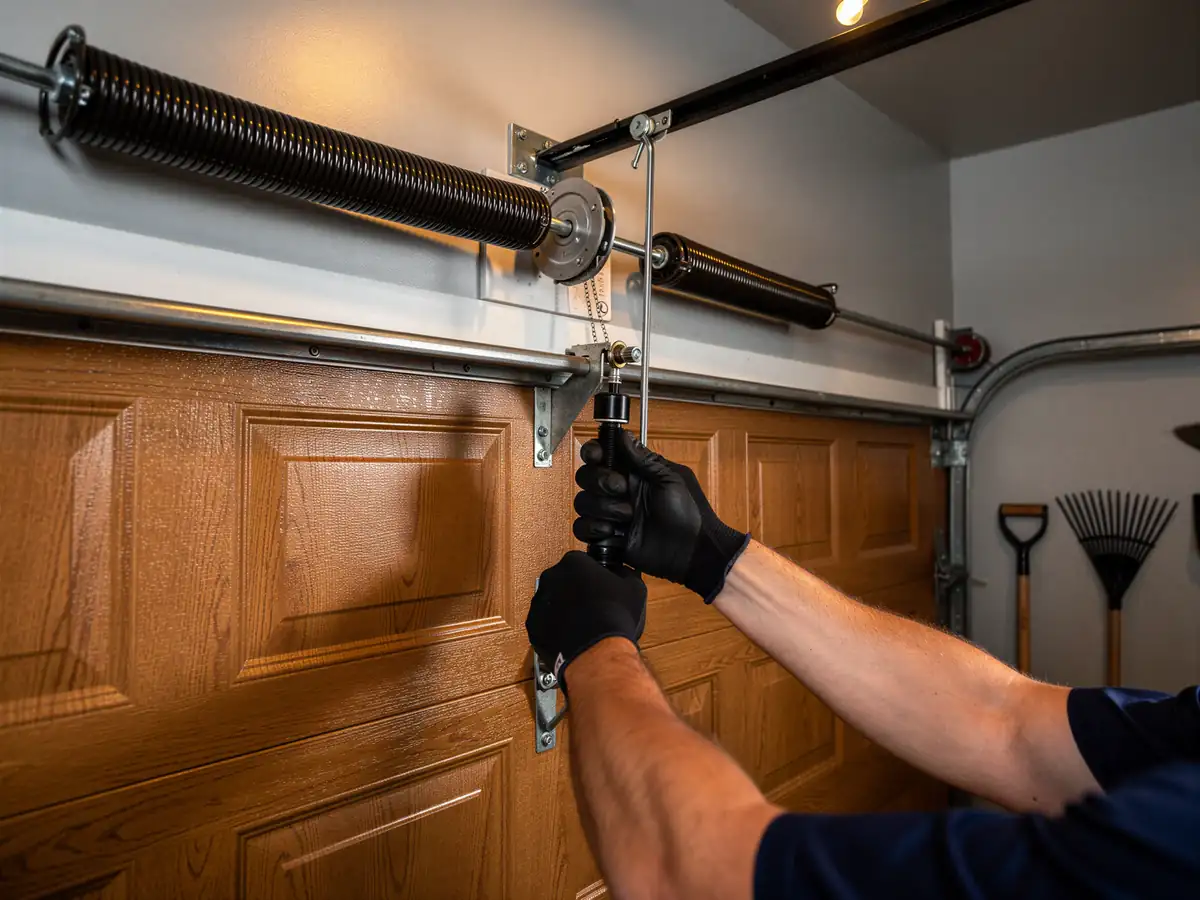
We release the spring tension first - a cable change-out is one of the few garage door jobs where skipping that step gets someone hurt - then pull both old cables even if only one failed, because a cable that's forty years old on one side is forty years old on the other. New cables get seated on a cleaned-out drum, and we check the bottom brackets and rollers while the door's apart, since a worn roller is what strains the next cable prematurely. We test the balance before we leave, not just the open-close cycle.