How Long You Are Without the Door
Pojoaque is 16 miles out from the shop in Santa Fe
Tied with White Rock as the farthest stop we run. That distance is baked into how we route the day - we don't promise a same-day arrival the way we might for a job two miles from the shop, and we won't pretend otherwise. What we can tell you is that once a truck is headed your way, it's loaded for the door hardware that's actually common out here: torsion springs and chain-drive openers sized for the steel sectional doors that went up with most of these houses in the early-to-mid 1990s. A broken spring on a door that age isn't a mystery part. It's one we expect to see and one we carry stock for before we leave Santa Fe, not after we diagnose the problem on your driveway.
- 16 miles
The honest limit: if a job needs a part we don't carry on the truck
An odd-width track or a discontinued opener board - that's a second trip. We'd rather tell you that up front than guess at an arrival window we can't back up from 16 miles away.
- 16 miles
Booking a Visit
Because every Pojoaque call is a dedicated trip from Santa Fe rather than a stop on a route through a denser part of town, we ask for a bit more detail up front than we would for a closer job: the door's age if you know it, whether the opener still runs, and whether the door is stuck open or stuck shut. That lets us bring the right spring size and the right opener parts on the first run instead of guessing.
With 939 households in Pojoaque - a small slice of the roughly 10,772 across the whole service area - we're not running daily loops through here the way we might through a bigger subdivision closer in. Booking ahead, even by a day, means we can group your job with other calls heading the same direction and get a tech out without a half-day wait on either end. Emergency same-day calls still go out, but a scheduled morning window works better for everyone when the drive itself takes a half hour each way.
What It Costs
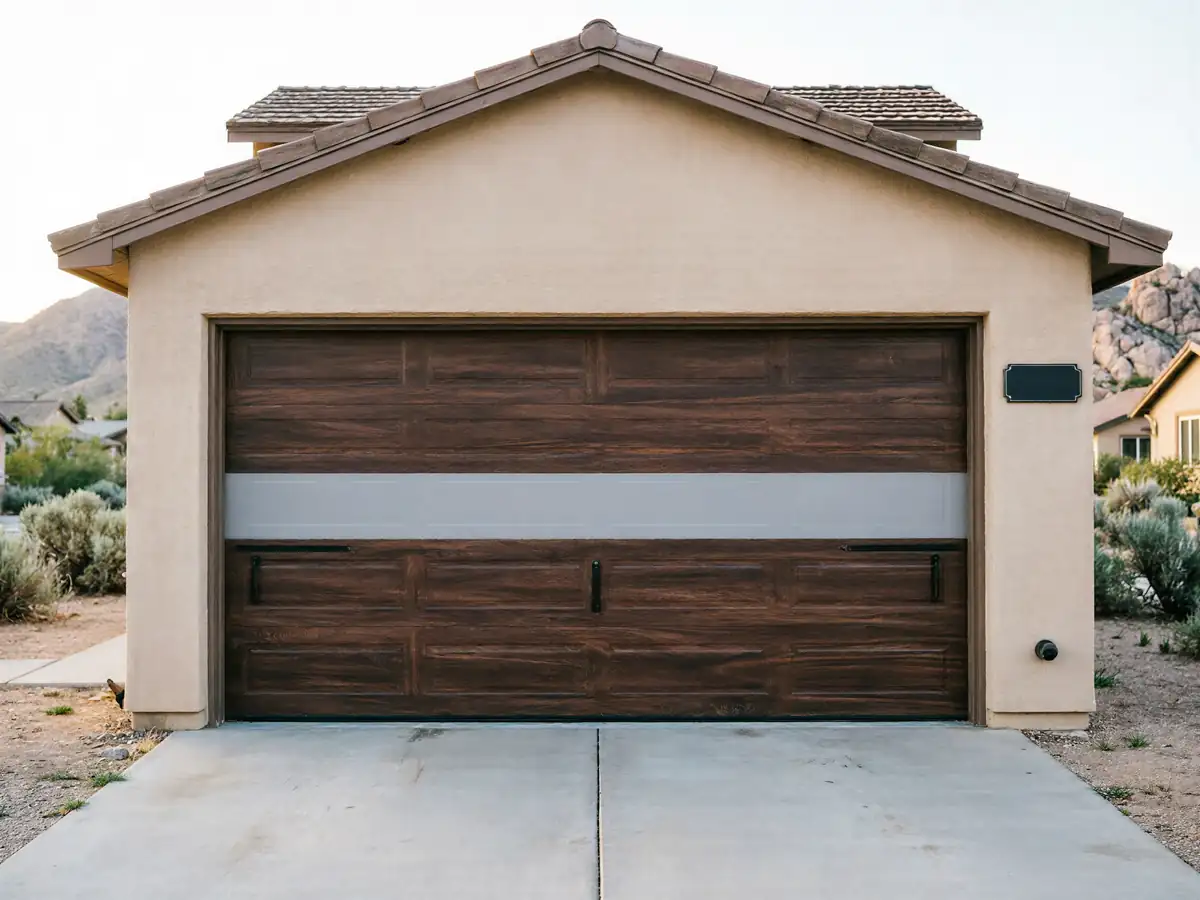
Pojoaque's median household income runs $68,188, just under the $68,432 median for the wider service area - close enough that pricing here isn't different from what we quote anywhere else we cover. What does shift the number is the age and type of hardware we're dealing with, and most of what's installed in Pojoaque dates to the early-to-mid 1990s: steel sectional doors on torsion springs, paired with openers that are now well past their expected service life.
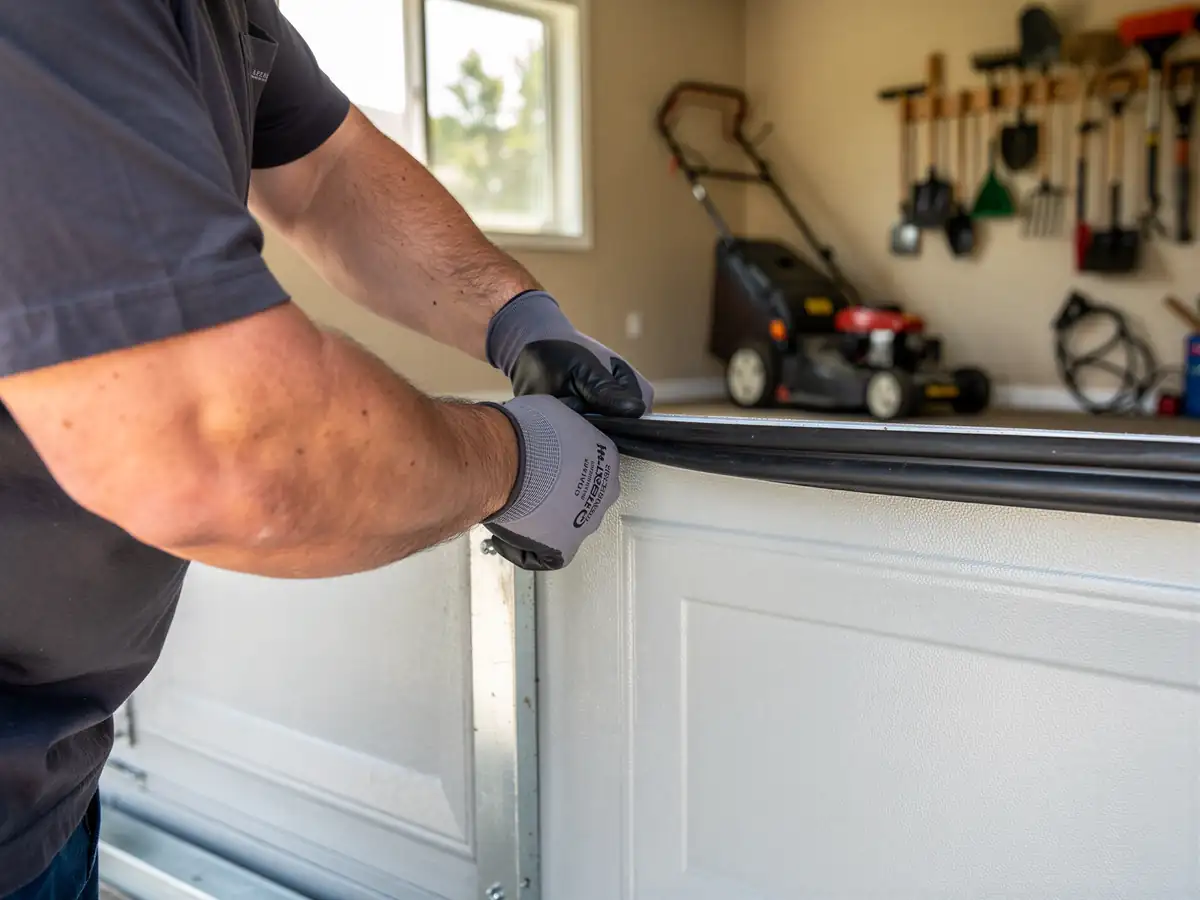
A spring swap on that kind of door is usually a straightforward job. Where cost climbs is when the opener itself has failed alongside the spring, or when a track has warped enough that it needs full replacement rather than an adjustment. We'll tell you plainly when a repair isn't worth it - a 30-year-old opener with a cracked gear housing usually costs more to keep alive than to replace, and we'd rather say that than bill you for a patch job that fails again in six months.
How We Fix It
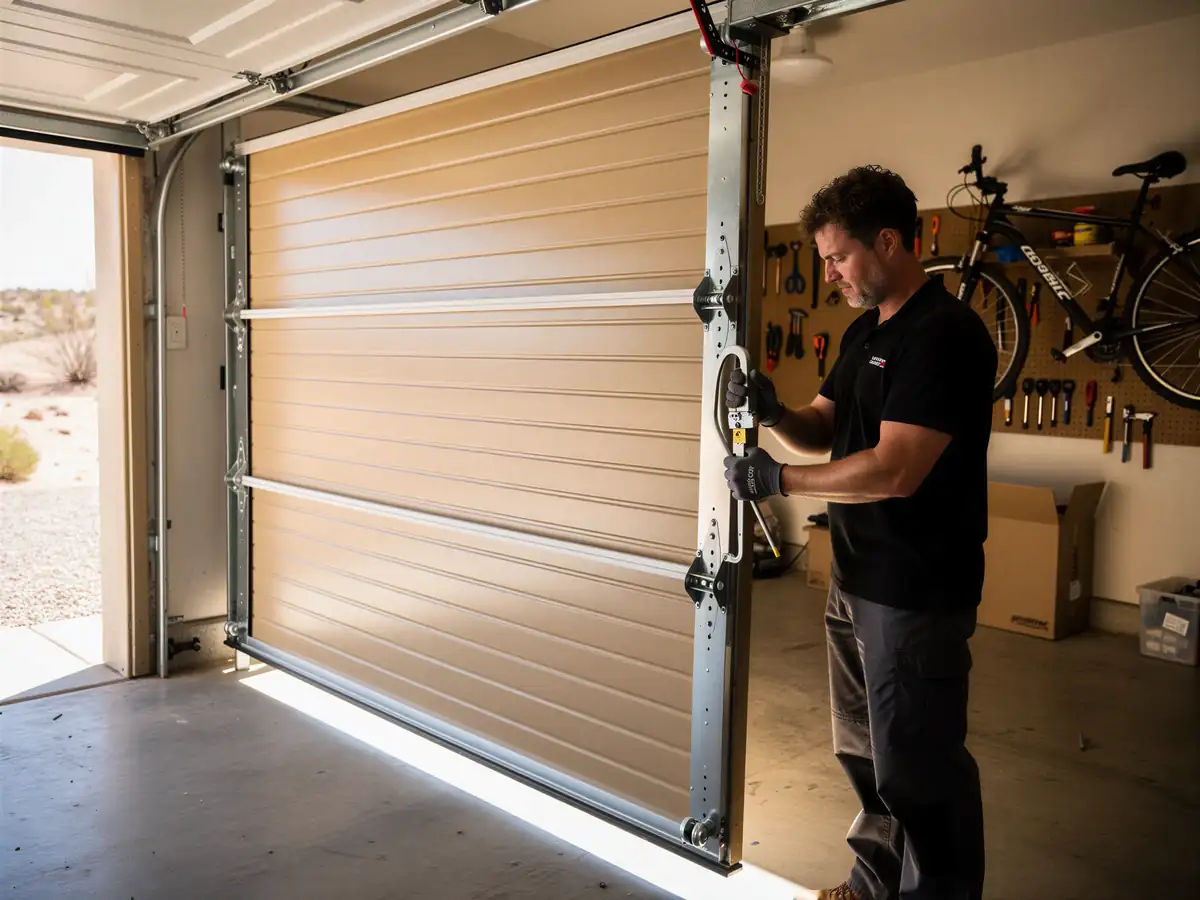
Doors built around 1994
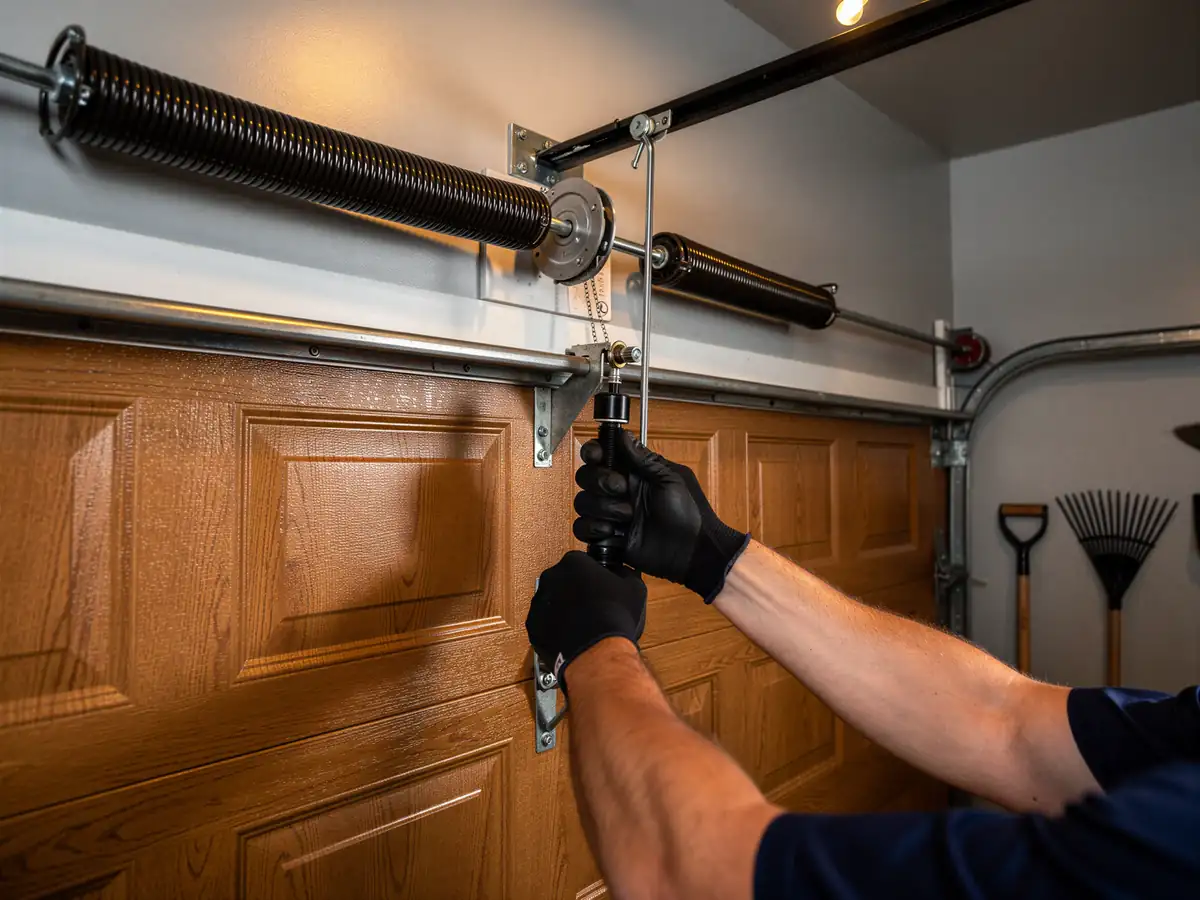
Which is close to the median build year for homes in Pojoaque, almost always came with torsion spring systems rather than the older extension-spring setups you'd find on houses from the 1960s and 70s. That matters for repair: torsion springs fail suddenly and completely, and replacing one means working with the door fully unloaded and the opposing spring checked for wear at the same time, since a mismatched pair just means a second failure in a year or two.
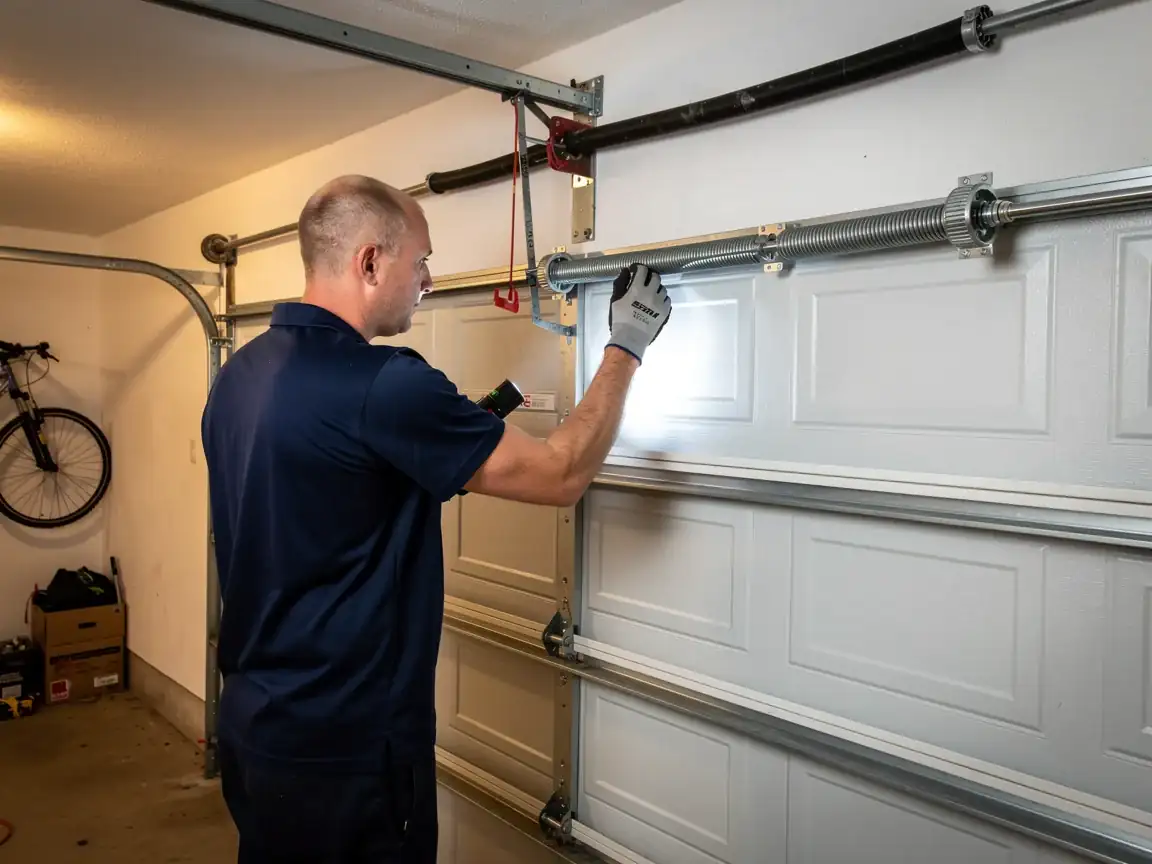
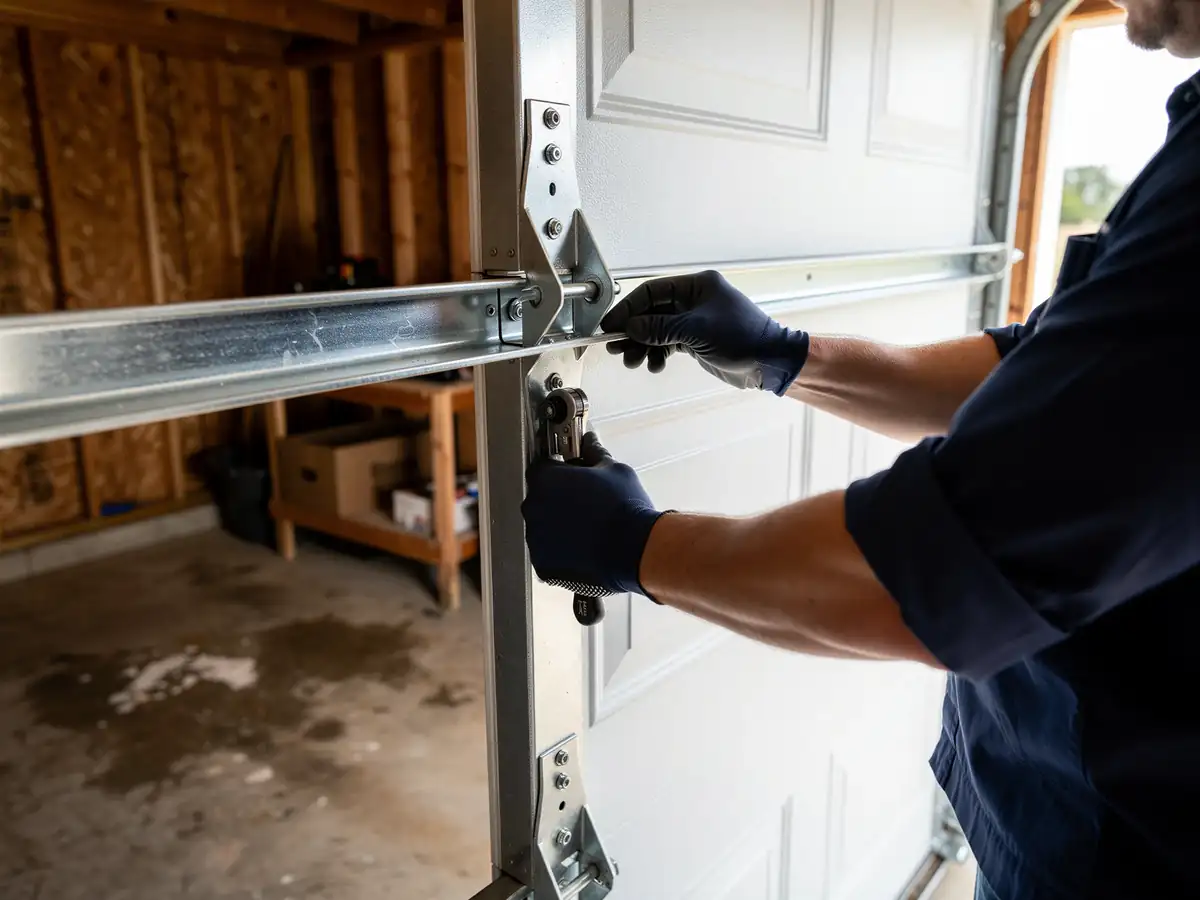
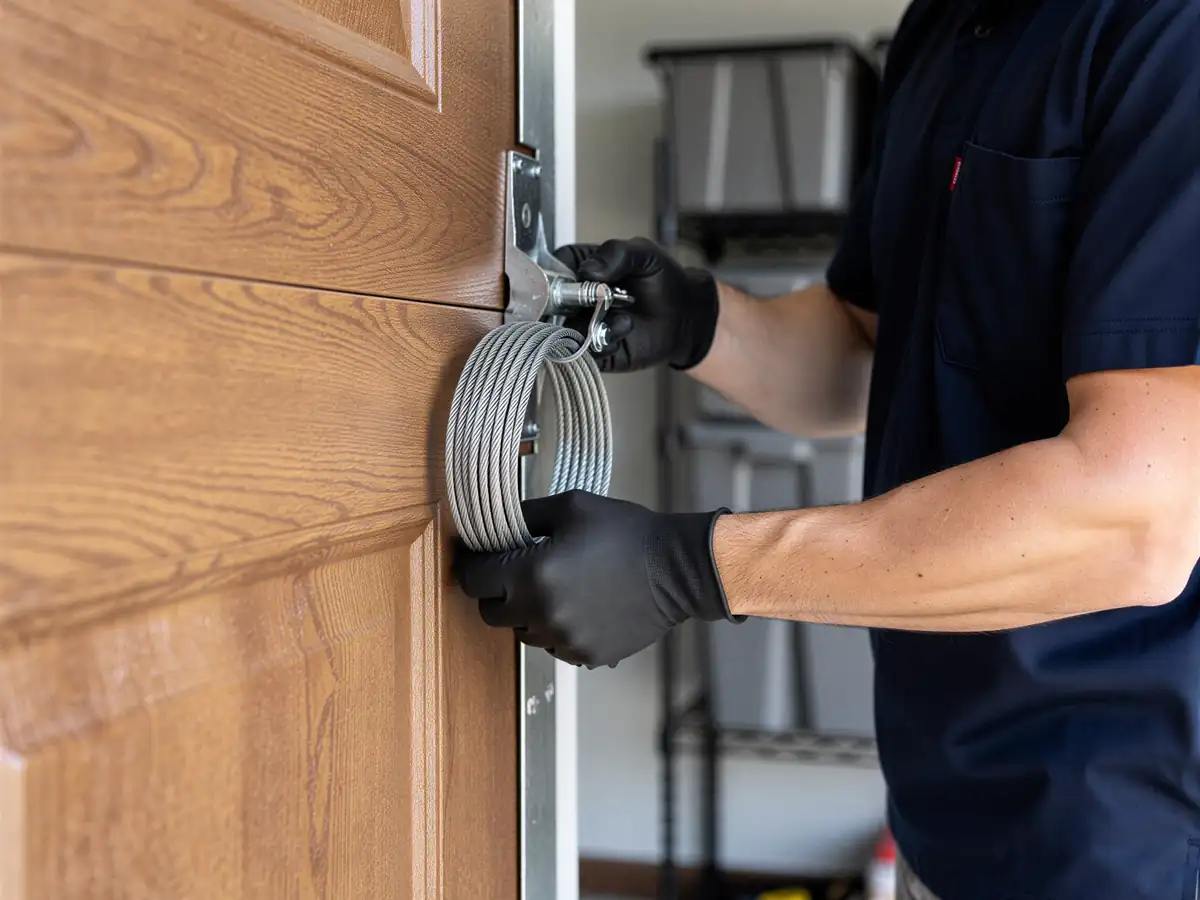
On these doors we check the torsion bar, the cable drums, and the bottom brackets as a set
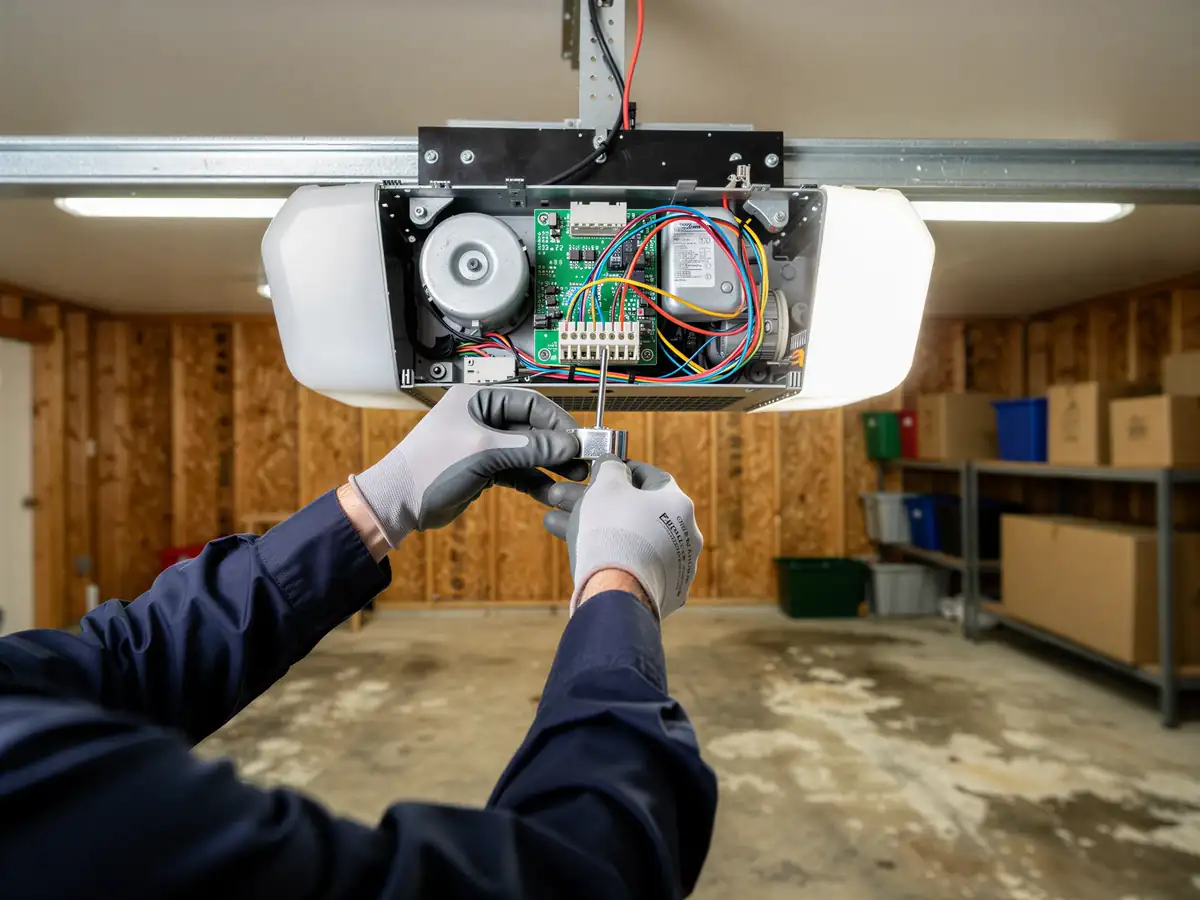
Not just the spring that snapped. If the opener is original to the house, we also look at the drive gear and the logic board - both are common failure points once an opener passes the two-decade mark, which a lot of Pojoaque units now have. We carry standard torsion spring sizes and common opener parts on the truck for exactly this reason: the hardware here is consistent enough that we know what we're likely to need before we leave Santa Fe.
What Causes It Around Here
The service area sits in a severe cold climate band, and Pojoaque doesn't escape that. Repeated hard freezes stiffen torsion springs and dry out the grease in bearing plates faster than a mild climate would, which is part of why springs installed when these houses were built in the early-to-mid 1990s are now reaching the end of their rated cycle life around the same time, house after house.
The other factor is simpler: age. A spring rated for 10,000 cycles doesn't care what year it is, it cares how many times the door has opened and closed, and a 30-year-old spring on a daily-use door has likely used up its rating regardless of the weather. Combine the two - cold-stressed steel and a spring already near its cycle limit - and late winter is when we see the most snapped springs out this way. It's not a defect in how the doors were built. It's just what happens to 1990s hardware after three decades of New Mexico winters.