How Long You Are Without the Door
We don't keep a crew based in Pojoaque
Every job here is a 16-mile run out from Santa Fe, so the honest answer is that you're factoring drive time into your day, not booking a technician who's already around the corner. That's a real limitation and worth saying plainly rather than promising something we can't back up.
What that means for you
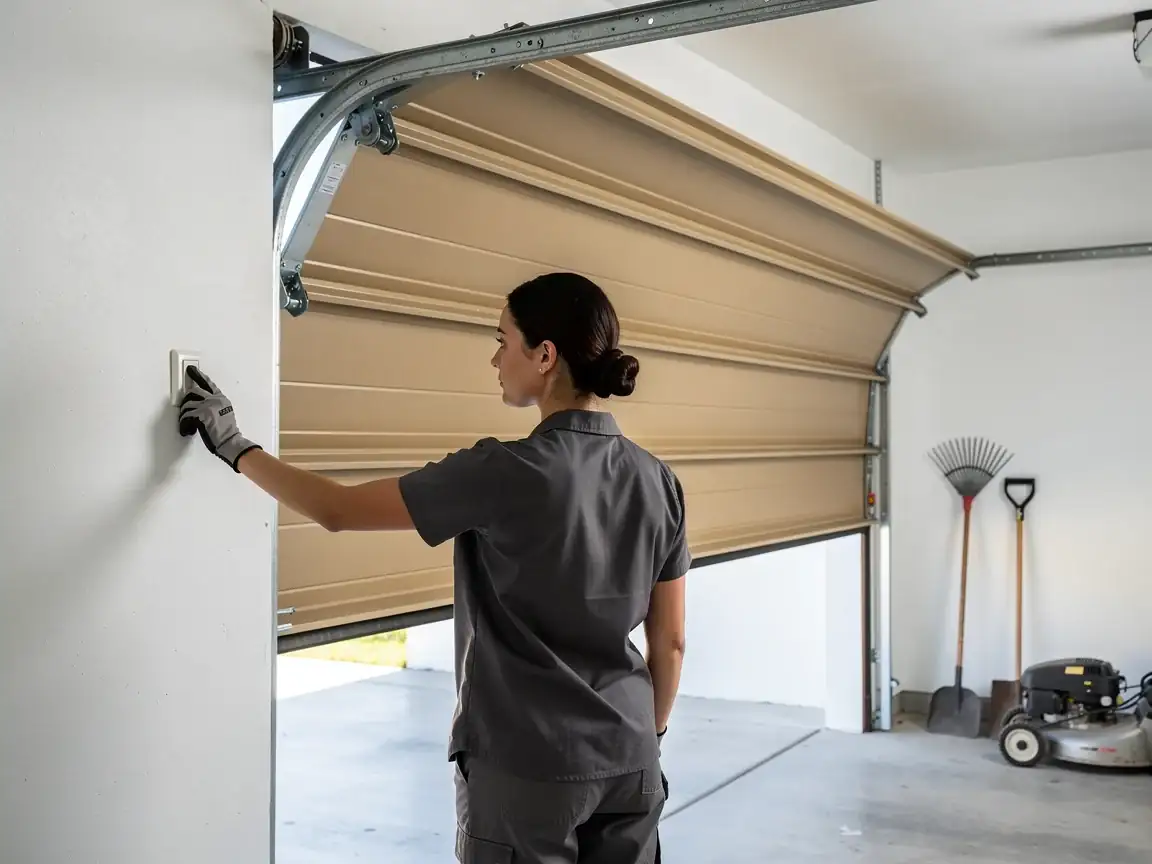
Call earlier in the day if the opener is dead and you need the door closed before dark, especially in winter when an open garage bay loses heat fast. If the opener has simply stopped responding to the remote or wall button, you can often get the door down manually using the release cord while you wait, which buys time without forcing the issue.
We don't quote a fixed hours-to-arrival number for Pojoaque specifically
Because we haven't been asked to state one, and we'd rather tell you that than invent a figure. What we can say is that the trip is built into how we schedule the day's route out from Santa Fe, so Pojoaque calls get worked into runs toward Tesuque, Cuyamungue, and Pojoaque together rather than as one-off trips.
Booking a Visit
The fastest way to get a technician scheduled for Pojoaque is through our service area page for Pojoaque, which routes the request correctly from the start instead of treating it as a general Santa Fe call. Tell us what the opener is doing - dead remote, grinding motor, door that reverses before it touches the floor - because that detail changes what gets loaded on the truck before the drive out.
If your opener is original to the house and the house was built in the mid-1990s, say so. It saves a diagnostic step, since we already know roughly what drive type and logic board era we're dealing with before we open the housing.
We book opener repairs separately from new door installs and spring jobs, so if you're not sure which one you need, describe the symptom rather than guessing at the cause - a door that won't budge is usually a spring problem, not an opener problem, and the two calls are handled differently.
What It Costs
We don't have a Pojoaque-specific price sheet to quote here, and we're not going to make one up. Opener repair cost depends on what's actually broken - a logic board, a stripped gear, a failed sensor, a worn belt - and that's something a technician confirms on site, not something that's the same for every call out this direction.
What we can tell you is what drives the range: whether the part is still stocked for a 1990s-era opener or needs to be sourced, and whether the fix is a component swap or a full unit replacement. Houses in this area built around 1994 are old enough that some original opener units are reaching the end of what's worth repairing, and at that point replacement usually costs less over time than chasing parts for a discontinued drive system. We'll tell you straight if that's where your unit is rather than billing you for a patch that won't hold.
How We Fix It
Most opener calls break down into a handful of repeat problems
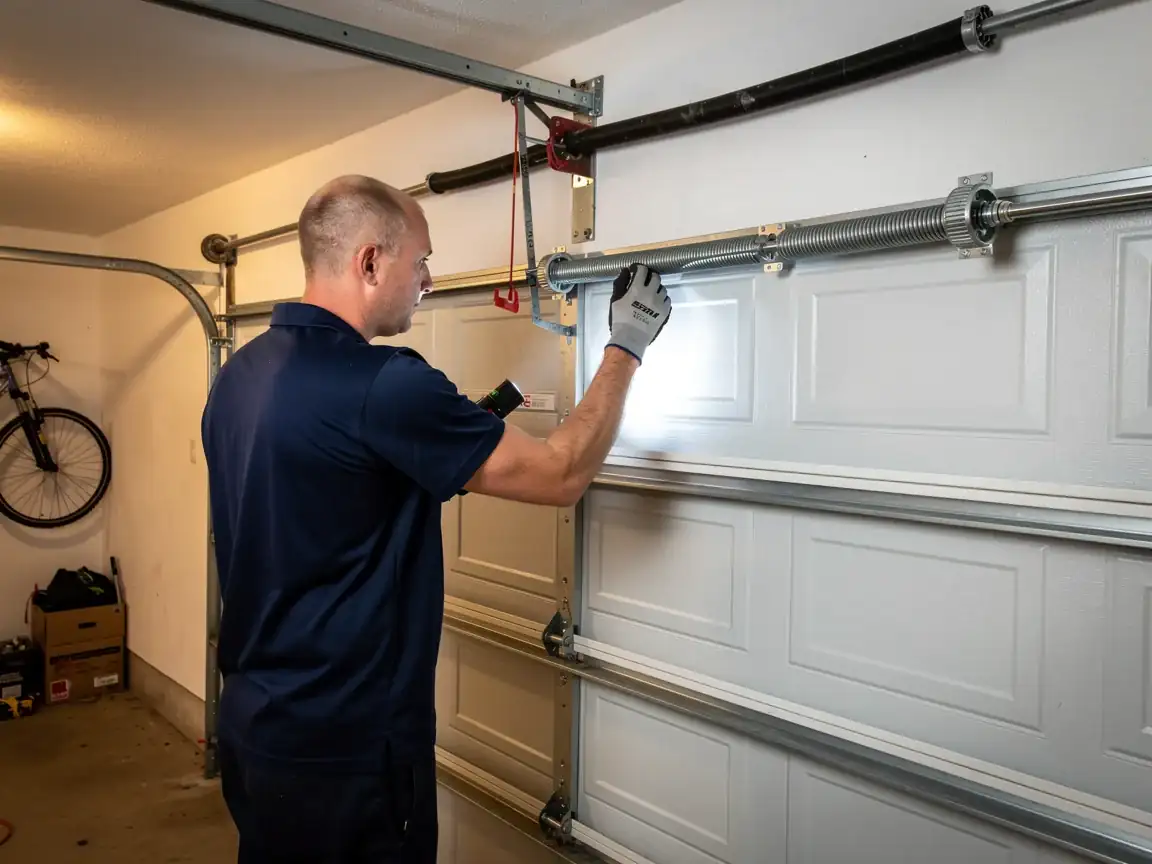
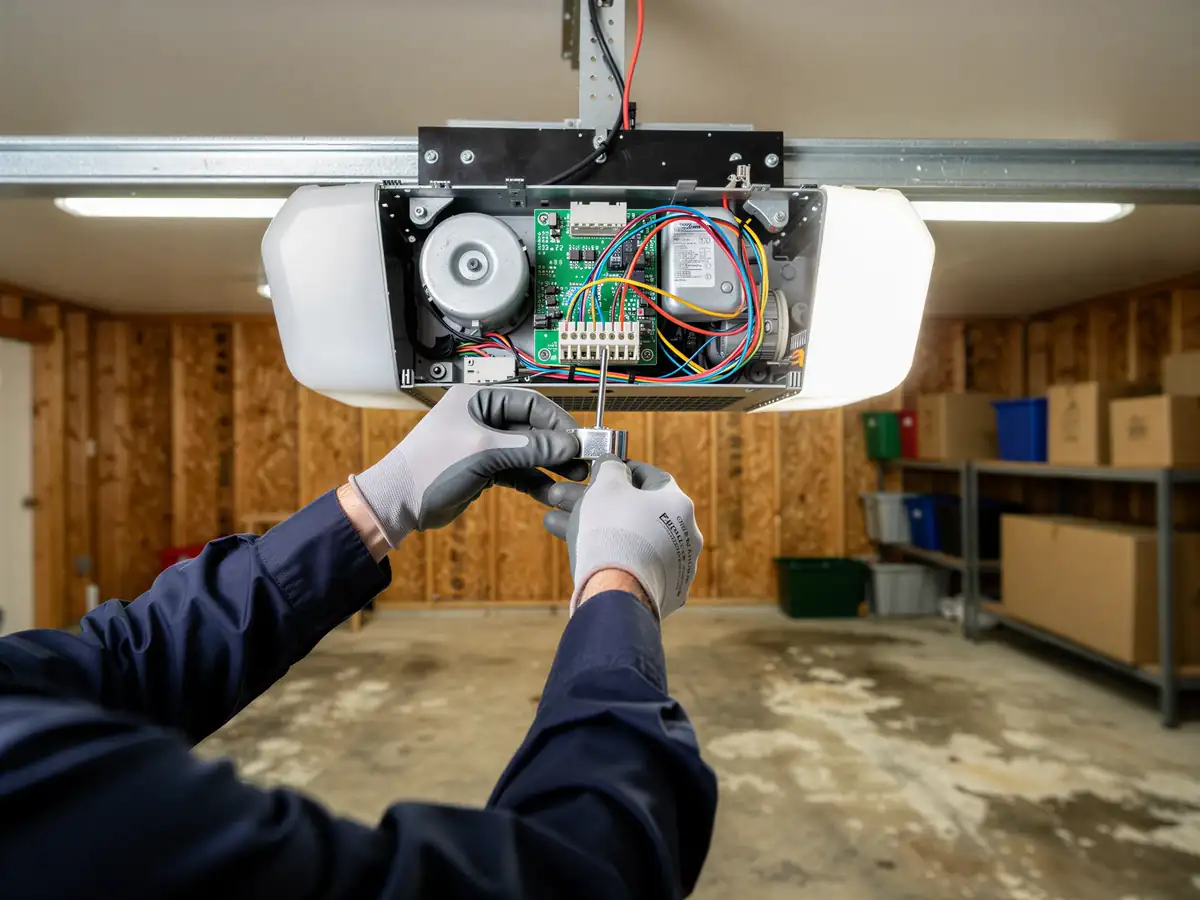
A stripped drive gear (common on chain-drive units from the 1990s), a dead or cracking logic board, misaligned or dirty safety sensors, or a worn belt on later belt-drive replacements. We open the housing, test the circuit board output, check the sensor eyes for alignment and obstruction, and run the drive train under load before we decide what's actually failing versus what's just a symptom.
Cold matters here
In a severe cold climate, grease inside an opener's gear housing thickens, motors draw harder to start, and plastic gears that were already worn crack sooner than they would in a milder climate. That's not unique to any one opener brand - it's a function of the temperature swings this area sees through the winter months.
We replace what's actually bad and leave the rest alone
If the motor's fine and it's just a sensor out of alignment, that's a short visit, not a full unit swap.
What Causes It Around Here
Pojoaque's housing stock runs a bit newer than the broader service area - a median build year around 1994, compared with roughly 1990 across the wider mix of neighborhoods we cover. That gap matters for openers specifically: houses from this era were built with the first generation of circuit-board-controlled chain and screw drives, not the relay-and-timer systems common in older housing stock elsewhere in the service area. Those boards are now thirty years old, and failure at the board level looks different from a worn-out mechanical opener - often it's intermittent, working one day and dead the next.
The area's severe cold climate band compounds that. Thermal cycling - cold nights, warmer days - stresses soldered joints on aging circuit boards and dries out lubricant in gear housings faster than a mild climate would. We see more board failures and gear wear here through the winter stretch than we'd expect in a warmer climate with the same age of equipment. None of this means every call is a board replacement - plenty are simple sensor or belt fixes - but it's the pattern behind why openers from this build era are starting to fail now rather than later.