Booking a Visit
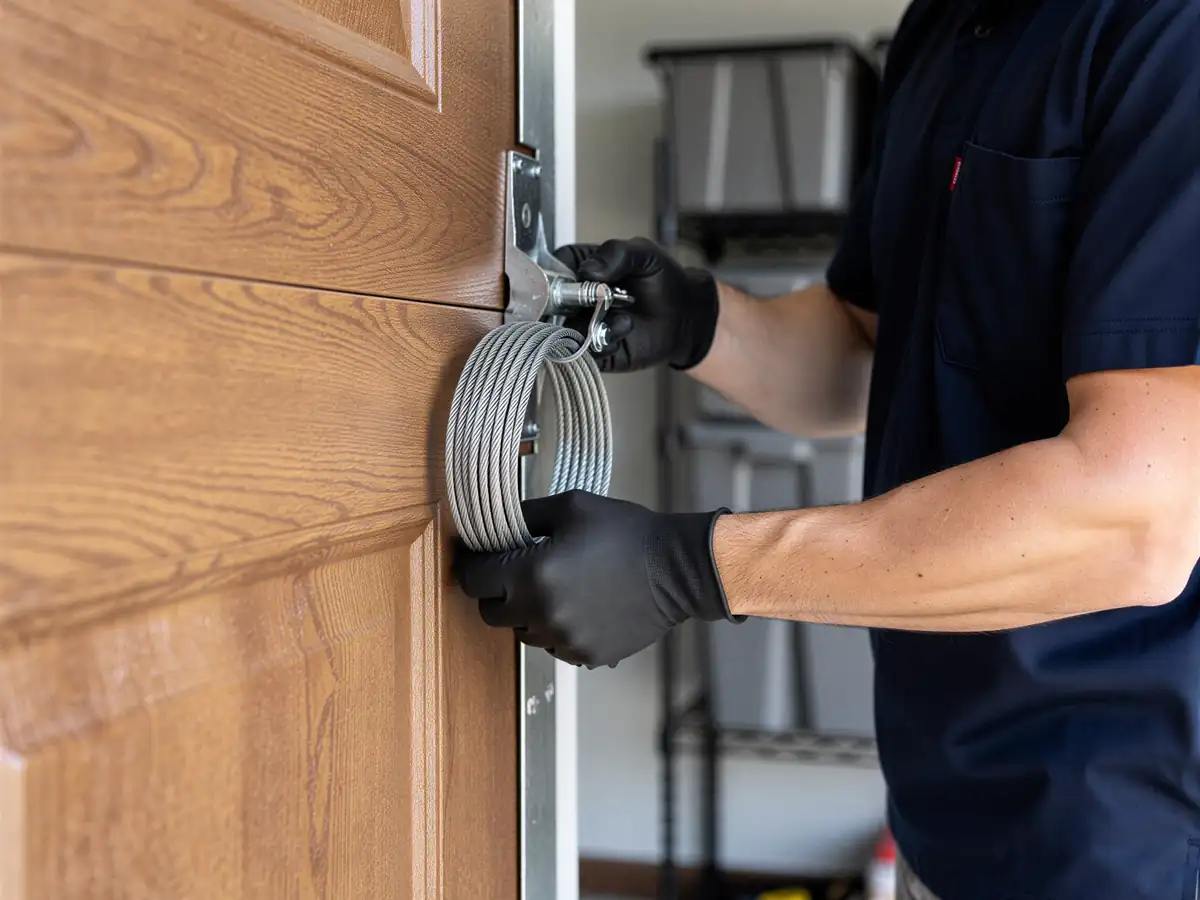
We travel to White Rock from Santa Fe, about 16 miles each way, so we schedule the visit rather than offer a walk-in slot. When you call, tell us whether the cable is frayed, off the drum, or already snapped - that changes what we bring. A snapped cable on a torsion system usually means the opposite side's cable is close behind it, since both get the same hours of use, so we'll plan to check both while we're there rather than make a second trip for the same door.
What You Are Seeing
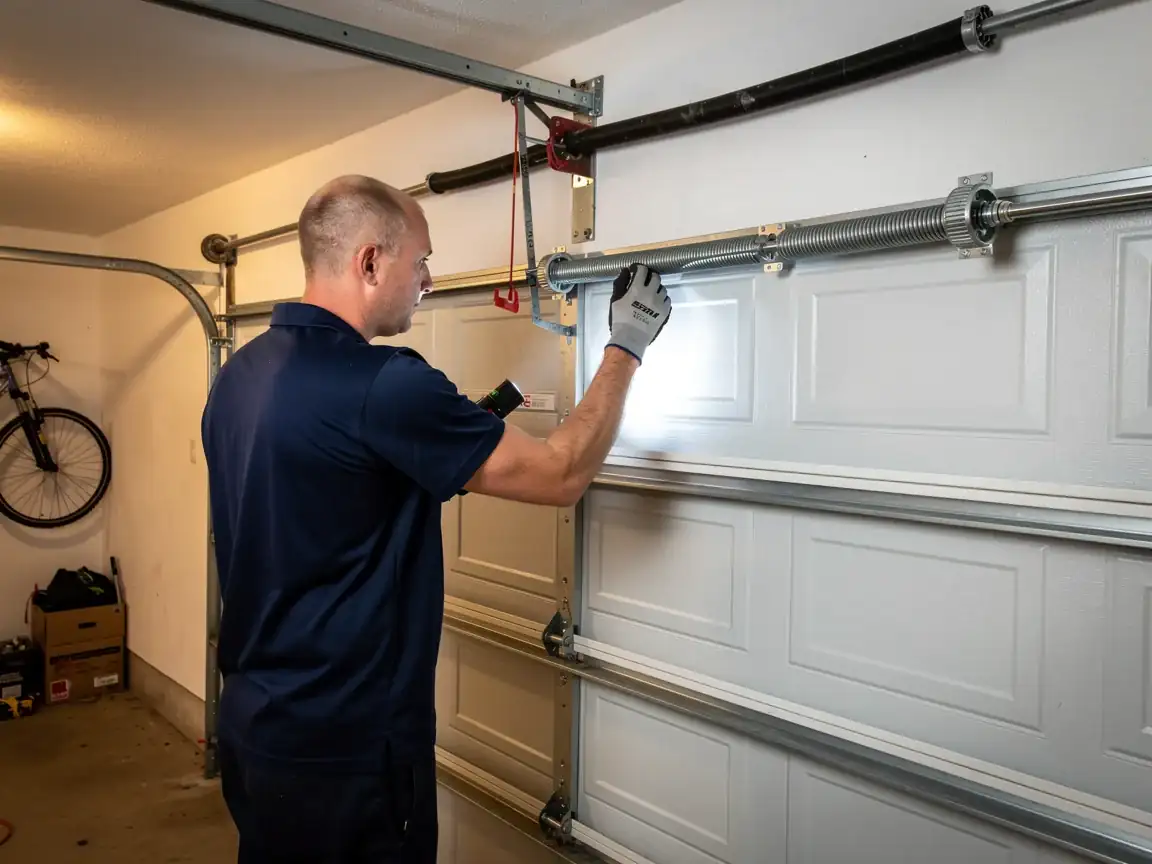
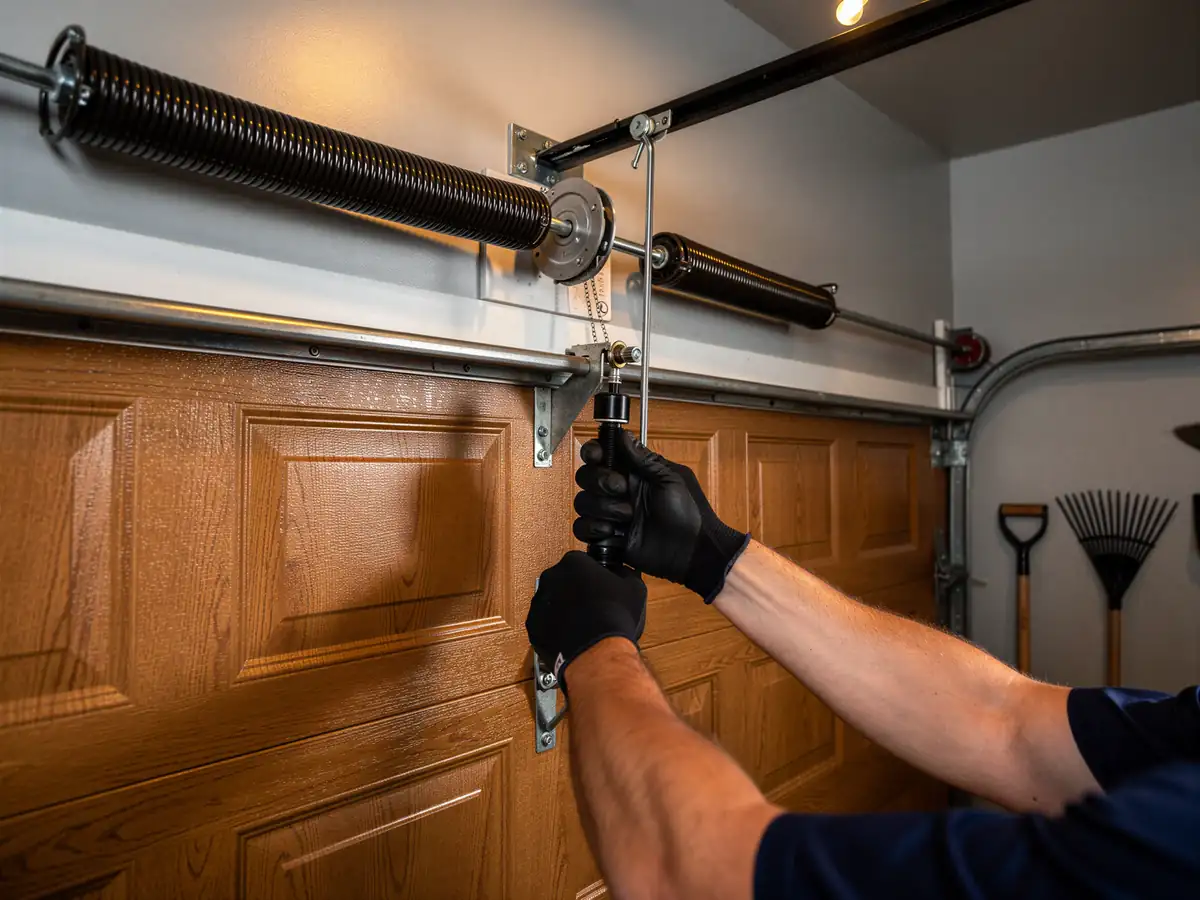
A fraying cable shows as thin, rust-colored strands poking out near the drum or the bottom bracket, sometimes catching sunlight before you notice anything else wrong. A cable that's come off the drum usually announces itself louder: the door hangs crooked, one corner lower than the other, or it won't move at all because the opener senses the imbalance and stops. On the 1973-and-earlier doors common in White Rock, the drums and cables are often original equipment, decades past where a cable manufacturer would warranty the part. That age is also why the cable tends to fail at the fitting rather than along its length - the crimp has had fifty years of New Mexico winters to work loose.
What Can Go Wrong
A cable repair that looks finished can still fail within weeks if the drum groove is worn, if the track is bent enough to pull the cable sideways, or if the spring was already under-tensioned before the cable broke and nobody noticed. We've seen jobs where a homeowner replaced the cable themselves and left the drum unchecked - the new cable wears into the same groove the old one cut, and you're back to a frayed cable in half the usual time. We check the drum on every visit, not just the cable, because skipping that step just delays the same call.
What Causes It Around Here
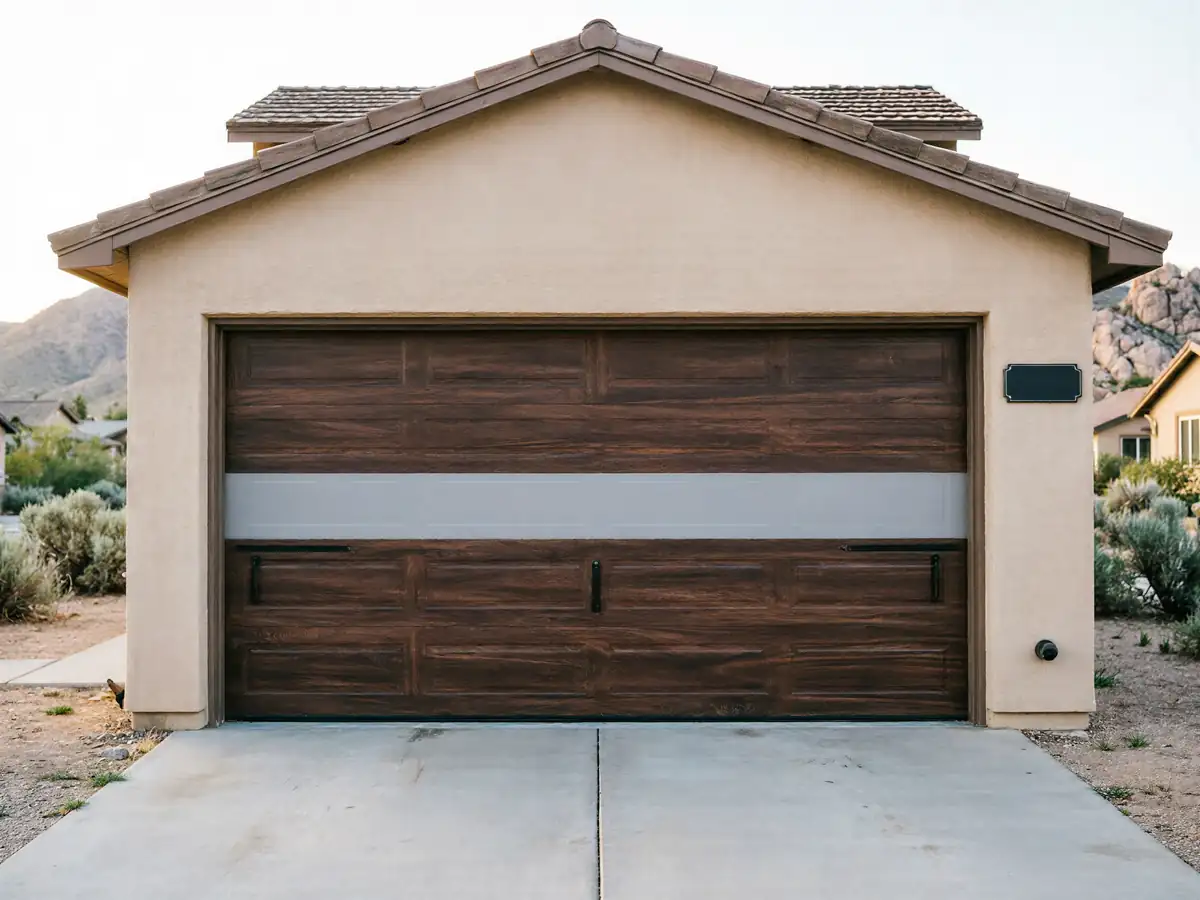
White Rock's housing dates mostly to 1973, which puts the original cable hardware well past its expected service life on houses that haven't had the door system touched since. Across the wider service area the housing stock runs 1973 to 1999 with a median around 1990, so White Rock sits at the older end of that range - its doors have simply had more years of cycles, more years of temperature swings, and more years for a cable fitting to fatigue. The region's cold-climate exposure adds to that: cable and spring steel contract in hard winter cold, and a cable already thinning from age is more likely to snap on a cold morning than a mild afternoon. With 2,040 households in White Rock, that's a meaningful number of doors from the same building decade facing the same wear pattern around the same time.