Booking a Visit
We run out of Santa Fe, about 16 miles from White Rock, so there's no local branch here and we won't pretend there is. When you call, we figure out what's likely wrong based on the door's age and symptoms, load the truck with the parts that era of hardware actually uses, and head out. Use the White Rock service area page to see that we cover this stretch regularly, or go straight to the main Santa Fe repair page for the full rundown of what we do. Because every trip starts from Santa Fe, it helps to describe the problem clearly on the phone - torsion spring versus extension spring, one door or two - so the truck isn't short a part for a 16-mile drive.
What You Are Seeing
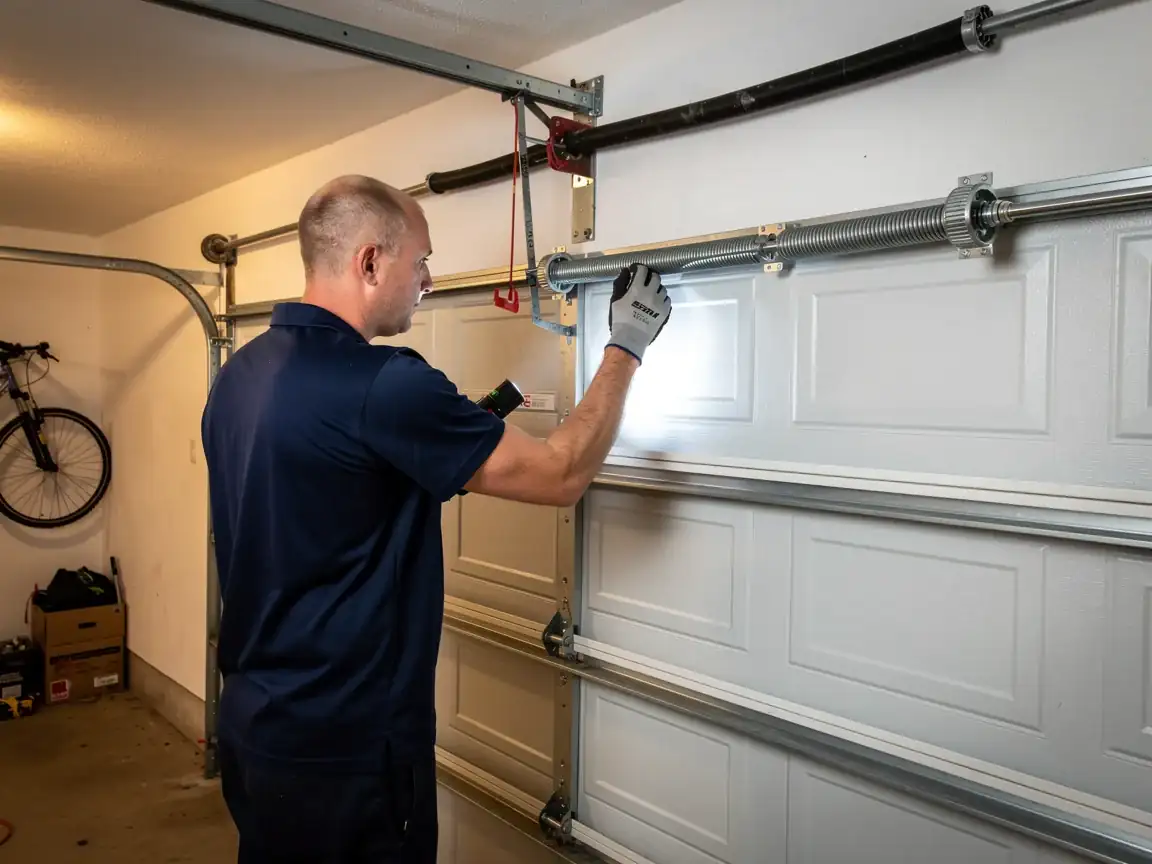
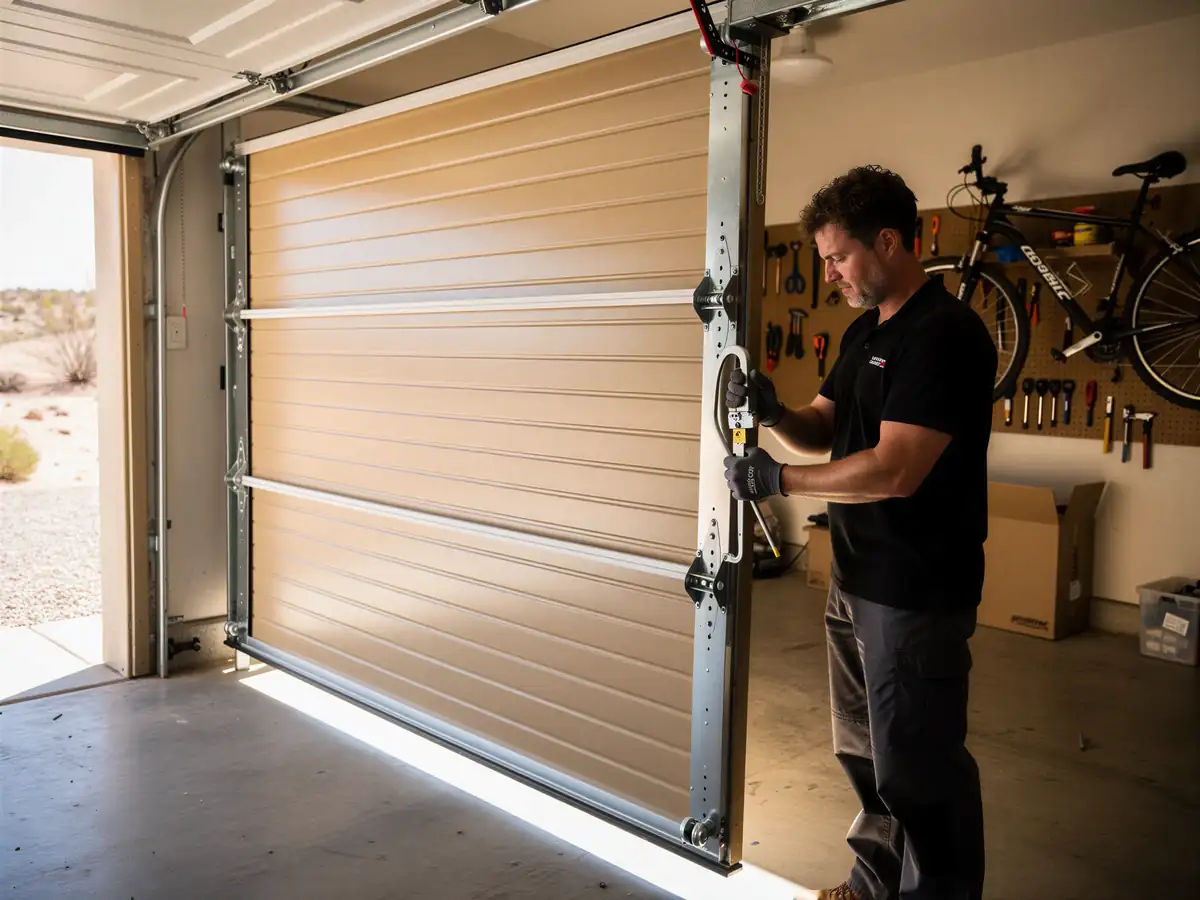
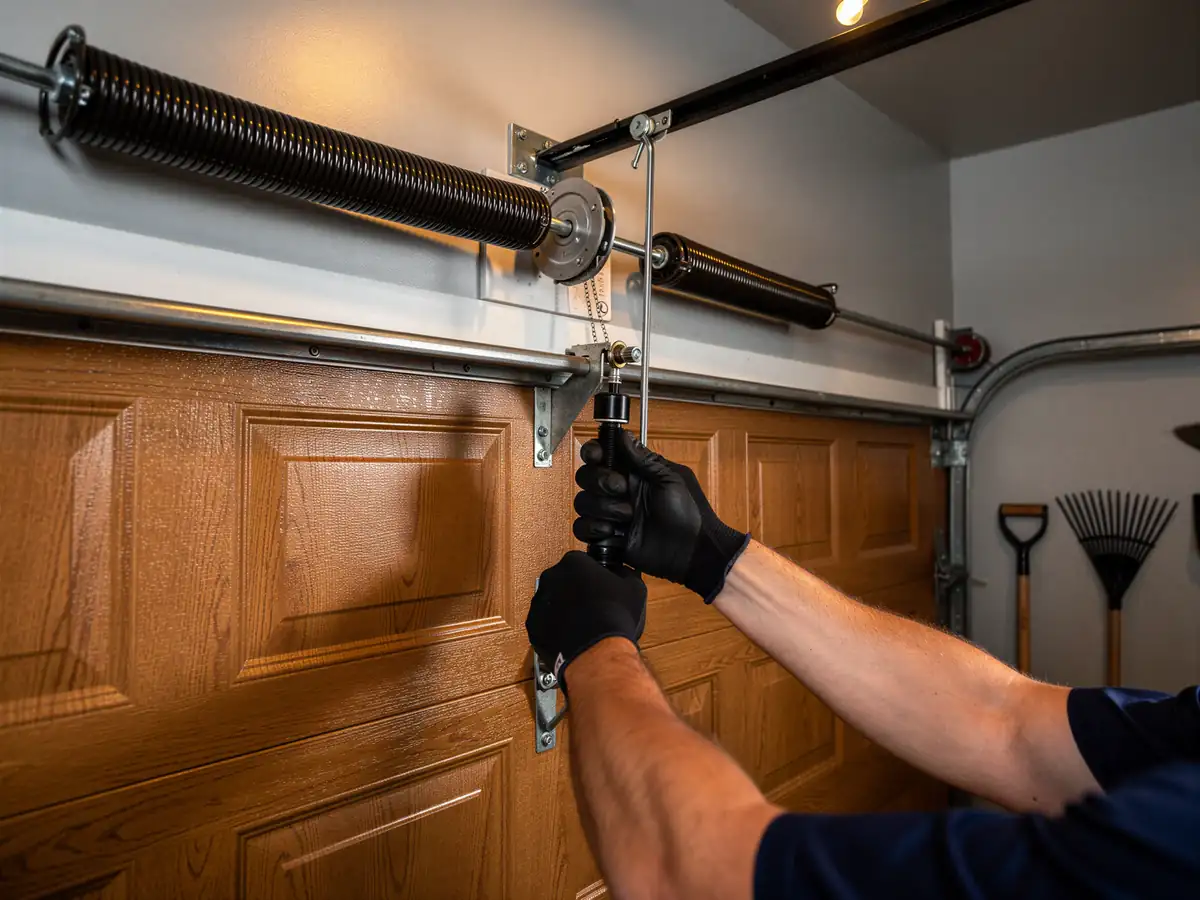
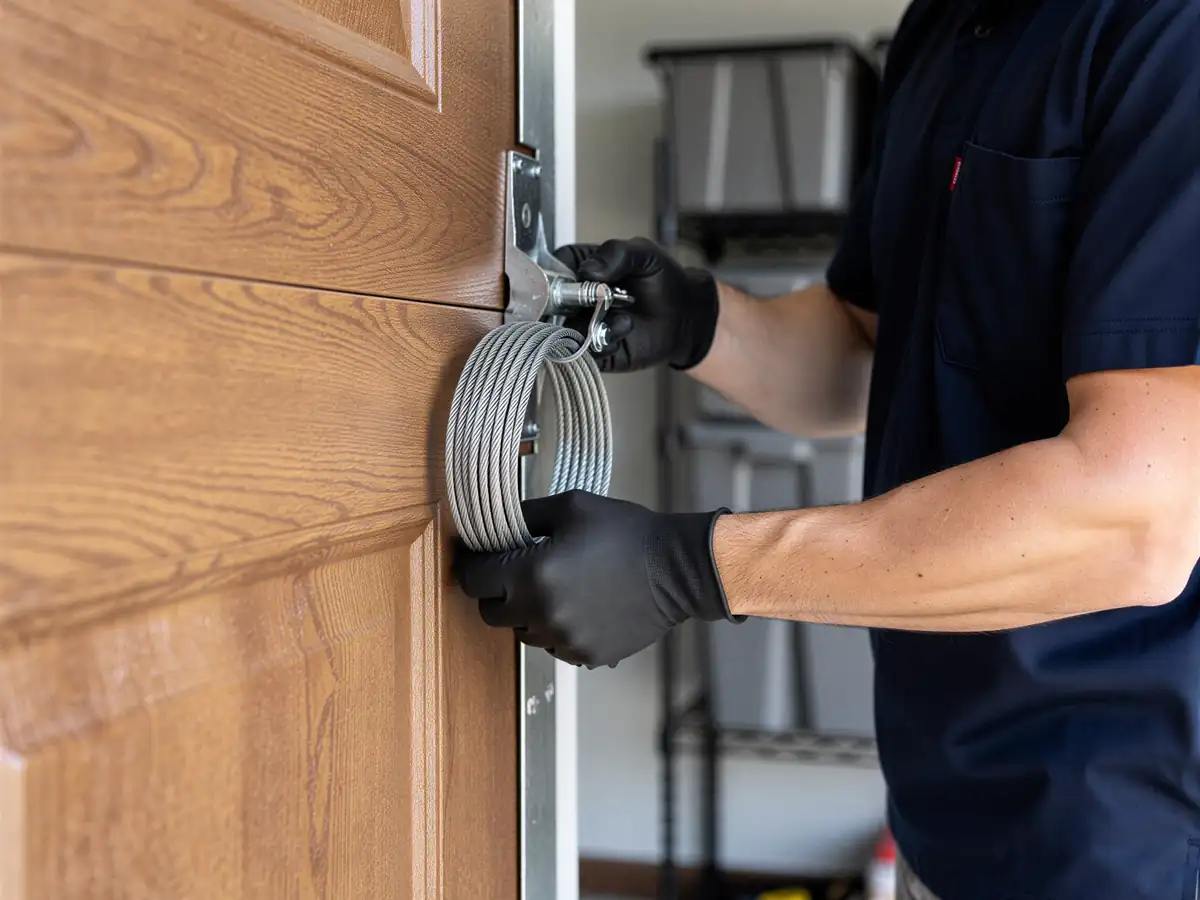
On a house from the early 70s, the most common failure is a snapped extension spring - you'll hear a bang, and the door won't lift or will only go up a few inches before stalling. If the door has already been retrofitted to torsion, the sign is different: the door won't budge and the torsion bar above the opening looks twisted or sagging on one side. Fraying lift cables show up often on original hardware that's never been swapped, since galvanized cable from that era wears through at a slower, less obvious rate until it suddenly doesn't. Rollers on original steel tracks tend to bind rather than squeal first, because steel track dimensions from the 70s run slightly narrower than what's sold today. If your door reverses right after touching the floor, that's usually a sensor or limit issue layered on top of old hardware, not the hardware itself.
What Can Go Wrong
Winters here run cold enough that we treat it as a severe cold-climate zone, and that matters more for a 1973 door than a newer one. Steel panels from that era are thinner and carry less insulation, so they flex more in a hard freeze, and flexing metal fatigues springs and hinges faster than steady metal does. Extension springs lose tension unevenly in cold swings, which is part of why one side of an old door droops before the other. Track bolts on original installs were set with less hardware than current code calls for, so cold-season vibration works them loose over the years in a way it doesn't on a newer torsion system bolted to a more rigid jamb. None of this is unique to any one door, but it shows up sooner on hardware this age than on something installed in the 90s.
What Causes It Around Here
White Rock's households carry a median income of $150,714, well above the roughly $68,432 median across the broader service area, and that shows up less in what breaks and more in what gets replaced instead of repaired - we see more full door swaps here on hardware that's otherwise fixable. With about 2,040 households, it's also one of the smaller markets we cover, so we don't have a long list of local quirks beyond the housing age itself. The real driver is still 1973: that's the year, and the hardware standards of that year are what we're working around on most calls here, whether it's an original extension spring door or an early torsion retrofit someone added in the decades since.